Climate written in vegetation
A biome is one of the world's great ecosystem types — rainforest, desert, grassland, tundra, and the rest — defined by its characteristic vegetation and the community of life that goes with it. Biomes are, in essence, climate made visible: what grows where is governed above all by two things — how warm it is and how much (and how seasonally) it rains — so a map of the world's biomes is largely a map of its climate.
Understanding biomes is the widest frame for everything else in this encyclopedia: it is why a baobab belongs in dry savanna and a dipterocarp in wet rainforest, why the same niche is filled by different trees on different continents, and why matching a plant to its climate is the first rule of growing.
The major biomes
Running roughly from the hot, wet equator to the cold poles:
Tropical rainforest. Hot and wet all year, the most biodiverse biome on land — the towering, layered forests of the dipterocarps, figs, and brazil nut, dependent on tight nutrient cycling over often-poor soils.
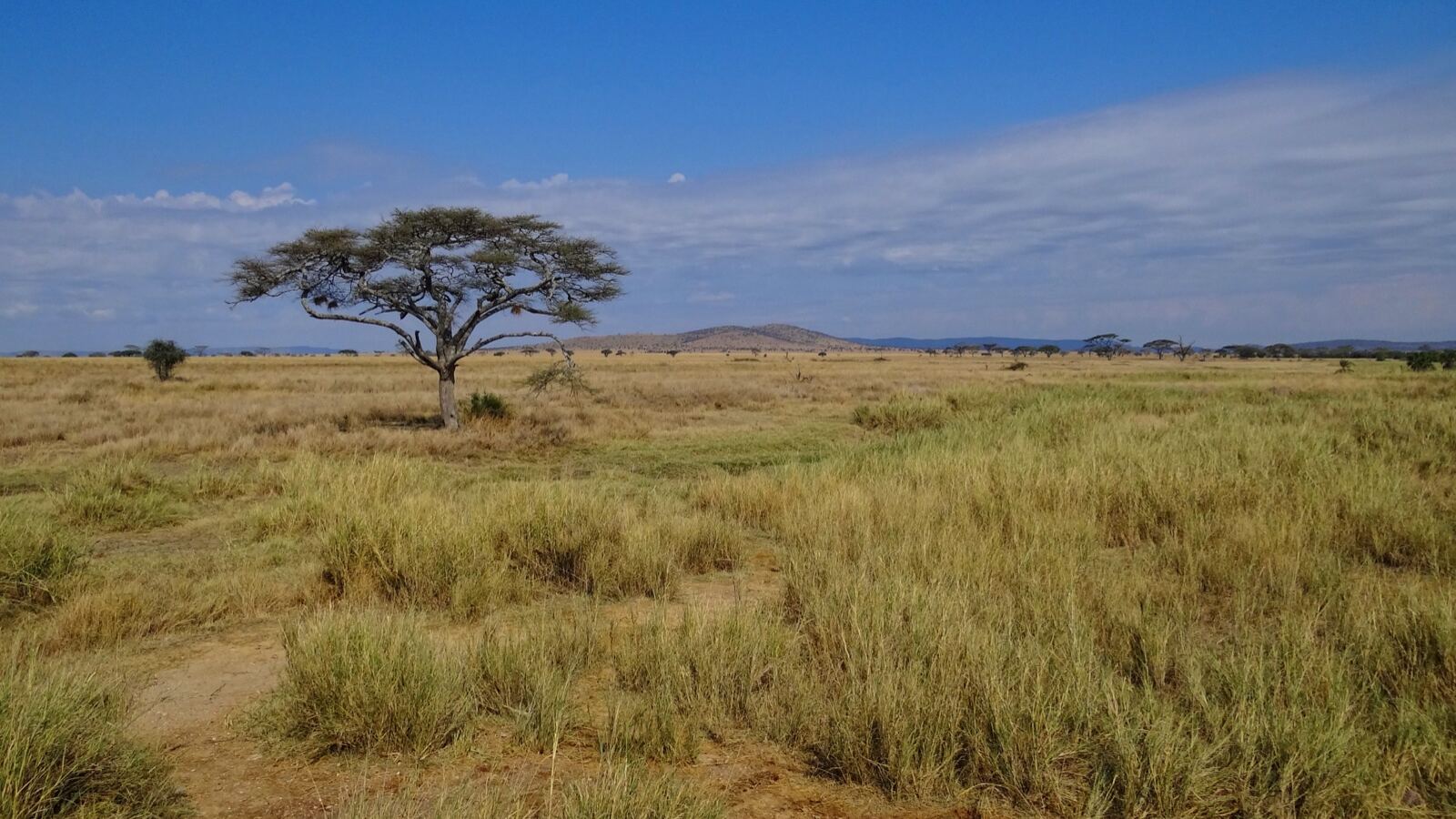
Tropical savanna and seasonal forest. Hot with a marked wet and dry season — grasslands dotted with drought-deciduous, often fire- and drought-adapted trees like the baobab, acacia, and flame of the forest; shaped by fire and grazing.
Desert. Hot or cold, but always dry — a biome of extreme water scarcity, home to the water-storing and leaf-shedding specialists of the dry, the cacti and their nurse trees, the mesquite, quiver tree, and dragon tree.
Mediterranean (chaparral). Mild wet winters and hot dry summers — the evergreen oaks, olive, and tough, aromatic, fire-adapted shrublands of the world's five Mediterranean-climate regions.
Temperate grassland. Cold winters, warm summers, and rainfall too low or too seasonal for forest — the prairies, steppes, and pampas, grass-dominated and fire- and grazing-maintained, and (tragically) the world's breadbaskets, largely ploughed up.
Temperate deciduous forest. Four distinct seasons and ample rain — the broadleaf woods of oak, beech, maple, and their kin that drop their leaves for winter, the biome of much of Europe, eastern North America, and East Asia.
Boreal forest (taiga). Long cold winters and short summers — the vast northern belt of evergreen conifers, the spruces, firs, pines, and larches, one of the largest biomes and a huge carbon store.
Tundra. Too cold and short a season for trees at all — low, ground-hugging vegetation over frozen ground, at the poles and above the mountain treeline.
Wetlands, mangroves, and coasts cut across the climate zones as their own water-defined systems — the mangroves, swamp forests, and saltmarshes.
The same climate, different life
A striking pattern emerges from the biome map: similar climates on different continents grow strikingly similar vegetation from unrelated plants — the phenomenon of convergent evolution. The Mediterranean-climate shrublands of California, Chile, South Africa, and Australia look alike though built from different families; the deserts of the world share the same water-saving forms; the casuarina mimics a pine because the same dry, exposed conditions favour the same solution. Climate calls the tune, and evolution answers it again and again in the same way — proof that biomes are shaped by conditions, not ancestry.
Why it matters
For the grower and restorer, the biome is the broadest match to get right: a plant evolved for one biome will usually struggle in another, and the whole practice of climate-matching, native plant selection, and choosing drought- or cold-tolerant species is, at bottom, working within (or carefully at the edges of) what a biome allows. And as the climate shifts, biomes themselves are on the move — their boundaries creeping poleward and upslope — which is one of the deepest challenges facing the trees and ecosystems of a warming world. See climate adaptation.
See also
- Biodiversity which biomes hold the most life, and why
- Ecological Niche the same niches filled by different species across biomes
- Coevolution convergent forms in matching climates
- Climate Adaptation biomes on the move in a warming world
- Conifers the boreal forest and the treeline
- Mediterranean Shrubs and Evergreen Oaks the Mediterranean biome