Disturbance is not just damage
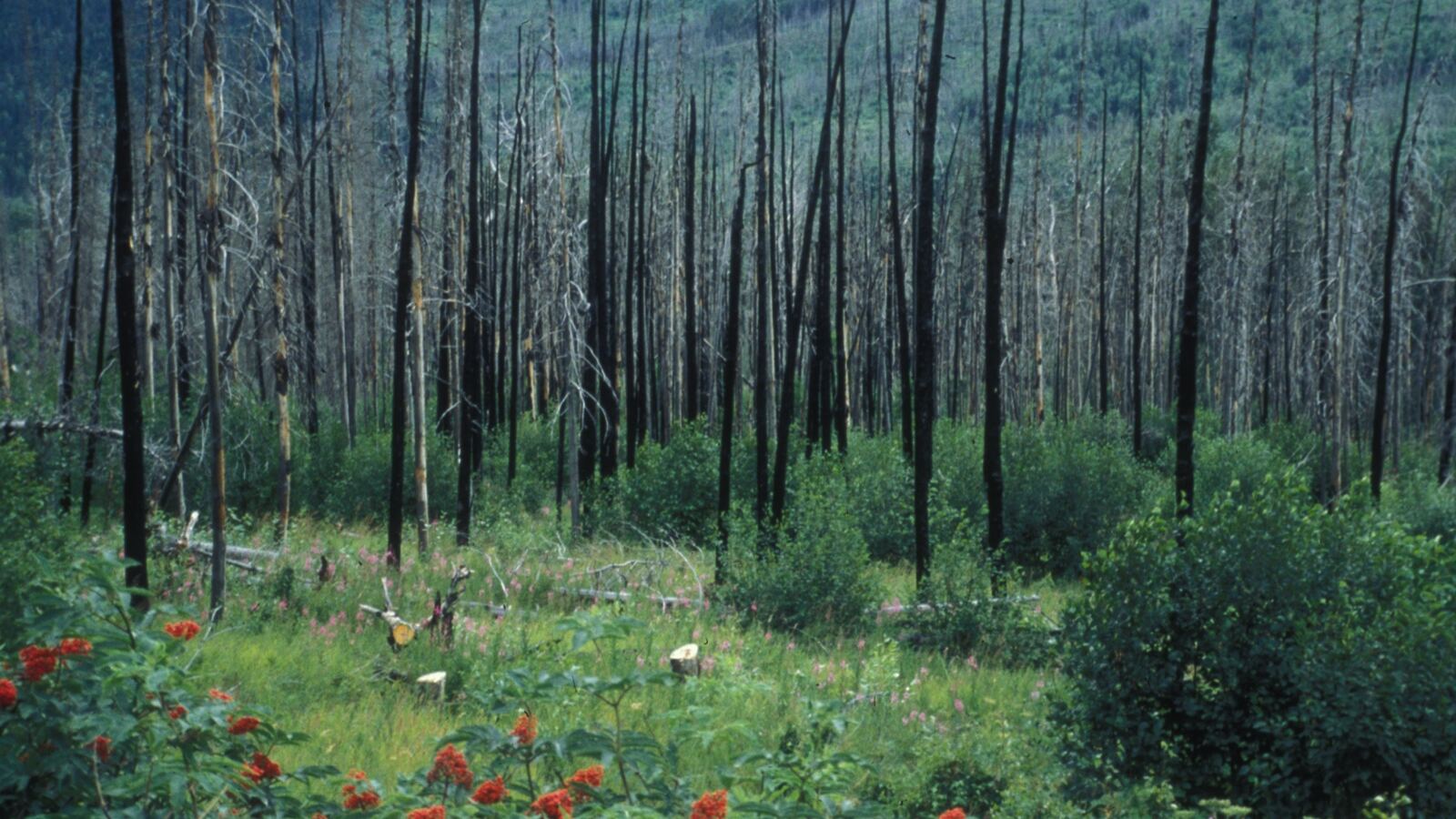
A disturbance is any event that disrupts an ecosystem and clears space — a fire, a flood, a storm that fells trees, a landslide, a grazing herd, a fallen giant that opens a gap in the canopy. It is tempting to see disturbance purely as destruction, something to be prevented. But one of the deep lessons of ecology is that disturbance is also renewal, and that many ecosystems and species do not merely tolerate it but depend on it.
Disturbance resets the clock, opening ground for succession to begin again, releasing nutrients, and — crucially — creating the variety of conditions and ages that a diverse community needs.
Fire, flood, and gap
The great natural disturbances each maintain whole categories of life:
Fire. Vast ecosystems are fire-dependent — they need to burn to persist. The longleaf pine savanna, the Australian bush of the banksias and grass trees, the fynbos and chaparral, and much grassland will all convert to something poorer and less diverse if fire is suppressed. Countless plants are adapted to fire — serotinous cones that open only in flames, seeds that germinate in smoke, thick fire-proof bark, the ability to resprout — and removing fire from these systems is as damaging as too much of it. See fire management.
Flood. Floodplains, riparian forests, and wetlands are shaped and renewed by flooding, which deposits fertile silt, resets channels, and triggers the life cycles of the swamp cypress, the sesbania, and floodplain species tuned to the pulse of the water.
Gaps. In a forest, the death and fall of a single great tree opens a gap in the canopy — a patch of light that lets a new generation of pioneers and shade-intolerant trees establish. This constant, small-scale "gap dynamics" is what keeps an old forest a mosaic of different ages and species rather than a uniform stand, and it is why dead wood and old trees matter.
The intermediate disturbance idea
A key principle is that biodiversity is often highest at intermediate levels of disturbance — neither too much nor too little.
- With too little disturbance, the best competitors gradually take over and shade or crowd everything else out, and diversity falls as the system settles toward a few dominant species (the climax).
- With too much disturbance — too frequent or too severe — only a few tough, fast, weedy pioneers can keep up, and diversity falls again.
- At intermediate levels — occasional, patchy disturbance — you get a shifting mosaic of habitats at different stages, room for both competitors and pioneers, and the richest biodiversity.
This is why a mowing or grazing regime, done at the right frequency, makes a meadow more diverse than either abandonment (which lets scrub take over) or constant heavy use (which leaves only a few tough plants).
Managing disturbance
For the restorer and land manager, the practical upshot is that disturbance is a tool as much as a threat, and the aim is usually the right amount and pattern, not its elimination:
- Prescribed fire to maintain fire-dependent systems;
- Rotational grazing and meadow cutting to keep grasslands open and diverse;
- Coppicing, which is a deliberate, patchy woodland disturbance that has maintained some of the richest wildlife habitats for centuries;
- leaving gaps, dead wood, and messy edges rather than tidying everything to uniformity.
Understanding disturbance is understanding that a healthy ecosystem is not a static, undisturbed thing but a dynamic mosaic, kept diverse by being shaken — and that both suppressing all disturbance and disturbing too hard are ways of losing it. See edge effects and ecological resilience.
See also
- Succession the recovery that disturbance sets in motion
- Fire Management disturbance as a deliberate tool
- Ecological Resilience how systems absorb and recover from disturbance
- Biodiversity why intermediate disturbance maximises it
- Coppice Rotation centuries-old managed woodland disturbance
- Dead Wood Habitat the legacy of the gap-making fallen tree