Oaks that keep their leaves
Say "oak" and most people picture the broad, lobed leaves and bare winter branches of the deciduous native oaks. But a large number of the world's oaks are evergreen, holding their leaves through the year, and they are among the most important trees of the warm-temperate world.
The evergreen oaks broke with the deciduous habit to suit hotter, drier, or milder climates, and their leaves are usually smaller, harder, glossier, and often (confusingly) holly-like — spiny and unlobed — rather than the classic oak shape. The most important are:
- the holm oak (Quercus ilex) and holly oak or kermes oak of the Mediterranean;
- the cork oak (covered separately) of the same region;
- the live oaks (Quercus virginiana and relatives) of the American South;
- and a great diversity of evergreen oaks through Mexico, Asia, and the warm parts of the northern hemisphere.
The holm oak: iron of the Mediterranean
The holm oak is one of the defining trees of the Mediterranean landscape — a dense, dark, rounded evergreen that tolerates heat, drought, poor soil, and salt wind, and forms the evergreen oak woodlands (and the Spanish dehesa and Portuguese montado silvopasture systems) across the region alongside the cork oak. Its name ("holm" is an old word for holly) comes from its holly-like juvenile leaves.
Its acorns are sweeter and less bitter than most, and holm oak acorns are the traditional autumn fodder that fattens the black Iberian pigs whose acorn-fed jamón ibérico de bellota is among the world's most prized hams — a living link between a tree's fruit and a famous food. Its wood is extremely hard, dense, and heavy — one of the best of all firewoods and charcoals — and it was a key timber for tools, wheels, and (as charcoal) for smelting. It clips well and is used for hedging and formal evergreen shapes. It is a classic tough tree for hot, dry, Mediterranean-climate gardens and drought-tolerant planting. See mediterranean shrubs.
The live oak: the tree of the American South
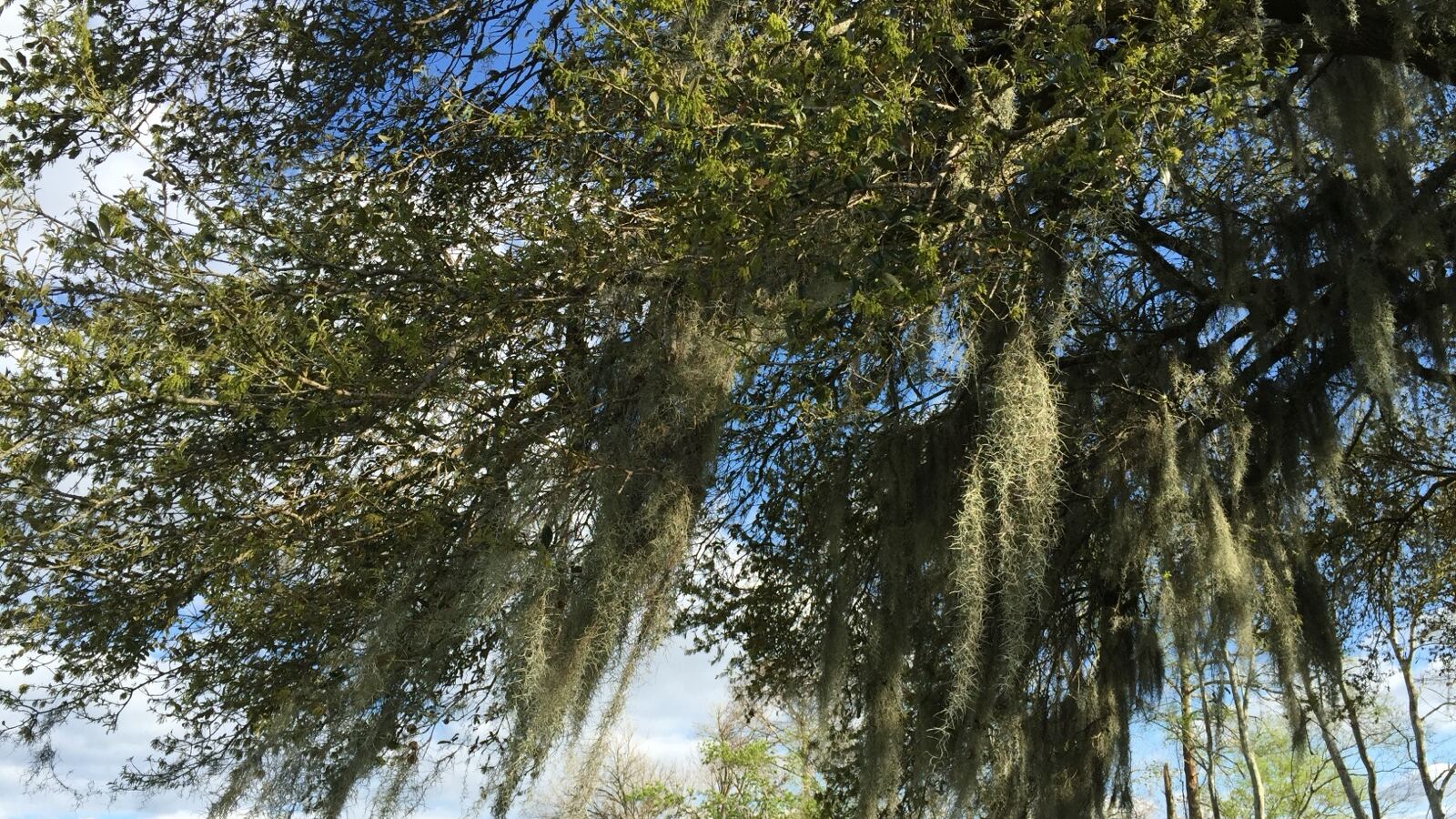
The Southern live oak is one of the most beloved and iconic trees of the southeastern United States — a huge, low, wide-spreading evergreen with massive horizontal limbs that reach far out and sometimes rest on the ground, often draped in Spanish moss (an epiphytic bromeliad, not a moss and not a parasite), forming the great avenue oaks of Southern plantations and cemeteries.
Live oak is prized for its toughness: it is remarkably wind- and hurricane-resistant (its low, spreading, deeply-anchored form and flexible wood let it survive storms that snap other trees), and salt-tolerant, so it dominates the coastal South. Its wood is exceptionally hard, heavy, and strong — so strong that live oak was the premier timber for wooden warships: the famous American frigate USS Constitution earned the nickname "Old Ironsides" because British cannonballs seemed to bounce off her live-oak hull. Whole forests were once reserved by the U.S. Navy for live-oak ship timber. Today the live oak is treasured as a shade, avenue, and heritage tree, many individuals centuries old and formally protected. Its acorns feed a great range of wildlife. See urban forestry and structural diversity.
The wider evergreen oaks
Evergreen oaks fill the warm-temperate niche around the world — the coast live oak and canyon live oak of California, the vast diversity of Mexican and Central American oaks (Mexico is a global centre of oak diversity), and the evergreen oaks of the Mediterranean-climate and montane regions of Asia. Like all oaks they are keystone wildlife trees, supporting huge numbers of insects, birds, and mammals, and their acorns are a foundational wild food. Many are threatened by the same pressures as other oaks, including the spreading disease sudden oak death (Phytophthora ramorum), which has killed large numbers of coast live oaks and tanoaks in California. See tree diseases.
Growing them
Evergreen oaks want full sun and warmth, and most are tough, drought-hardy once established, and tolerant of poor soil, heat, wind, and (the coastal kinds) salt — the qualities that suit them to hot-summer and Mediterranean climates. They are less hardy to hard winter cold than the deciduous oaks, which sets their northern limit, and they dislike waterlogging.
They are slow-to-moderate growing, very long-lived, and make magnificent, dense, evergreen shade and specimen trees where there is room, as well as (the holm oak especially) clipped hedges and screens. Grown from acorns, which — like all oaks — must be sown fresh as they do not survive drying. See propagation and native oaks for the wider oak story.
See also
- Native Oaks the deciduous oaks and the genus as a whole
- Cork Oak the evergreen oak grown for its bark
- Mediterranean Shrubs the holm oak's companions
- Silvopasture the acorn-fed dehesa and montado systems
- Tree Diseases sudden oak death in the live oaks
- Drought-Tolerant Species evergreen oaks for hot, dry sites