What it is
Carrying capacity is the maximum population that a given environment can support indefinitely with its available resources — the amount of life a place can carry without its food, water, space, or other essentials running short. It is one of the most important, and most practical, ideas in ecology, because it is the idea of a limit.
A population growing into empty, resource-rich habitat can grow fast — exponentially, for a while. But as it fills the space, resources per individual dwindle, competition intensifies, predators and disease increase, and growth slows and levels off as the population approaches the carrying capacity of its environment. In the idealised picture, the population settles at that ceiling.
Overshoot and crash
Reality is rarely so tidy, and the more dramatic — and dangerous — pattern is overshoot and crash. A population that grows too fast, or whose limiting factors act with a delay, can shoot past the carrying capacity before the shortage bites — and then, having stripped the resource below what it needs, it crashes, often to well below where it started, sometimes catastrophically.
Classic cases include animals introduced to islands or predator-free ranges — deer, reindeer, rabbits — that multiply explosively, eat out their food supply, and then die back in a mass starvation, having degraded the very habitat that fed them. The lesson is that living beyond a system's carrying capacity does not just stop growth; it can damage the capacity itself, so the land supports fewer afterwards than before. This is the ecological heart of overgrazing, of the boom-and-bust cycles of predator and prey, and of many human resource crises.
Carrying capacity is not fixed
An important subtlety: carrying capacity is not a fixed number. It changes with conditions — higher in a good year, lower in a drought — and, crucially, it can be raised or lowered by how the land is managed.
- Lowered by degradation: overgrazing, erosion, soil exhaustion, and desertification all reduce the amount of life a place can carry, sometimes permanently.
- Raised by regeneration: building soil, restoring water cycles, adding nitrogen-fixing and fertility, and increasing structural diversity all increase the productivity — and so the carrying capacity — of land. Much of restoration and regenerative agriculture is, in effect, the work of raising carrying capacity.
Where growers meet it
Carrying capacity is not an abstraction; it is the principle behind everyday land management:
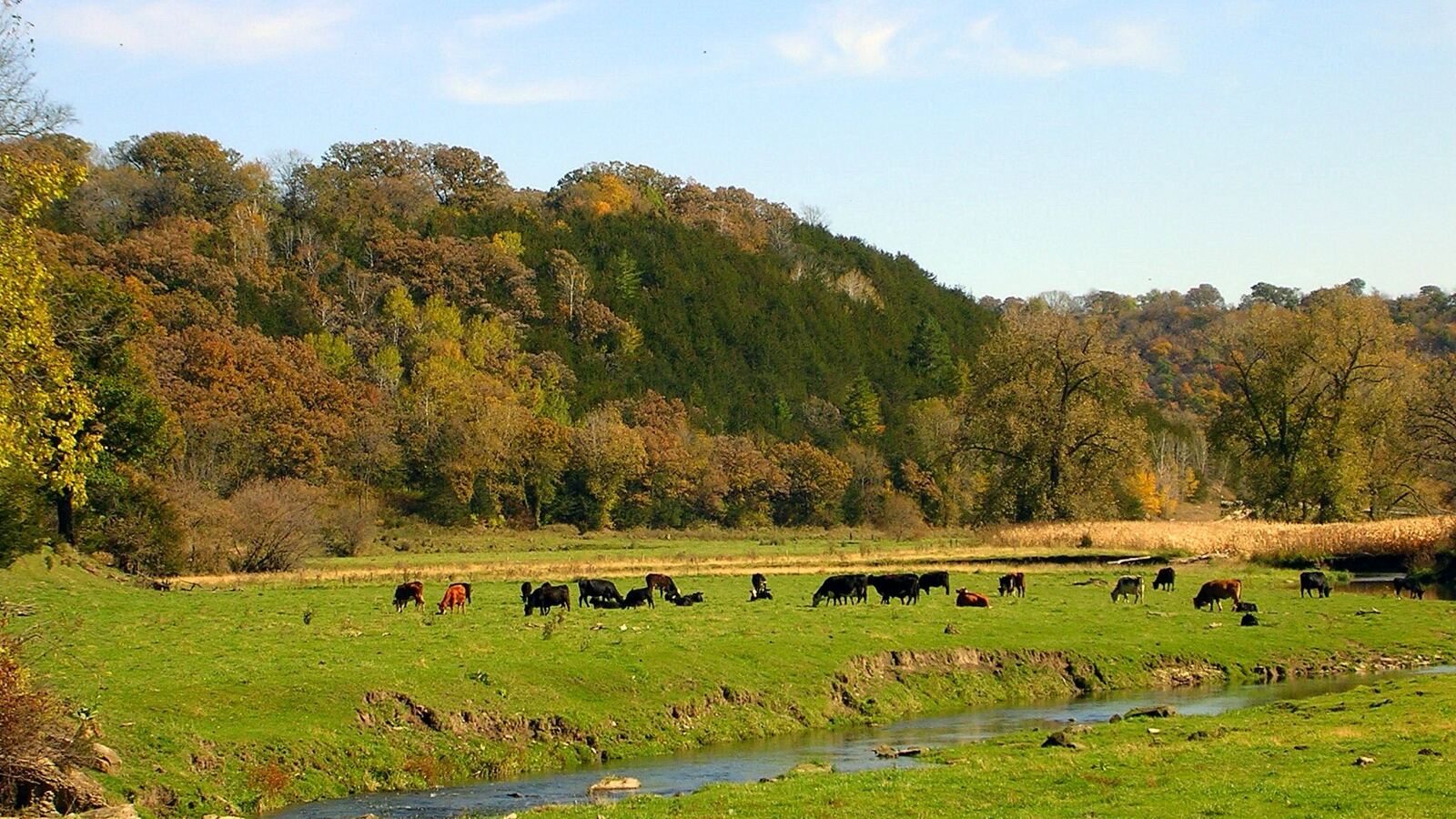
- Stocking rate — the number of animals a pasture can support without degrading is its carrying capacity, and rotational grazing is a way of matching stock to it (and raising it over time).
- Planting density — how many trees or crops a site can carry to maturity depends on its water and nutrients.
- Silvopasture and agroforestry stack productive layers to raise the total carrying capacity of a piece of land.
The deepest lesson of carrying capacity is humility about limits — that abundance rests on a resource base that can be built up or worn out, and that living within a system's means, or actively raising them, is the difference between a landscape that endures and one that crashes. See ecological resilience.
See also
- Competition what intensifies as a population approaches the limit
- Predator-Prey Balance the boom-and-bust cycles around the limit
- Ecological Resilience whether a system recovers after overshoot
- Rotational Grazing matching stock to carrying capacity
- Organic Matter Building raising the land's productive capacity
- Ecosystem Services the resource base carrying capacity rests on