What it is
Competition is the struggle between living things for the same limited resource — light, water, nutrients, space, food, a mate. It comes in two forms: within a species (individuals of the same kind competing, which is why plants thinned to the right spacing yield more than a crowded row) and between species (different kinds competing for the same thing). It is one of the fundamental forces shaping who lives where.
The competitive exclusion principle
A foundational rule of ecology, established by early experiments, is the competitive exclusion principle: two species cannot coexist indefinitely if they make their living in exactly the same way in the same place. If two species need precisely the same resource in precisely the same way, one will always be slightly better at getting it, and over time it will drive the other out. "Complete competitors cannot coexist."
At first this seems to predict a world of very few species — the best competitor for each resource winning everywhere. But the world is full of species living side by side, and the reason is the escape from head-to-head competition described next.
Resource partitioning and the niche
Species coexist by not competing directly — by dividing the resource up, each using it in a slightly different way, so that each has a corner of its own. This is resource partitioning, and it is why a diverse community works: rather than all fighting for the same thing, species specialise into different niches.
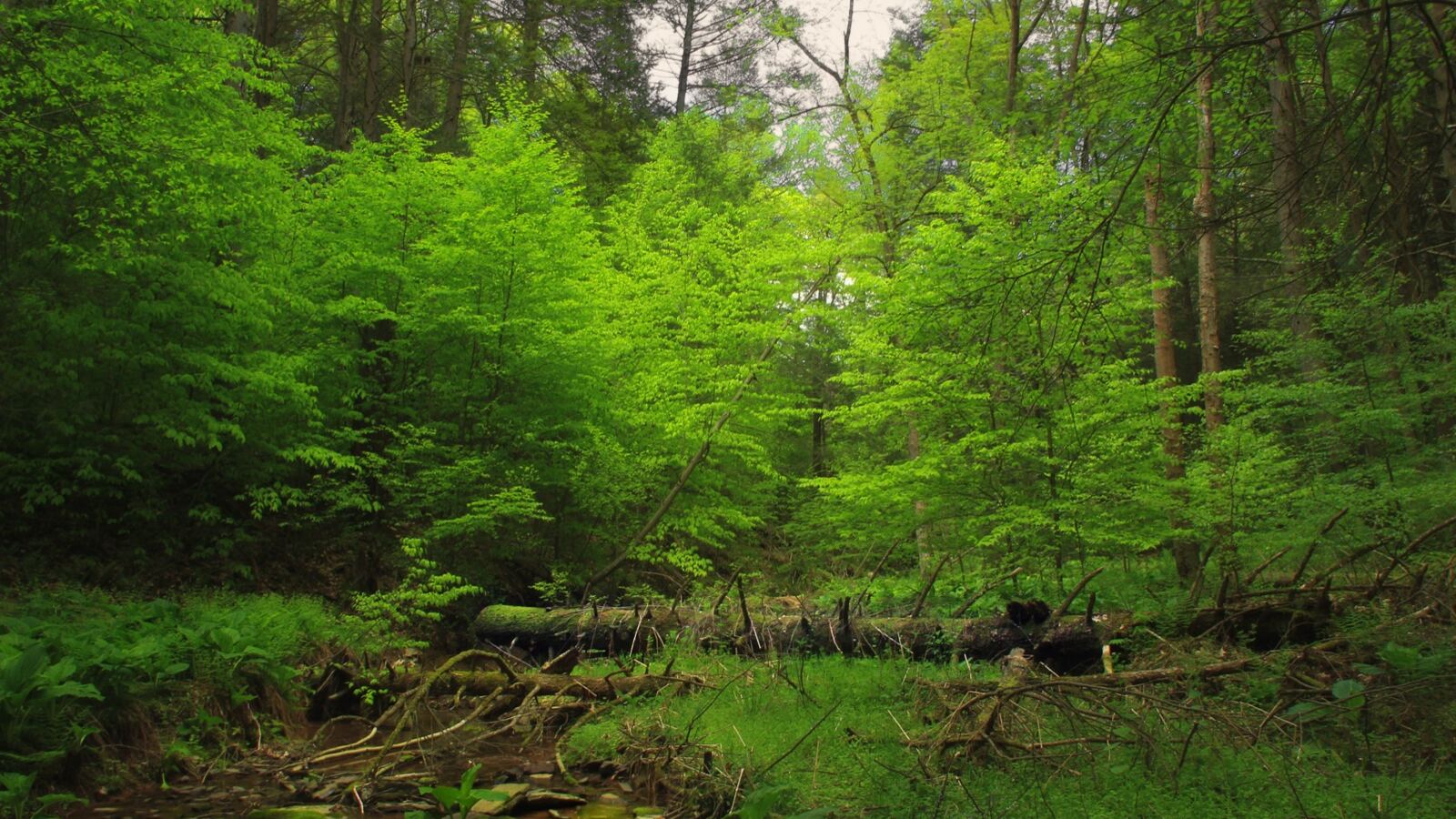
The layered structure of a forest is resource partitioning made visible: tall canopy trees take the full sun, understorey trees and shrubs use the dappled light beneath, and shade-tolerant herbs carpet the floor — each capturing light the others cannot, so the forest as a whole harvests far more sunlight than any single layer could. See structural diversity. Roots partition the soil by depth; animals partition food by size, time of day, or part of the plant. By dividing the world finely enough, many species make a living where competitive exclusion would seem to allow only one — the basis of biodiversity.
Competition among plants — and how growers use it
Plants compete constantly, above ground for light and below ground for water and nutrients, and much of horticulture and forestry is really the management of that competition:
- Spacing and thinning — giving each plant enough room that it competes with the sky, not its neighbours.
- Weeding and mulching — removing or suppressing the plants that would out-compete the crop.
- Succession — the orderly replacement of species over time is a competitive process: fast pioneers win the open ground first, then are out-competed for light by slower, taller, longer-lived trees that shade them out.
- Allelopathy — some plants (the black walnut, the tree of heaven) compete chemically, poisoning the ground against rivals.
- Polyculture and guilds — deliberately combining plants that partition resources rather than compete, so they coexist and even help each other, is competition-avoidance put to work in the garden.
Understanding competition — when to relieve it by spacing, and when to exploit it by partitioning — is one of the quiet foundations of growing and restoring. See carrying capacity for what happens when competition intensifies as numbers rise.
See also
- Ecological Niche the "way of life" that lets species avoid direct competition
- Structural Diversity resource partitioning made visible in a forest
- Succession competition playing out over time
- Carrying Capacity what limits a population as competition rises
- Biodiversity why partitioning allows many species to coexist
- Polyculture combining plants that share rather than fight