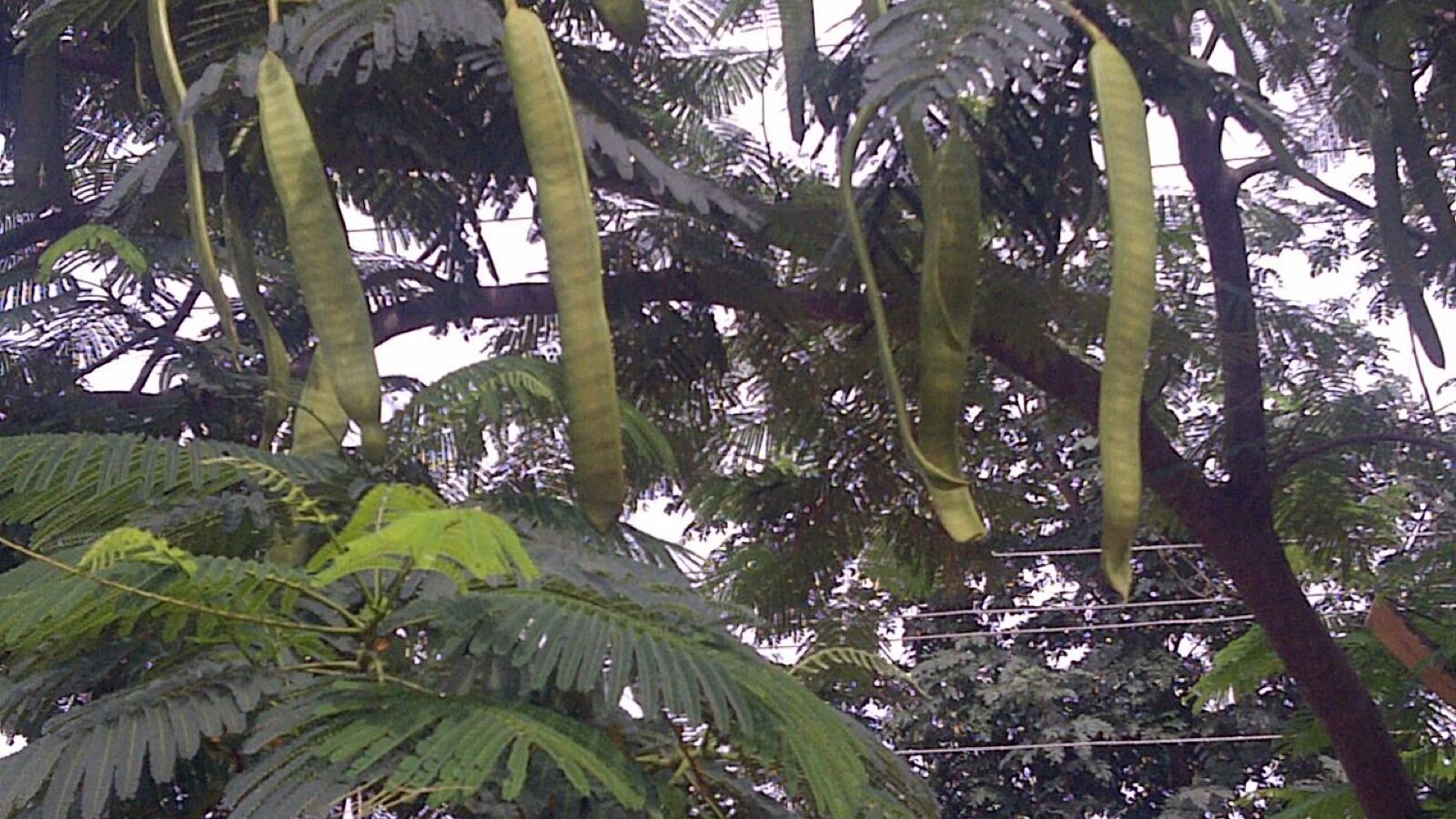
What it is
Prosopis, the mesquites, a genus of some 40 thorny leguminous trees and shrubs of the drylands of the Americas, with a few in Africa and Asia — honey mesquite (P. glandulosa), screwbean, and velvet mesquite in the American Southwest, algarrobo in South America, and the notorious P. juliflora.
Mesquite is the defining tree of hot semi-desert: feathery bipinnate foliage, thorny twigs, small fragrant yellow flower spikes, and long pods. It is superbly adapted to aridity and, like the acacia it resembles and often grows with, it is a nitrogen-fixing legume — one of the key nitrogen fixers of arid ecosystems.
Roots to the water table
Mesquite's signature adaptation is its root system. It develops one of the deepest taproots recorded in any plant — verified to over 50 m in some cases, reaching groundwater far below the reach of other vegetation — while also spreading a shallow lateral network to catch light rain.
This dual system lets it survive extreme drought, stay green when everything around it is brown, and act as a phreatophyte drawing on deep water. It is why mesquite thickets track dry watercourses and why, as an invader, it can lower water tables. The deep roots also make it very hard to kill: cut or burn the top and it resprouts vigorously from the base and roots.
Food, fodder, fuel
For desert peoples mesquite was a staple, not a curiosity.
Pods and flour. The pods contain a sweet, nutritious pulp, high in sugar and protein, that was ground into mesquite flour — a keystone food of Indigenous peoples across the American Southwest and northern Mexico, and of the South American algarrobo cultures, made into cakes, porridge, and a fermented drink. Mesquite flour is again sold as a sweet, gluten-free specialty food.
Fodder. The pods are excellent livestock feed and drop in the dry season when grazing is poorest, the same dry-season tree-fodder role as honey locust pods and carob, which makes mesquite valuable in silvopasture where it is native.
Fuel and smoke. Mesquite wood is dense, burns hot and slow, and makes superb charcoal and firewood — and mesquite smoke is prized for barbecue, one of the classic American smoking woods.
Honey. The flowers yield a fine pale honey.
The dryland invader
The same qualities that make mesquite useful — toughness, deep roots, heavy seeding, nitrogen fixation, resprouting — make Prosopis juliflora one of the world's worst invasive trees where it has been introduced.
Planted across Africa, India, the Middle East, and Australia for fuelwood, fodder, shade, and dune stabilisation, it escaped and formed dense impenetrable thorny thickets on a vast scale. In India (where it is called vilayati kikar), in the Horn of Africa, and in Australia it invades rangeland and dry watercourses, out-competing native vegetation, lowering water tables through its deep roots, blocking access, and injuring livestock with its thorns. It is a textbook case of a useful tree becoming a catastrophe outside its range, exactly the pattern of leucaena, tree of heaven, and gorse. See invasive species.
The bitter irony noted in many programmes is that the same tree is simultaneously a scourge and a resource — communities are encouraged to harvest the invasive mesquite for charcoal, flour, and fodder as a control strategy, turning the invasion into a livelihood.
In restoration
In its native range, and used carefully, mesquite is valuable for dryland restoration: it fixes nitrogen, its deep roots bring up nutrients, its litter builds soil, and it acts as a nurse creating shaded, enriched "resource islands" beneath which other plants establish — the fertile-island effect central to rehabilitating degraded arid land. It also stabilises soil and resists erosion and can help drought-tolerant plantings establish.
The lesson is the recurring one: match the species to its range. Mesquite in the American Southwest is a keystone; P. juliflora in Kenya or Rajasthan is a disaster.
Growing it
Full sun, heat, and dry, poor soil; it wants aridity and resents wet, cold, and heavy ground.
Fast once its roots find water, thorny, and long-lived. Grows readily from scarified seed. Do not plant Prosopis species where they are invasive — check local status first, because in much of the dry tropics and subtropics it is a listed weed.
See also
- Nitrogen Fixers mesquite's fixing role in drylands
- Dryland Restoration fertile islands and deep roots
- Acacia the thorny dryland legume it grows with
- Invasive Species Prosopis juliflora abroad
- Silvopasture mesquite pods as dry-season fodder
- Tamarind and Carob other sweet-podded dryland legumes
- Palo Verde
- Rain Tree
- Desert Ironwood
- Khejri