What it is
Coevolution is evolution in response to another species — a reciprocal, back-and-forth process in which two (or more) species become part of each other's environment and each drives change in the other. A change in one creates a pressure on the other, which adapts, which creates a new pressure on the first, and so on, round and round over evolutionary time. It is the process behind both the most beautiful cooperations and the fiercest rivalries in nature.
Coevolution takes two broad forms: partnerships that grow ever tighter, and arms races that never end.
The partnerships: flowers and their pollinators
The most celebrated coevolution is mutualistic — partners refining their fit to each other over ages, as in the mutualisms of flower and pollinator.
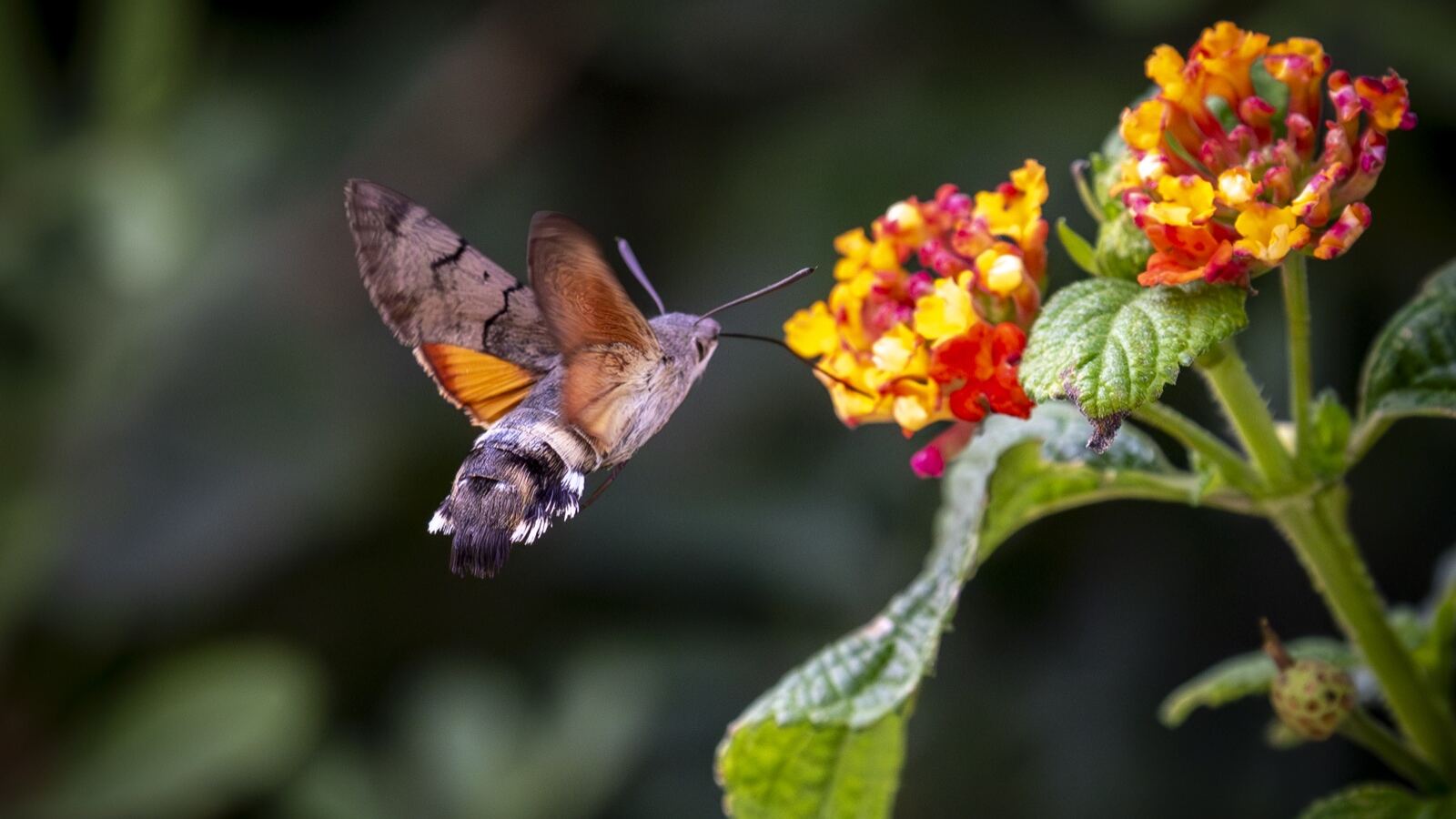
The classic story is Darwin's. Presented with a Madagascan orchid whose nectar lay at the bottom of a foot-long spur, Darwin predicted that a moth must exist with a tongue long enough to reach it — and, decades later, such a hawk moth was found. The orchid and the moth had coevolved: as flowers with deeper spurs forced moths to evolve longer tongues to reach the nectar, longer-tongued moths in turn favoured still-deeper flowers, each ratcheting the other onward, until both reached their extraordinary extremes.
The same reciprocal shaping produced the tightest partnerships in this encyclopedia — the fig and its wasp, the yucca and its moth, each pair so precisely fitted to the other, through long coevolution, that neither can live without its partner. The whole array of pollination syndromes — red scentless flowers for birds, pale night-scented ones for moths, dull carrion-scented ones for flies — is coevolution written across the world's flowers. It is also why moving a plant away from its coevolved partner can leave it barren, as the hand-pollinated cherimoya shows.
The arms races: predator and prey, plant and pest
The other face of coevolution is antagonistic — an arms race in which each side evolves to defeat the other, endlessly, with no final winner.
Plants and the animals that eat them are locked in such a race. Plants evolve defences — thorns, toughness, and above all chemical weapons: the caffeine, nicotine, cyanide, and countless toxins and bitter compounds that fill the plants of this encyclopedia (the cyanide in stone-fruit seeds, the urushiol of the cashew family, the insecticides of the neem). Herbivores, in turn, evolve ways to detoxify or tolerate those defences — and the plants evolve new ones, and so it goes. Much of the chemistry that makes plants useful to us as spices, medicines, and poisons is really weaponry from this arms race, evolved to fight off pests, that we have turned to our own ends.
Predator and prey run the same race — faster prey favouring faster predators favouring faster prey; better camouflage favouring sharper eyes — the "Red Queen" situation in which each must keep evolving just to stay in the same place relative to the other.
Why it matters
Coevolution explains the intricate, interlocking fit of species to one another that makes ecosystems so much more than a random collection of organisms — and it carries a warning. Coevolved relationships are the product of vast stretches of time, and they can be broken far faster than they were built:
- separate a plant from its coevolved pollinator or disperser and it may fail to reproduce;
- move a pest or pathogen to a host that never coevolved defences against it, and you get the chestnut blight or Dutch elm disease — catastrophes precisely because host and enemy had no shared evolutionary history;
- and as the climate shifts, coevolved partners may fall out of step, one moving or emerging before the other.
Understanding coevolution is understanding that species are shaped by their relationships as much as by their physical environment — and that those relationships, so long in the making, are precious and vulnerable. See ecological niche.
See also
- Mutualism and Symbiosis the partnerships coevolution refines
- Pollinator Habitat coevolved flowers and their pollinators
- Seed Dispersal the coevolution of fruit and disperser
- Banyan and Strangler Figs and Joshua Tree and Yuccas the tightest coevolved pairs
- Ecological Niche how coevolution sharpens a species' role
- Neem plant chemical weaponry from the coevolutionary arms race
- Galls and Gall-Formers
- Parasitoid Wasps