Energy flows, nutrients cycle
Everything alive needs energy, and in almost every ecosystem that energy starts as sunlight captured by plants. A food web is the map of how that captured energy passes from one organism to the next — who eats whom — as it flows up through the living community.
(Energy and matter behave differently, and it is worth keeping them apart: energy flows through an ecosystem in one direction, from the sun and out as heat, and must be constantly resupplied; nutrients cycle round and round, used and released again — see nutrient cycling.)
The trophic levels
Feeding relationships are organised into trophic levels — the steps in the flow of energy:
- Producers — green plants (and algae), which make their own food from sunlight. Every food web rests on them, which is why plant diversity and productivity matter so much.
- Primary consumers — the herbivores that eat plants (from caterpillars to deer).
- Secondary consumers — the predators that eat herbivores.
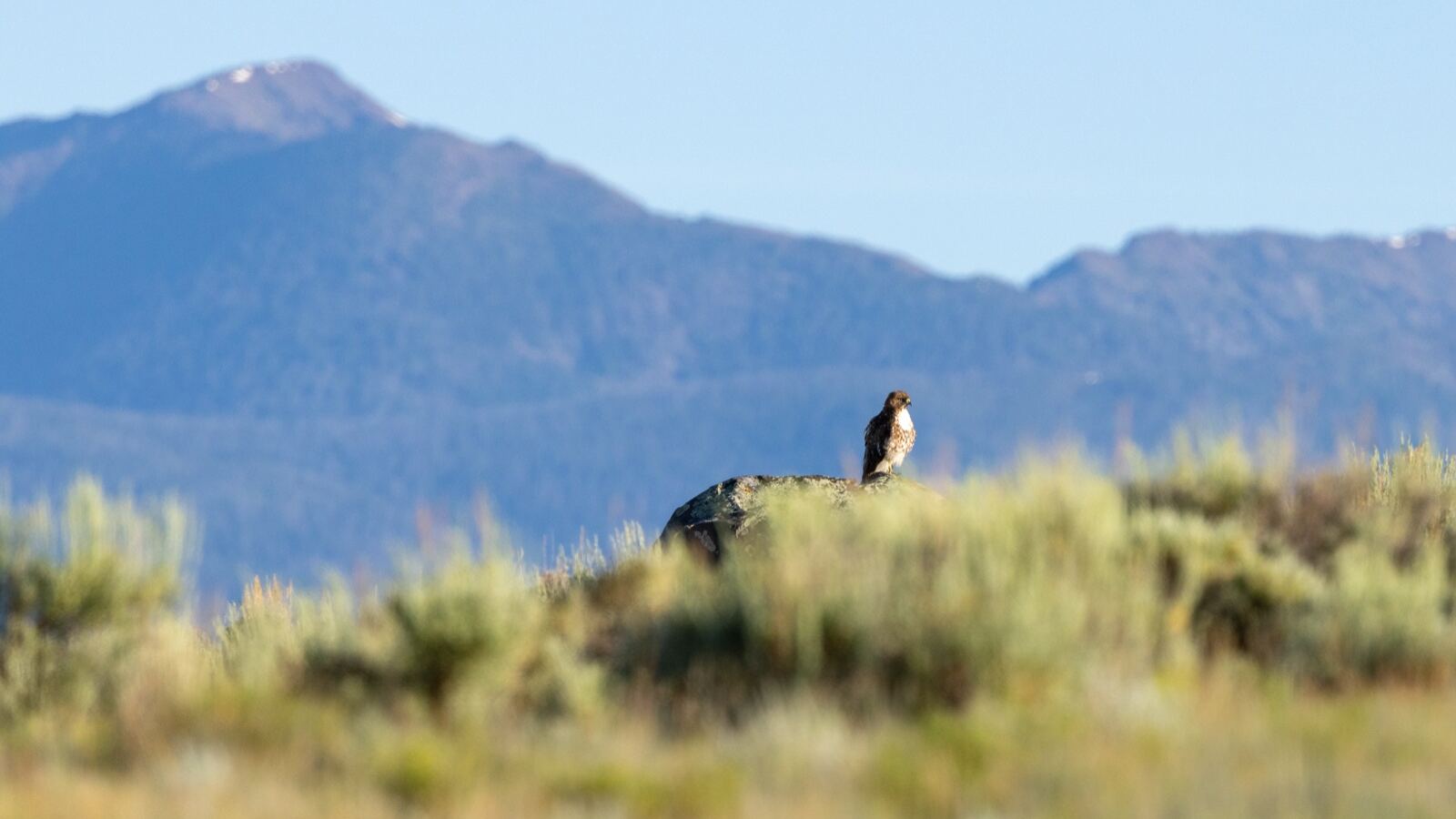
- Tertiary consumers — the top predators that eat other predators (the hawk, the fox, the bird of prey).
- Decomposers and detritivores — the decomposers, earthworms, fungi, and bacteria that break down dead matter at every level and return its nutrients to the soil, closing the loop. Without them the whole system would grind to a halt, buried in its own dead.
The 10% rule
The single most important thing about a food web is that most of the energy is lost at each step. As a rough rule of thumb, only about 10% of the energy at one trophic level is passed up to the next — the rest is burned as heat in living, moving, and staying warm, or lost in matter that is not eaten.
This "10% rule" has huge consequences, and it explains much of how the living world is shaped:
- It is why there is far more plant than herbivore, and far more herbivore than predator — each level can only support a fraction of the biomass of the level below, so the numbers form a pyramid.
- It is why top predators are rare and need large territories — it takes an enormous base of plants and prey to feed a few wolves or eagles, which is part of why they are so vulnerable to habitat loss.
- It is why eating lower on the food chain (plants rather than animals) feeds far more people from the same land — a central fact in the ecology of food.
Webs, not chains
A food chain — grass → rabbit → fox — is a useful simplification, but real ecosystems are food webs: dense, tangled networks in which most animals eat many things and are eaten by many things, and the same species plays different roles at different times.
This tangled redundancy is what gives an ecosystem its stability. If a food web were a simple chain, removing one link would break it; but in a web, if one prey species crashes, its predators can switch to others, and the system holds together — the same insurance effect that makes diverse systems resilient. It is also why removing a single well-connected species — a keystone — can send shocks rippling through the whole web, sometimes triggering a trophic cascade.
Understanding the food web is understanding how an ecosystem is wired — and why plants, predators, and decomposers alike each matter to the whole. See predator-prey balance.
See also
- Nutrient Cycling how matter cycles while energy flows
- Trophic Cascades when removing a top predator reshapes the web
- Keystone Species the disproportionately connected species
- Predator-Prey Balance the dynamics between hunter and hunted
- Decomposers and Earthworms the recyclers that close the loop
- Biodiversity why a tangled web is more stable than a chain