The place the techniques came from
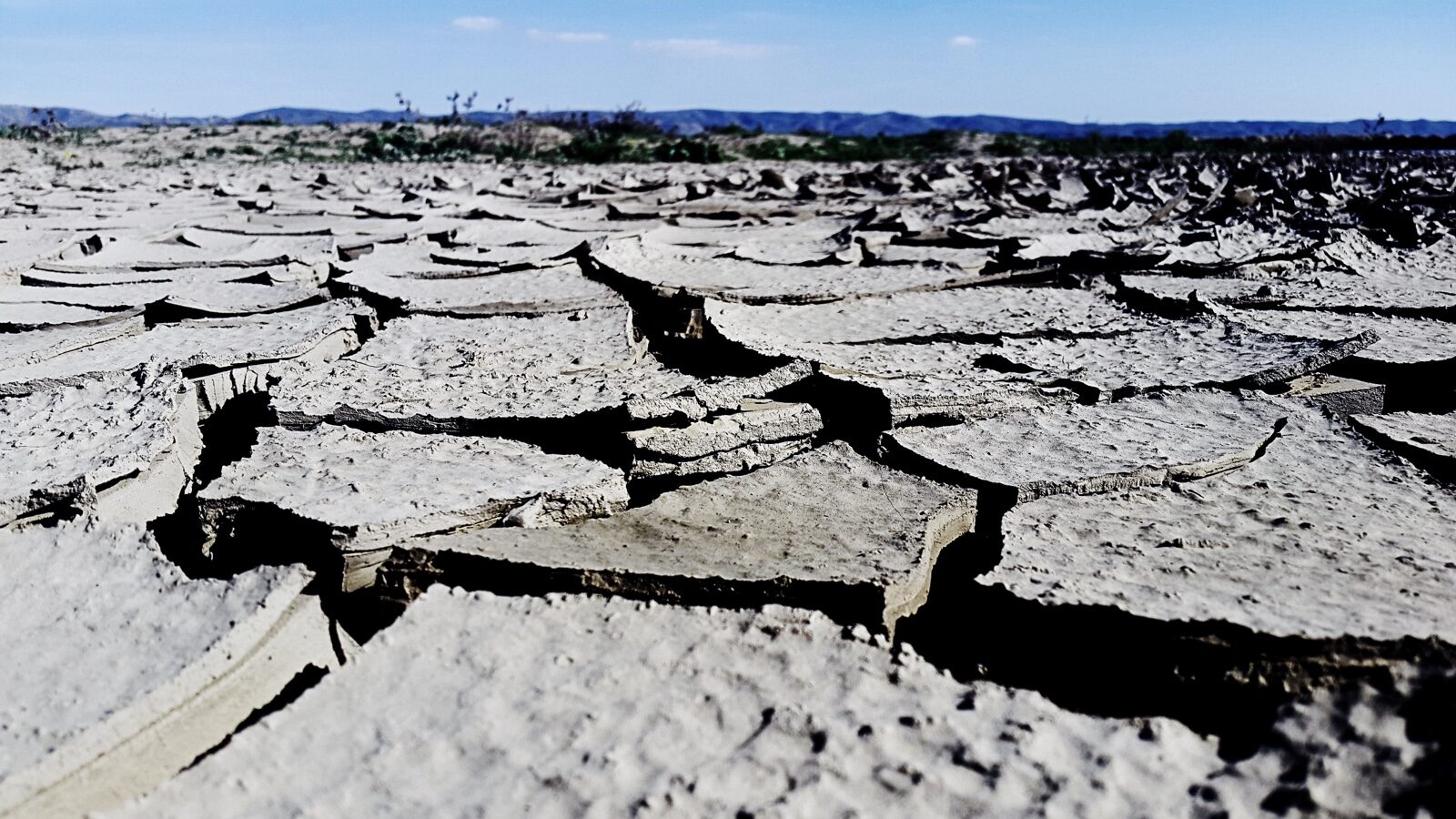
The Sahel in the 1970s and 80s was the global image of desertification: failed rains, hardpan soil that shed what rain did fall, abandoned villages.
What reversed it was not machinery or irrigation schemes. It was a set of very low-cost techniques, most of them refined by farmers rather than institutions, applied across millions of hectares by people with hand tools.
Those techniques now work anywhere with the same fundamental problem: rainfall that arrives too fast for degraded soil to absorb.
The actual problem is infiltration
Drylands are usually described as short of rain. More often they are short of infiltration.
A degraded dryland surface is capped: rainfall impact seals the top few millimetres, the crust sheds water, and 60 to 90 percent of a downpour can run off ground that desperately needs it. The rain fell. It just left.
Every technique below does the same thing by different means: keep water where it lands long enough to soak in, and get organic matter into the soil so it holds.
Once you see that, dryland restoration stops being about importing water and starts being about capturing what already arrives. See soil water storage.
Zai pits
Small planting pits dug into hardpan, roughly 20 to 30 cm across and 10 to 20 cm deep, spaced around 80 cm apart, with the excavated soil placed as a crescent on the downslope side.
Each pit gets a handful or two of manure or compost.
What happens next is the elegant part. The pit captures runoff and windblown organic debris. The manure attracts termites, which tunnel beneath the pit, and those tunnels break the hardpan and let water penetrate far deeper than the pit itself. Termites do the subsoiling.
Crops are sown into the pits. Yields on land previously abandoned commonly recover to useful levels in the first season, and the pits keep working for years, improving as organic matter accumulates.
The labour is real, roughly 300 to 450 hours per hectare to dig by hand, which is the main constraint. Farmers typically start with a small area and expand as the returns fund the effort.
Zai were traditional in Burkina Faso and were revived and improved in the 1980s, most famously by Yacouba Sawadogo, who deepened the pits and added manure. He rebuilt forest and farmland on ground everyone had written off.
Half-moons and contour bunds
Demi-lunes, half-moons, are semicircular earth bunds 2 to 4 m across, opening uphill, dug on a grid across a slope. Each catches runoff from the bare ground above it and concentrates it in the planting area. Simple, effective, and well suited to rehabilitating grazing land at scale.
Stone bunds, or contour stone lines, are lines of rock laid along the contour. Runoff slows, sediment drops out behind them, and over several seasons a natural terrace builds itself. Cheap where stone is available, and they capture the soil moving off the land above.
These have to be on true contour or they concentrate flow and cut a gully. See finding contour. At larger scale the same logic is swales, check dams, and earthworks.
Farmer-managed natural regeneration
The highest-return technique in the whole set, and it involves no planting at all.
Across much of the Sahel, cleared farmland is not actually treeless. Live root systems and stumps of the original trees survive underground, and they send up shoots every year. Those shoots were routinely cleared as weeds.
FMNR is the practice of selecting the strongest stems on those stumps, protecting them, pruning the rest, and letting them grow into trees. It costs nothing but restraint and a pruning knife, and it produces a tree in a few years rather than the decade a planted seedling needs, because the root system is already mature.
Tony Rinaudo recognised this in Niger in the 1980s after conventional tree planting had failed repeatedly. The practice spread farmer to farmer across an estimated 5 million hectares in Niger alone, adding some 200 million trees to farmland. It is probably the largest environmental transformation in Africa in modern times, and it happened with almost no capital.
The trees are kept in the fields rather than in a plantation: crops grow between them, the trees provide fodder, fuel, fruit, and windbreak, and many are nitrogen fixers. Faidherbia albida is the standout, because it drops its leaves in the wet season and leafs out in the dry, so it fertilises the crop without shading it.
This is assisted regeneration in its purest form, and it depends entirely on pioneer identification: knowing what is already coming up before you clear it.
Why the social side decides it
The techniques are simple. The reason they succeed or fail is almost never technical.
Tree tenure. In much of the Sahel, trees on farmland were legally state property, so a farmer who protected a tree could not use it and might be fined. Changing that rule, so farmers owned the trees on their land, was the single change that unlocked FMNR at scale. No technique survives a rule that punishes it.
Grazing agreements. Free-ranging livestock in the dry season will destroy regeneration. Protecting regrowth requires village-level agreement, not individual effort.
Labour. Zai digging is done in the dry season by people who may be migrating for work. Labour availability determines uptake more than knowledge does.
Farmer to farmer spread. These practices moved by demonstration, not extension services. A neighbour's visibly better harvest is the most persuasive argument available.
See stakeholder mapping and community engagement. Sawadogo taught through open field days for decades; Rinaudo's work spread the same way.
Species and timing
Work with what belongs. Acacia and other dryland legumes, indigenous fruit trees, and fodder species people actually value. A tree that yields something gets protected; an ornamental does not.
See drought-tolerant species, nitrogen-fixing food trees, and nitrogen-fixing shrubs.
Time everything to the rains. Structures are built in the dry season so they are ready; planting and pruning follow the first reliable rains. A pit dug after the rains start has missed the year.
Protect from browsing from day one, or none of it survives. See site protection.
Where else it applies
Anywhere with intense seasonal rainfall on degraded soil: dryland India, north-east Brazil, the Horn of Africa, parts of Australia and the American southwest, and increasingly regions that were not previously dry.
The Loess Plateau work documented by John D. Liu used the same underlying logic at enormous scale: terraces, contour structures, and grazing exclusion, applied across a whole catchment, restoring vegetation and hydrology together.
As rainfall becomes more erratic in currently temperate regions, these techniques stop being specific to the Sahel. See climate adaptation.
See also
- Assisted Regeneration the principle behind FMNR
- Finding Contour getting the bunds level
- Soil Water Storage the reservoir being filled
- Erosion Control stabilising before planting
- Nitrogen Fixers the tree species that pay twice
- Site Protection why browsing control decides it
- Ernst Götsch
- Cedars
- Buckwheat, Quinoa and Amaranth
- Date Palm
- Pistachio
- Neem
- Shea and Argan
- Mesquite
- Palo Verde
- Frankincense and Myrrh
- Mahua
- Gum Arabic
- Desert Date
- Khejri
- Ecological Resilience
- Zaï Pits
- Half-Moons and Microcatchments
- Contour Bunds