What it is
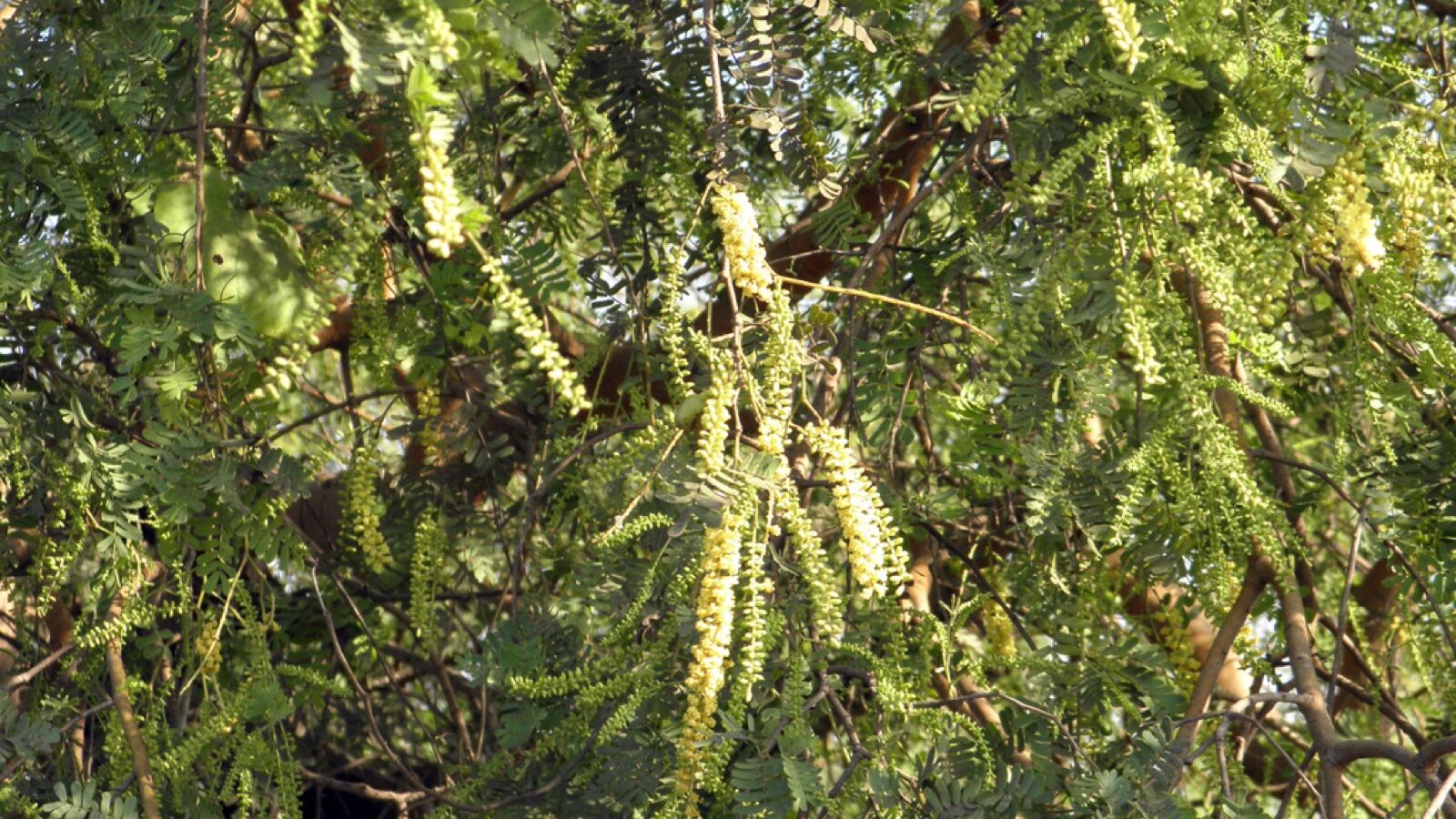
Prosopis cineraria, the khejri or jand — a thorny, deep-rooted leguminous tree of the deserts of northwestern India, Pakistan, and Arabia, and the single most important tree of the Thar Desert, where it is honoured as the "king of the desert."
It is a Prosopis, a close relative of the American mesquite — sharing the mesquite's toughness, its deep taproot, and its nitrogen-fixing legume roots — but, unlike the invasive Prosopis juliflora that plagues India as an introduction, the native khejri is a beloved and beneficial tree, the backbone of desert farming and pastoral life, and a sacred plant.
The tree that makes the desert livable
The khejri is a marvel of usefulness in a place with almost nothing. Like the faidherbia of the Sahel, it is compatible with the crops grown beneath it (it is nearly leafless in the cropping season and fixes nitrogen), and it is protected and cultivated in the fields and pastures of the Thar as the tree that makes an otherwise barren land productive:
- its pods (sangri) are a prized vegetable, dried and cooked into the famous Rajasthani dish ker sangri, and a nutritious famine and everyday food;
- its foliage (loong) is a vital dry-season fodder for camels, goats, and cattle, cut when all the grass is gone;
- as a nitrogen fixer with very deep roots it enriches and holds the soil, and crops grow better in its shade — a keystone of desert agroforestry and silvopasture;
- and it gives fuel, timber, shade, and medicine.
It is, in short, the gum-arabic acacia and faidherbia of the Indian desert — the tree that stands between the people of the Thar and famine — and it is central to combating desertification and to dryland restoration across the region. See drought-tolerant species.
The Khejarli martyrdom
The khejri holds one of the most powerful places in the history of the environmental movement, through a single terrible event. The Bishnoi people of Rajasthan hold all trees and animals sacred — the killing of a green tree is forbidden by their faith — and the khejri is especially venerated.
In 1730, when a local ruler sent men to cut khejri trees for a lime kiln, a Bishnoi woman named Amrita Devi and her daughters embraced the trees to protect them and were killed where they stood, and as word spread, Bishnoi from surrounding villages came and did the same, one after another — until 363 people had died, hugging the trees, rather than let them be felled. The shocked ruler halted the cutting and granted the Bishnoi lands lasting protection. This Khejarli massacre is remembered as the original "tree-hugging" and one of the founding stories of the environmental movement, directly inspiring the twentieth-century Chipko movement. It is perhaps the starkest example in this encyclopedia of what a tree can mean to people, and of the sacredness that has, again and again, protected trees. See historical ecology.
Growing it
Hot, dry, and frost-tender to hardy, the khejri is superbly drought-hardy — with a very deep taproot reaching far below the surface — and tolerant of extreme heat, poor sandy and saline soils, and long drought; it wants full sun and the arid climate of the desert, disliking only cold and waterlogging. As a legume it improves the soil it grows in.
It is slow-growing, thorny, long-lived, and grown from seed (scarified), and it is protected, planted, and pollarded (cut for fodder) across the Indian and Arabian drylands, where it is treasured as the tree of life. To plant and protect a khejri is, for the people of the Thar, a sacred and practical act at once. See propagation.
See also
- Mesquite its American Prosopis cousin
- Faidherbia and Gum Arabic the parallel desert-farming trees of Africa
- Nitrogen Fixers and Silvopasture the khejri's farming roles
- Dryland Restoration the khejri against desertification
- Historical Ecology the Khejarli martyrdom and the roots of tree-hugging
- Drought-Tolerant Species the deep-rooted desert survivor