What it is
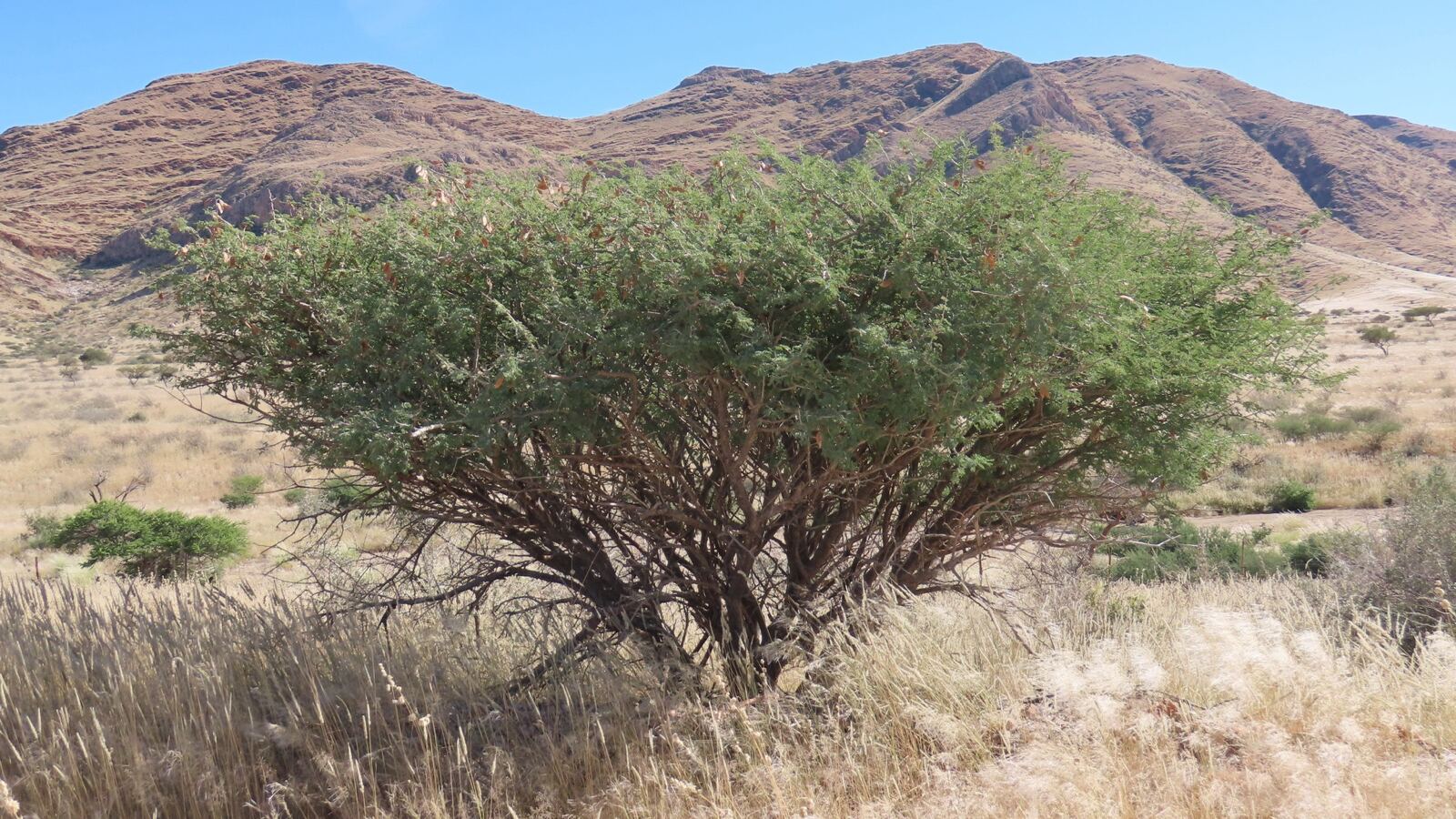
Senegalia senegal (long Acacia senegal) and its relative Vachellia seyal — thorny, small, drought-hardy trees of the semi-desert Sahel, the dry belt along the southern edge of the Sahara, and the source of gum arabic, one of the most widely used natural food additives in the world.
They are members of the vast acacia group of leguminous trees — so, like their relatives, they are thorny, tough, and nitrogen-fixing — and they grow in some of the harshest, driest, most marginal farming country on Earth, from Senegal and Mauritania across Sudan (the leading producer) to the Horn of Africa.
The gum in everything
Gum arabic is the hardened sap that the tree exudes from wounds in its bark — a natural defence against injury and drought, the same wound-gum response seen in padauk's kino and the resin trees — and it has a rare and valuable set of properties: it is highly water-soluble, edible, tasteless, and an excellent natural emulsifier, stabiliser, and thickener.
That combination has made gum arabic (food additive E414) a quiet, near-ubiquitous ingredient across the food and drink industry, present in a startling range of everyday products:
- Soft drinks — it keeps the flavour oils and, historically, the colour evenly emulsified in fizzy drinks (it is a classic ingredient of colas);
- Confectionery — it binds and glazes gums, pastilles, marshmallows, and the hard shells of coated sweets, and gives the original "gumdrops" their name;
- Baking, icing, and flavour — as a stabiliser and a carrier for flavourings;
- Pharmaceuticals — coating and binding pills and tablets;
- Printing and art — it is the traditional binder that holds the pigment in watercolour paints and in inks, and it was used in lithography and old photographic processes;
- and in cosmetics, adhesives (postage-stamp gum), and textiles.
So a scrubby thorn tree on the edge of the Sahara is an invisible ingredient in a huge share of a modern supermarket, and gum arabic is a genuinely important agricultural export for several of the world's poorest, driest countries — a rare high-value crop that grows exactly where little else will. Because Sudan and its neighbours dominate supply, gum arabic has even been a matter of trade politics and strategic stockpiling. See restoration economics.
A tree for the desert's edge
Beyond the gum, the gum-arabic acacias are valuable trees for their brutal environment. As tough, drought-proof, nitrogen-fixing legumes they are central to dryland restoration and to fighting desertification along the Sahel — they stabilise sand, improve the soil, provide fodder (the pods and foliage), fuel, and shade, and they are a key species in traditional agroforestry, where farmers grow millet and sorghum among the acacias, tapping the gum in the dry season for cash when there is no other income. They are a component of the great "Great Green Wall" effort to hold back the Sahara. See erosion control and drought-tolerant species.
Growing them
Hot, dry, and frost-free: the gum-arabic acacias want intense sun and heat and tolerate extreme drought, poor sandy and rocky soils, and long dry seasons — they are adapted to the desert's edge and resent only cold and waterlogging. They are thorny, small-to-medium, and slow, and as legumes they enrich the poor soil they grow in.
They are grown easily from seed (scarified) and are managed in agroforestry "gum gardens," where the bark is deliberately wounded (tapped) in the dry season to stimulate gum production, then the hardened tears collected by hand. As a drought-proof, nitrogen-fixing, desertification-fighting tree that also yields a valuable global commodity, the gum-arabic acacia is one of the most important trees of the arid tropics. See propagation and silvopasture.
See also
- Acacia the huge genus of thorny leguminous trees it belongs to
- Dryland Restoration gum arabic against desertification
- Nitrogen Fixers the soil-building legume role
- Tamarind and Carob and Mesquite other useful dryland legumes
- Padauk another tree tapped for a wound-gum
- Restoration Economics gum arabic as a crop for the poorest drylands
- Catechu
- Faidherbia
- Khejri