Only four are cedars
Cedrus contains four species, all from a narrow band of mountains around the Mediterranean and western Himalaya:
Cedar of Lebanon, C. libani — Lebanon, Syria, Turkey. Atlas cedar, C. atlantica — the Atlas Mountains of Morocco and Algeria. Deodar, C. deodara — the western Himalaya. Cyprus cedar, C. brevifolia — a single small population on Cyprus.
Everything else called cedar is something else, and the confusion is worth clearing up because it affects timber buying and planting decisions:
Western red cedar and white cedar are Thuja. See cypresses and thujas. Spanish cedar is Cedrela, a tropical mahogany relative. Japanese cedar, sugi, is Cryptomeria. Incense cedar is Calocedrus. Bermuda cedar and eastern red cedar are Juniperus. See juniper.
The name attached itself to almost any conifer with fragrant, durable, reddish timber.
Identifying a true cedar
Needles in dense whorled rosettes on short spur shoots, like a shaving brush, with single needles on new growth — the same arrangement as larch, but evergreen.
Barrel-shaped upright cones that sit on the branch and disintegrate on the tree, leaving a central spike, as in silver fir.
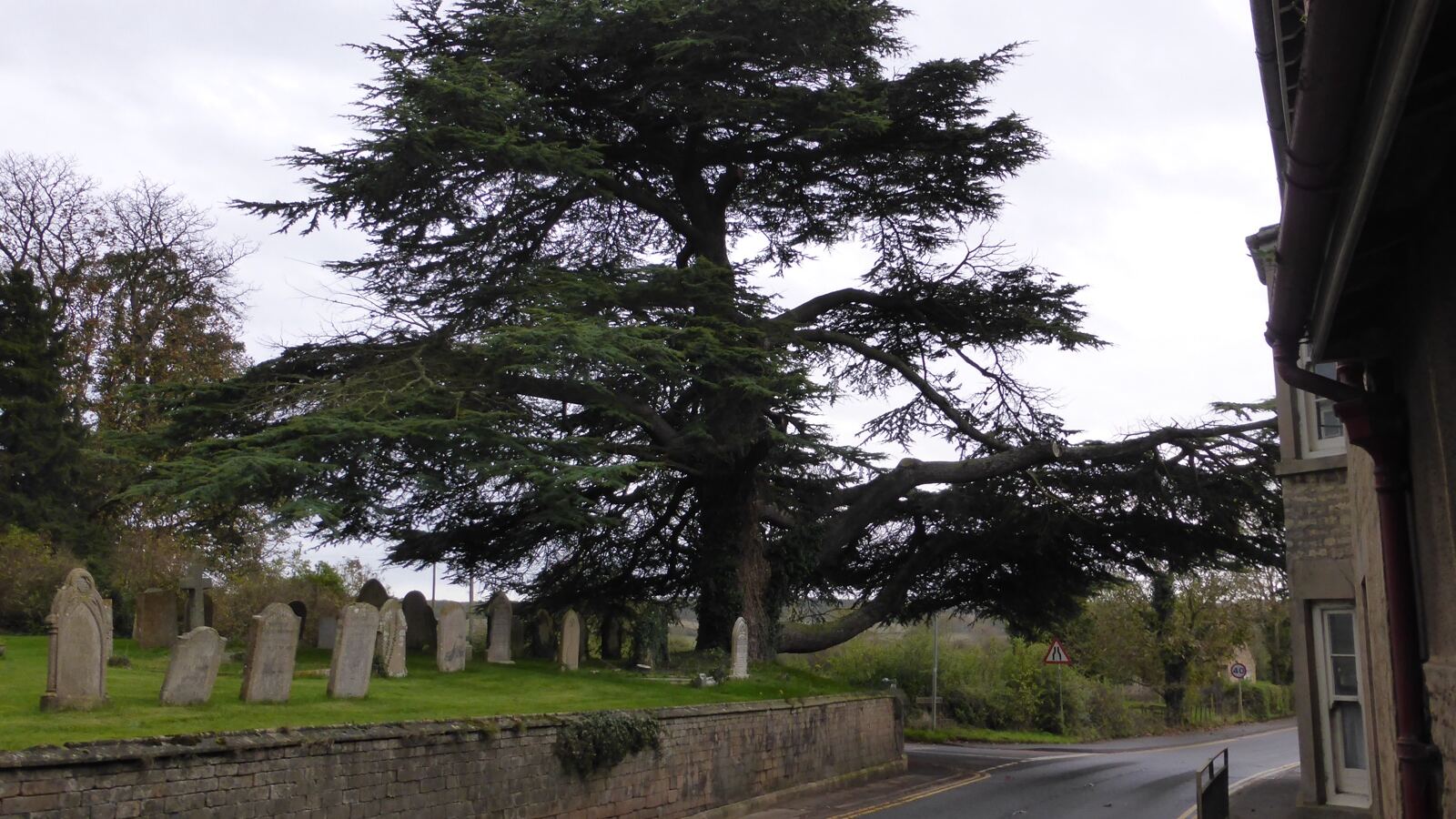
Level, plated branching. Mature cedars build broad horizontal tiers of foliage in flat plates, with a wide flat-topped crown. That architecture is unmistakable and is why cedars dominate the parkland they are planted in.
Distinguishing the three commonly planted species: deodar has drooping leading shoots and a pendulous tip; Atlas cedar is stiffly ascending, often blue-grey in the common cultivar; Lebanon is level and flat-topped with age.
The most famous timber in antiquity
Cedar of Lebanon was the prestige timber of the ancient eastern Mediterranean for three thousand years.
It is fragrant, durable, insect-repellent, stable, and available in very long clear lengths — the combination made it the timber for temples, palaces, and ships.
The Phoenicians built their fleets from it and traded it across the Mediterranean. Egyptian shipbuilding and mummification both relied on it. Solomon's Temple is described as built with it, supplied by Hiram of Tyre. The Epic of Gilgamesh turns on an expedition to the Cedar Forest.
The result is one of the earliest documented cases of resource exhaustion. The forests that covered the Lebanese mountains were reduced over millennia to scattered remnants — a few thousand hectares now, in protected groves like the Cedars of God at Bsharri, with individual trees over a thousand years old.
Regeneration there is now limited by grazing, fire, a warming and drying climate, and the small size of the remaining populations — the pattern set out in minimum viable populations and dryland restoration.
The cedar remains the national symbol of Lebanon and appears on its flag.
The timber
Warm brown, fragrant, light, stable, and naturally durable, with the aromatic oils that repel insects.
Used historically for building, shipbuilding, chests, and joinery; today for outdoor furniture, cladding, and specialist work where the scent and durability matter.
Deodar is the major construction timber of the western Himalaya and was used extensively for railway sleepers and bridges under British rule in India, again with substantial deforestation as a result.
The scent is the point of cedar chests and cedar-lined wardrobes — though most modern cedar chests are made from aromatic eastern red cedar, which is a juniper.
Where they suit
Cedars are Mediterranean and montane trees, adapted to hot dry summers, cold winters, and sharp drainage on mountain slopes.
That makes them well suited to a warming Europe. Atlas cedar in particular is markedly drought-tolerant and is being planted in France and Spain as a climate-adapted replacement for species now failing on dry sites. See climate adaptation and drought-tolerant species.
They need space. A cedar of Lebanon reaches 30 to 40 m with a crown 20 to 30 m across, and the horizontal branch plates are the whole point of the tree. Planted close to a building or crowded by neighbours, it never develops the form and is eventually a problem. This is a parkland and estate tree, not a garden one.
Sharp drainage is essential; they will not tolerate waterlogging.
Shelter when young. Cedars are slow to establish and vulnerable to exposure and hard frost in their first years, then become tough.
They are also brittle. Heavy horizontal limbs on old cedars fail in snow and wind, and veteran specimens frequently need reduction or propping. Plan the position accordingly.
Like nearly all conifers, cedars will not resprout from old wood — a cedar cut back hard is disfigured permanently. See conifers.
Problems
Generally healthy in a suitable position. Root rot from Phytophthora and honey fungus on wet ground is the main risk, which returns to the drainage requirement. See tree diseases.
Aphid infestations cause honeydew and sooty mould on the plates, cosmetically unattractive on specimen trees.
See also
- Conifers the wider group and the identification keys
- Cypresses and Thujas the trees most often miscalled cedar
- Juniper the other cedar impostor, and the aromatic chest timber
- Drought-Tolerant Species cedars in a warming climate
- Minimum Viable Populations the Lebanese remnants
- Larch the same needle arrangement, deciduous
- Firs
- Spanish Cedar
- Cryptomeria