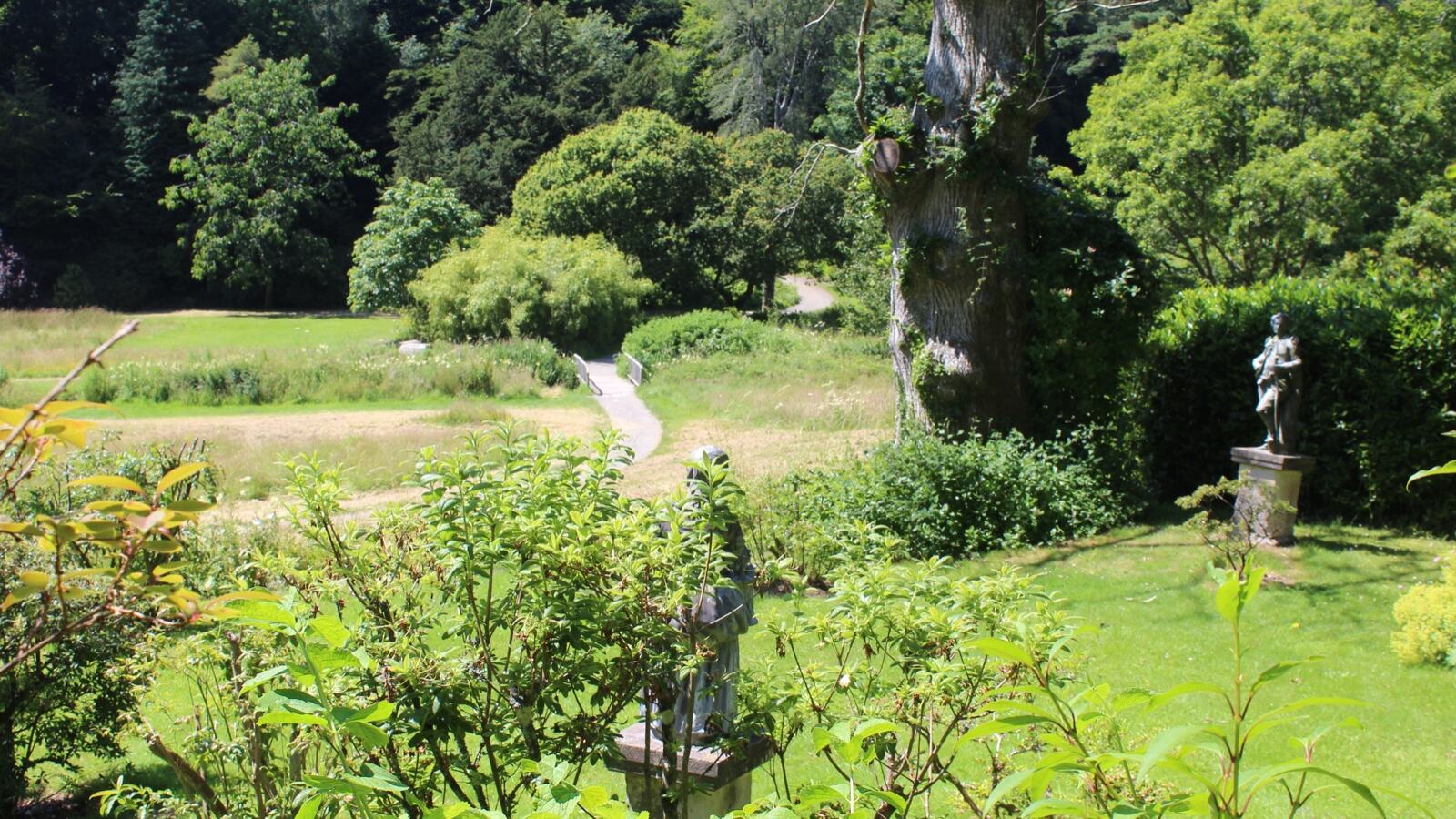
The ecosystem nobody defends
Grasslands are the least protected and most converted major biome on earth. Tallgrass prairie is reduced to a fraction of one percent of its original extent. European species-rich hay meadows have declined by around 97 percent in a century. Steppe and pampas have gone under the plough almost entirely.
They attract a fraction of the attention forests get, partly because a grassland does not look like it is doing anything.
It is. Most of a grassland's biomass is underground. Root systems reaching 2 to 5 m built the deepest, most carbon-rich soils on the planet, which is precisely why they were ploughed.
Grassland soil carbon is also more secure than forest carbon: it is below ground, it does not burn off in a fire, and it does not blow down in a storm. See carbon accounting.
Not all grassland is the same thing
Getting this wrong wastes years.
Climatic grassland. Prairie, steppe, and pampas exist because rainfall is too low or seasonal for forest. They are stable without intervention.
Semi-natural grassland. European hay meadows, chalk downland, and most British grassland exist because of centuries of grazing and cutting. Stop managing them and they revert to scrub and woodland. The diversity is a product of the management, not a survival despite it.
Improved grassland. Ploughed, reseeded with one or two productive grasses, fertilised. Agriculturally productive and ecologically close to empty.
Restoration means different things in each. The first needs the plough stopped and grazing restored. The second needs the traditional management reinstated. The third needs the fertility taken out before anything else will work.
Fertility is the obstacle
This is the counterintuitive core of grassland restoration, and it is where most attempts fail.
Species-rich grassland is a low-fertility system. Diversity exists because no single species can dominate when nutrients are scarce. Add nitrogen and phosphorus, and a handful of vigorous grasses outcompete everything, collapsing a forty-species sward to five.
So you cannot restore diversity onto fertile ground. Sow the finest wildflower mix available into an improved pasture with high residual phosphorus, and rye grass will smother it within two seasons.
Phosphorus is the hard one. Nitrogen depletes reasonably fast once inputs stop, but phosphorus is held in soil for decades, and a soil test showing a high phosphorus index is a warning that restoration will be slow.
Ways to strip fertility:
Stop all inputs, obviously and permanently.
Cut and remove. Hay taken off site exports nutrients. This is the main tool, and it takes years. Never leave cuttings to rot in place, which returns everything.
Graze without supplementary feeding, since feed imports nutrients in dung.
Deep cultivation to dilute the enriched topsoil with subsoil, on the worst cases.
Topsoil stripping as the drastic option, removing the enriched layer entirely. Expensive, effective, and it exposes low-fertility subsoil that suits many target species well.
Yellow rattle, Rhinanthus minor, is the biological lever in European systems. It is hemiparasitic on grass roots, reducing grass vigour by up to half and opening gaps for forbs. Sown first, it does years of work for the price of seed. It needs autumn sowing into a very short sward with real soil contact, and it will not establish into a thatch.
Getting the species in
Once fertility is manageable, the constraint becomes propagule availability. Most target species have no persistent seed bank and disperse poorly, so they will not simply arrive.
Green hay. Freshly cut hay from a species-rich donor site, spread onto the receptor within hours. Carries the full local assemblage including species not sold commercially, at the right proportions, with local genetics. The best method available where a donor site exists within a sensible distance.
Brush harvesting. Seed brushed directly from a donor sward and spread. Similar advantages, easier logistics.
Commercial seed. Convenient and consistent. Insist on local provenance, since a mix of the same species from a different region brings the wrong genetics and the wrong flowering times, which matters for the invertebrates depending on them. Cheap generic wildflower mixes often contain agricultural cultivars and non-natives.
Plug plants. Expensive per plant, useful for species that establish badly from seed, or for seeding a nucleus that spreads.
Natural regeneration. Free, and worth checking first. On sites with intact seed banks or nearby source populations, stopping the damage may be sufficient. See assisted regeneration and pioneer identification.
Whatever the source, seed needs soil contact and light. Broadcasting into a dense existing sward achieves nothing. Harrow, scarify, or graze hard to open 40 to 60 percent bare ground first, then sow, then roll.
Then manage it forever
Semi-natural grassland is a managed state. The management is the ecosystem.
Hay cut timing. Traditionally mid to late summer, after most species have set seed and ground-nesting birds have fledged. Cutting early, as silage does, is the main reason meadow birds have collapsed. Leave the cut sward a few days before removing so seed drops.
Aftermath grazing. Autumn grazing creates the short sward and small disturbances that seedlings need, and removes the growth that would otherwise form a smothering thatch.
Vary it. Uniform management produces uniform structure. Rotating cut dates between fields and years, and leaving uncut refuges each season, supports far more invertebrate life. A field cut identically every year on the same date loses everything that cannot complete its cycle in that window.
Do not graze continuously through spring and summer. See rotational grazing and meadow management.
Control scrub, selectively. Some scrub is valuable structure and edge. Total scrub clearance is as damaging as letting it take over. See rewilding edges and edge effects.
Expectations
Grassland restoration is slow and the pace surprises people.
Structure and common species respond within 3 to 5 years. Characteristic forbs take 5 to 15. The full assemblage, including the specialists dependent on particular fungi or soil conditions, may take many decades and often never fully arrives.
Ancient grassland cannot be recreated on a project timescale, which is the strongest possible argument for protecting what remains rather than accepting its destruction on a promise of replacement elsewhere.
Measure progress honestly with fixed quadrats and consistent recording, and expect weather to produce noise that looks like trend. See monitoring.
What it supports
Species-rich grassland carries pollinator assemblages that farmland cannot: native bees, hoverflies, butterflies whose larvae need specific foodplants. See caterpillars and pollinator habitat.
Below ground, the fungal and invertebrate communities of old grassland are exceptional, and waxcap fungi in particular are indicators of long-undisturbed turf. See soil food web and indicator species.
And the deep-rooted perennial sward does hydrological work: high infiltration, deep water use, and structural stability on slopes. See soil water storage and erosion control.
See also
- Meadow Management the hay cycle in detail
- Rotational Grazing grazing as the management tool
- Soil Testing checking phosphorus before you start
- Pollinator Habitat what the sward supports
- Monitoring separating trend from weather
- Carbon Accounting the underground carbon store
- Aldo Leopold
- Black Locust
- Butterflies and Moths
- Birds of Prey
- Coastal Dunes
- Cork Oak
- Gorse and Broom