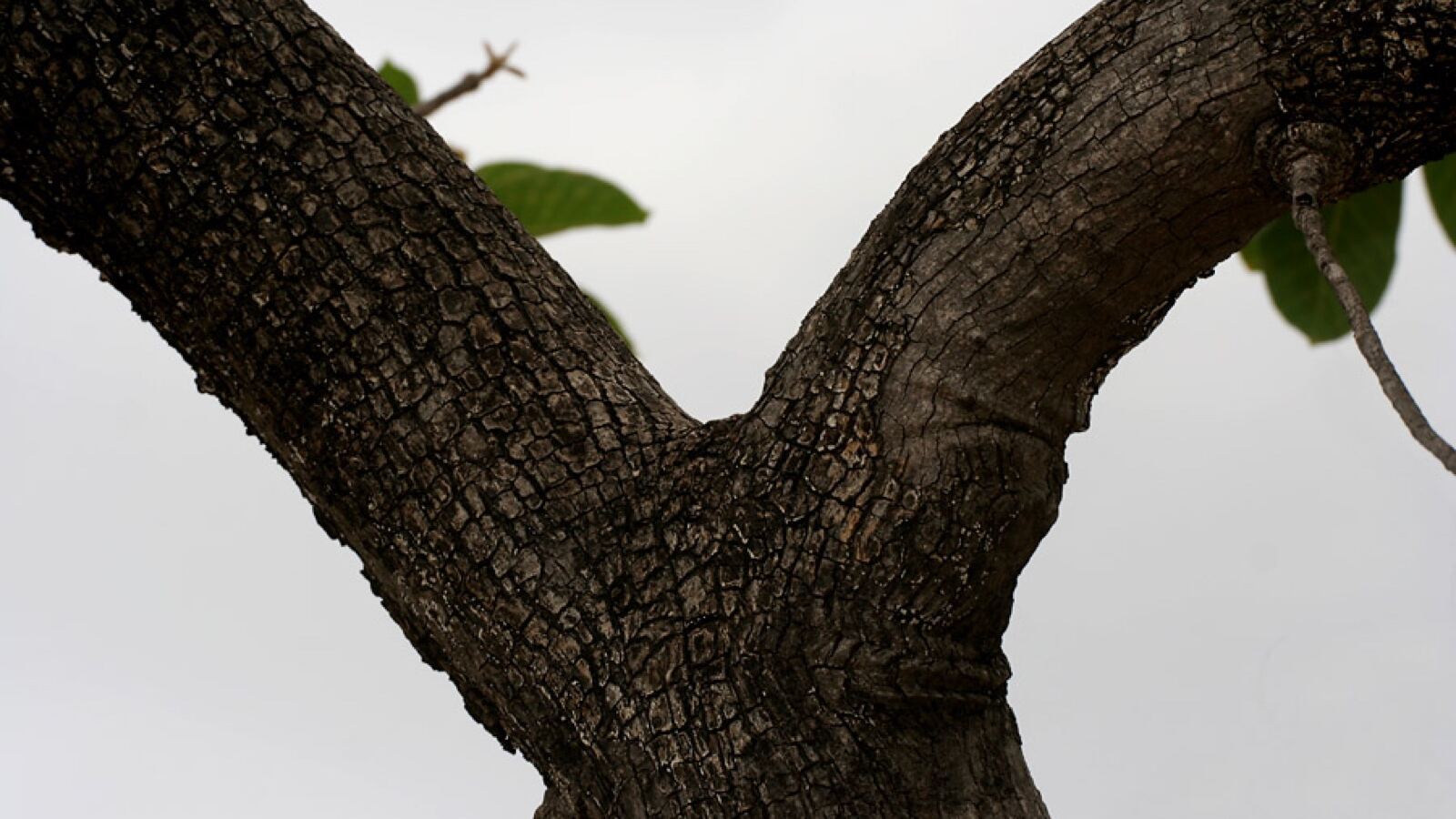
What it is
Madhuca longifolia, the mahua (or mahwa, mohua) — a large, deciduous, shade-giving tree of central and northern India, and one of the most economically and culturally important trees for the tribal (adivasi) peoples of central India.
It belongs to the sapodilla family, Sapotaceae — a relative of the sapodilla and the sapotes — but, unlike them, the mahua is grown not for its fruit but for its flowers, which are the crop, the food, and the drink at the centre of forest life across a great swathe of India.
Flowers you gather by the sackful
The mahua's flowers are unusual and valuable: they are small, pale cream, fleshy and sweet, and rich in sugar, and they fall from the tree in enormous quantity in spring, carpeting the ground beneath.
In the flowering season, families — above all adivasi communities — gather beneath the mahua trees at dawn to collect the fallen flowers by the sackful, sweeping them up as they drop. The fresh flowers are eaten raw and cooked as a food (they are genuinely nutritious and sweet, a real dietary staple in lean seasons), dried and stored, made into syrups and sweets, and used as animal fodder. A single good mahua tree yields a large harvest of these sweet flowers each year, for very little labour, which makes it a keystone economic resource in forest villages — the mahua harvest is a defining event of the central Indian year. See restoration economics.
The liquor at the heart of a culture
The mahua's most famous product is drink. The sugary flowers are fermented and distilled into mahua liquor — a traditional country spirit that is deeply woven into the social, ceremonial, and religious life of adivasi communities, used in festivals, weddings, and rituals and central to their culture.
This has given the mahua a complicated and often fraught legal history: colonial and later governments taxed, restricted, and sometimes banned mahua liquor (partly to protect state revenue from licensed alcohol), criminalising a traditional drink and, with it, a part of adivasi life and economy — a source of long grievance. In recent years there has been a movement to recognise and legitimise mahua as a heritage product, to promote it as a premium artisanal spirit, and to secure the rights of the forest communities who make it. The mahua sits, in other words, at the meeting point of ecology, culture, law, and livelihood in a way few trees do.
More than flowers
The mahua gives more than its flowers. Its seeds yield a thick oil (mahua butter), used for cooking, soap-making, and lamps, and important in the local economy; the fruit and leaves are eaten and used as fodder; the timber is hard and used in building; and the tree gives bark medicines and supports wildlife — the flowers and fruit feed deer, bears, and many birds and insects, and the tree is a good pollinator and honey source. As a large, tough, shade-giving, multi-purpose tree, the mahua is protected and cherished in the landscapes where it grows, often left standing in fields and around villages precisely because it is so valuable. It is a model of a wild-and-cultivated tree underpinning a whole forest economy, like the marula in Africa.
Growing it
Tropical to subtropical, frost-tender, and notably drought-hardy and tough: the mahua thrives in the hot, dry, seasonal climate of central India, tolerates poor, rocky, and dry soils, and is deep-rooted and resilient, dropping its leaves in the dry season. It wants full sun and a distinct dry season, and it is well suited to dryland and degraded-land planting and to silvopasture and agroforestry, giving shade, fodder, food, and oil.
It is a slow-to-moderate growing, large, long-lived tree, grown from seed (best sown fresh), and it is planted and protected for its flowers, oil, and shade across its range. Supporting the sustainable harvest and fair recognition of mahua is part of supporting the forest communities who depend on it. See propagation.
See also
- Sapotes its relatives in the sapodilla family
- Marula the African parallel — a wild tree underpinning a rural economy
- Restoration Economics the mahua flower-and-liquor economy
- Dryland Restoration the mahua on dry, degraded land
- Silvopasture the mahua for shade, fodder, and food
- Amla and Bael other useful trees of the Indian countryside
- Miracle Fruit
- Gutta-Percha
- Canistel and Abiu