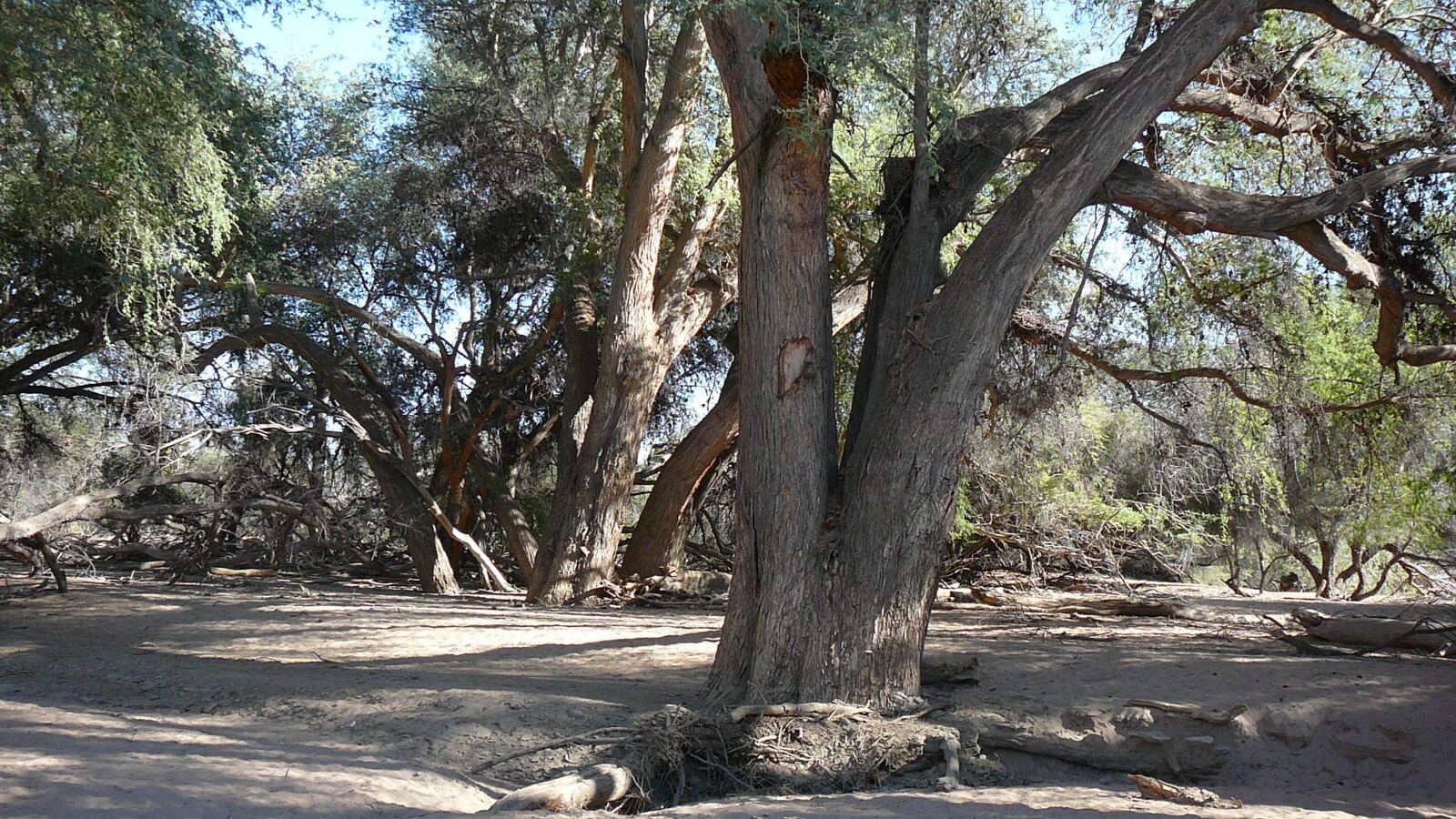
What it is
Faidherbia albida (long Acacia albida), the faidherbia, apple-ring acacia, ana tree, or winter-thorn — a large, thorny leguminous tree of the drylands of Africa and the Middle East, and one of the most important trees in all of African farming.
It is a member of the acacia group, and, like its relatives, it is a nitrogen fixer with deep roots and thorny branches. But faidherbia does one thing no other farm tree does, and that one thing has made it a quiet agricultural miracle across the Sahel.
Reverse phenology
Faidherbia's superpower is reverse phenology — it runs its whole leafy calendar backwards compared to every tree around it.
Almost all trees are in full leaf during the warm, wet growing season and bare in the cold or dry season. Faidherbia does the opposite: it comes into leaf at the start of the dry season and drops its leaves at the start of the rains — so it stands bare and leafless through the very months when crops are growing beneath it.
The consequences for farming are extraordinary. Because the tree is leafless during the cropping season:
- it casts almost no shade on the crops below when they need the sun, removing the usual conflict between trees and crops;
- and it drops its nitrogen-rich leaf litter and its sweet, protein-rich pods onto the field exactly when the crops are planted, fertilising the soil (on top of the nitrogen it fixes) at the perfect moment.
The result is that crops grow better directly under faidherbia than in the open — measurably higher yields of millet, sorghum, and maize in the tree's own footprint, the reverse of what happens under an ordinary shade tree. Farmers across the Sahel have known this for centuries and deliberately keep faidherbia in their fields, and it is now the flagship species of "evergreen agriculture" / "fertiliser tree" systems promoted across Africa, in which millions of faidherbia are grown scattered through cropland to raise yields, restore soil, and combat hunger without artificial fertiliser. It is one of the clearest and most hopeful examples of agroforestry working, and of a single tree's odd biology being a gift to farming. See nitrogen fixers and dryland restoration.
More than fertiliser
Faidherbia gives more than soil fertility. In the dry season, when it is in leaf and pod and everything else is bare, it provides shade, fodder, and food at the leanest time: its nutritious pods and foliage are prime dry-season livestock feed (the "ana tree" is prized by pastoralists), a silvopasture asset; its pods and seeds are eaten by people in famine; it yields gum, fuel, and timber; and its deep roots and litter stabilise and build the soil, making it central to holding back desertification. It is a keystone tree of the Sahel in every sense. See gum arabic for the related desert acacias.
Growing it
Hot, dry, and frost-tender, faidherbia is superbly drought-hardy, with very deep roots that reach water far down (so it stays green in the dry season), and it tolerates poor, sandy, and seasonally-flooded soils; it wants full sun and the seasonal wet-and-dry climate of the savanna and floodplain.
It is grown from seed (scarified) and is planted and protected in cropland, pasture, and restoration across the African drylands, where its reverse phenology makes it uniquely compatible with growing crops beneath it. Slow to establish but long-lived and large, it is a tree to plant for the farm and the future. As the fertiliser tree that grows backwards, faidherbia is one of the most valuable trees in the world for feeding people on poor, dry land. See propagation.
See also
- Acacia and Gum Arabic its thorny leguminous relatives
- Nitrogen Fixers the soil-enriching legume role
- Alley Cropping the agroforestry systems faidherbia leads
- Silvopasture faidherbia as dry-season fodder
- Dryland Restoration faidherbia against desertification
- Mesquite and Tamarind and Carob other useful dryland legumes
- Sesbania
- Khejri