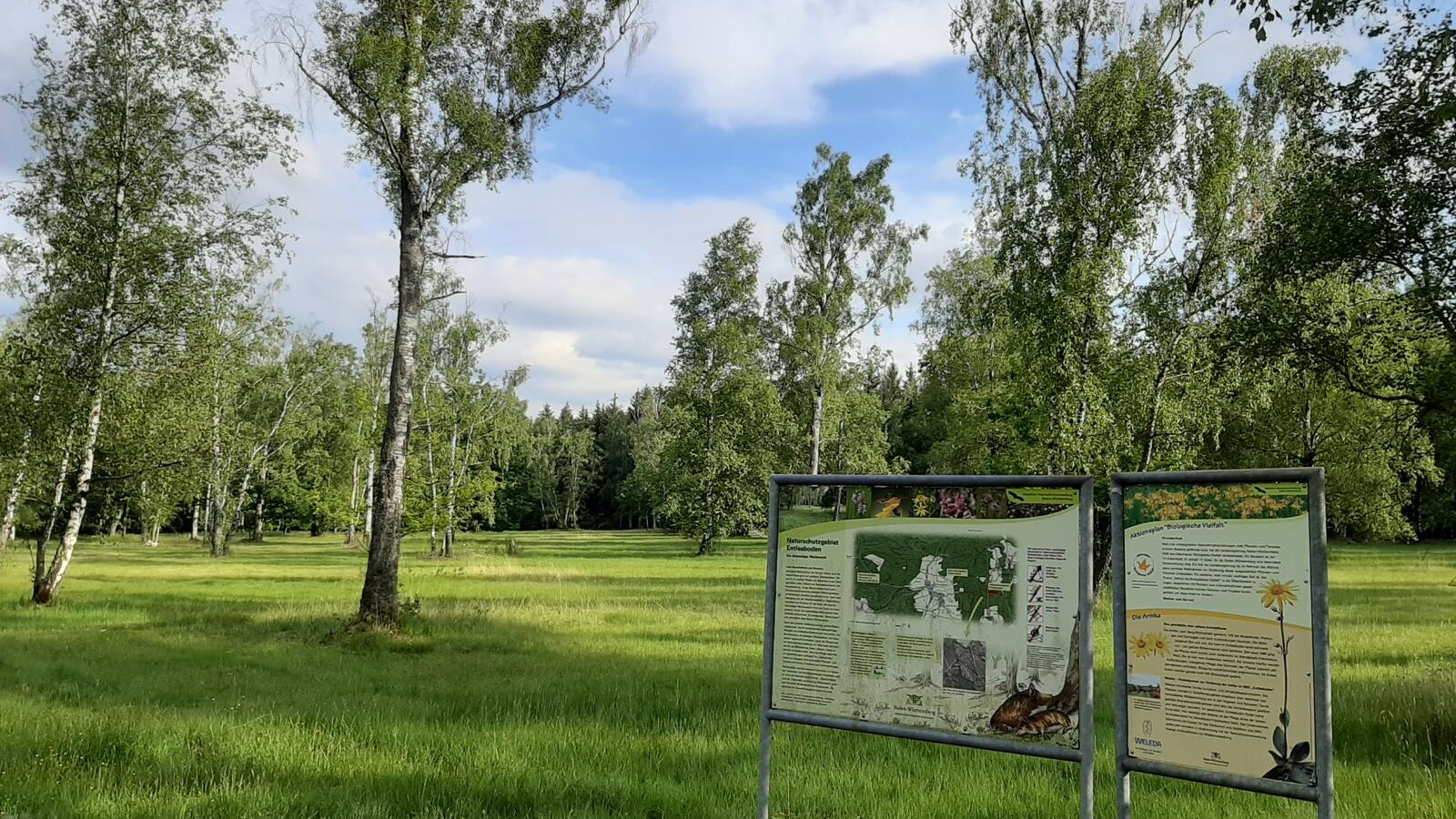
What it is
Trees, forage, and livestock managed together on the same land, deliberately, as one system.
The word deliberately is doing the work. Animals under trees is not automatically silvopasture. Cattle allowed to wander through a woodland is woodland damage: compacted soil, browsed regeneration, and a wood that quietly dies over thirty years because nothing replaces the canopy.
Silvopasture is designed. Tree spacing, species, grazing timing, and stocking density are all set so that each component supports the others.
Why it beats either alone
The usual measure is the land equivalent ratio: how much separate land you would need to produce the same amounts. Well-run silvopasture typically comes out between 1.3 and 1.6, meaning the combination produces what 130 to 160 hectares of segregated land would.
The gains come from several directions at once.
Shade is production, not loss. Heat-stressed cattle stop grazing, stop gaining weight, and stop conceiving. Above roughly 25 C for temperate breeds, performance falls off sharply. Shade keeps animals feeding through the middle of the day. In hot climates this effect alone can outweigh the forage lost to the trees.
Forage quality often improves. Moderate shade, around 30 to 50 percent, slows growth slightly but raises protein content and delays the summer collapse in quality. Shaded pasture stays green weeks longer into drought.
Different rooting depths. Trees draw water and nutrients from below the grass root zone, and cycle them to the surface as leaf litter. The two are not competing for the same pool.
The trees are a second crop. Timber, fruit, nuts, or fodder, on a different timescale from the livestock, which smooths income enormously.
Shelter cuts winter losses. A shelterbelt reduces wind chill and lamb mortality. See windbreaks.
The forms
Grazed orchard. The traditional standard orchard: widely spaced large fruit trees on vigorous rootstock, sheep or geese below. Old European and British orchards were nearly all managed this way. See apples and pears.
Dehesa and montado. The Iberian oak savanna, evergreen oaks at 20 to 40 stems per hectare over grazing, with pigs finishing on acorns in autumn. Two thousand years old, and among the most biodiverse farmed landscapes in Europe. Proof the model persists.
Timber silvopasture. Widely spaced high-value timber, walnut, oak, poplar, pruned for clear stems, with grazing beneath for the decades before harvest. The grazing pays the mortgage while the timber grows.
Fodder systems. Trees grown specifically to be browsed or cut for leaf fodder. Willow, poplar, ash, mulberry, and tropical legumes like Gliricidia. Tree leaf is often higher in protein and minerals than grass, and stays available in drought when grass has burnt off. Willow and poplar also carry condensed tannins that reduce internal parasite burdens.
Thinned woodland. Existing woodland opened up to 30 to 50 percent canopy to let a forage layer establish. Requires care, and is where most damage happens.
Establishment is where it fails
Trees and livestock are compatible at maturity and completely incompatible at the start.
A cow will rub a young tree out of the ground. A sheep will strip bark at head height. Both will compact the rooting zone. Nearly every failed silvopasture project failed in the first five years.
Protect properly or do not plant. Individual guards, tree tubes, or, better, exclusion fencing around whole rows or clusters. Budget for it in advance. See site protection.
Keep animals out for three to five years. Longer for cattle, longer again if the trees are slow. This is the single most common shortcut and the single most common cause of failure.
Control the grass. Grass competition, not shade, is what stalls young trees. A clear mulched circle for the first years matters more than fertiliser. See tree planting and weed management.
Phase it. Establish blocks in rotation so part of the farm is always grazeable. Taking the whole holding out of production for five years is not viable and nobody does it.
The alternative, where the site allows, is to start from existing trees: thin a scrubby woodland or protect natural regeneration rather than planting. Far cheaper, and it is how most historic systems arose. See assisted regeneration and pioneer identification.
Managing it once it works
Density. Usually 30 to 150 stems per hectare for timber or standard fruit, depending on species and final canopy. Roughly 30 to 50 percent canopy cover is the common target: enough shade to matter, enough light for forage.
Grazing rhythm. Short, intense, well-rested. Continuous set-stocking damages both sward and trees. This is where rotational grazing becomes not just compatible but necessary.
Keep animals off wet ground. Compaction under hooves in winter is what kills tree roots and ruins soil structure. See decompaction.
Prune for the endpoint. Timber trees need formative pruning and high pruning for clear stems. Fodder trees get pollarded above browse height so they resprout out of reach.
Watch the parasites. Longer grass and shade can favour some gut parasites. Rest periods and mixed grazing manage it.
Carbon and water
Silvopasture consistently appears near the top of climate mitigation rankings for agriculture, because it stacks above-ground carbon in wood onto soil carbon in a permanent sward, without taking land out of food production.
Soil carbon under well-managed silvopasture typically runs higher than under either open pasture or arable, and the deep tree roots put carbon well below the depth that cultivation would ever disturb. The accounting caveats are in carbon accounting.
Hydrologically, trees break rainfall impact, litter builds infiltration, and roots create macropores. Pasture that would have shed a summer downpour absorbs it instead. See soil water storage and erosion control.
The honest limits
It is more complex to manage than either pasture or forestry. It needs a manager who understands both, and those people are rarer than they should be.
The returns are split across very different timescales, which is difficult to finance and difficult to explain to a lender.
And it is not a licence to put animals in a wood. The damage from unmanaged woodland grazing is real, well documented, and the reason many foresters remain hostile to the whole idea.
See also
- Rotational Grazing the grazing management it depends on
- Alley Cropping the arable equivalent
- Site Protection guarding trees from the stock
- Windbreaks shelter as a production input
- Permaculture Design stacking functions as a principle
- Woodland Management when to thin toward open canopy
- Mulberry
- Coconut
- Shea and Argan
- Cork Oak
- Honey Locust
- Coral Tree
- Evergreen Oaks
- Rain Tree
- Mahua
- Tagasaste
- Faidherbia
- Dung Beetles