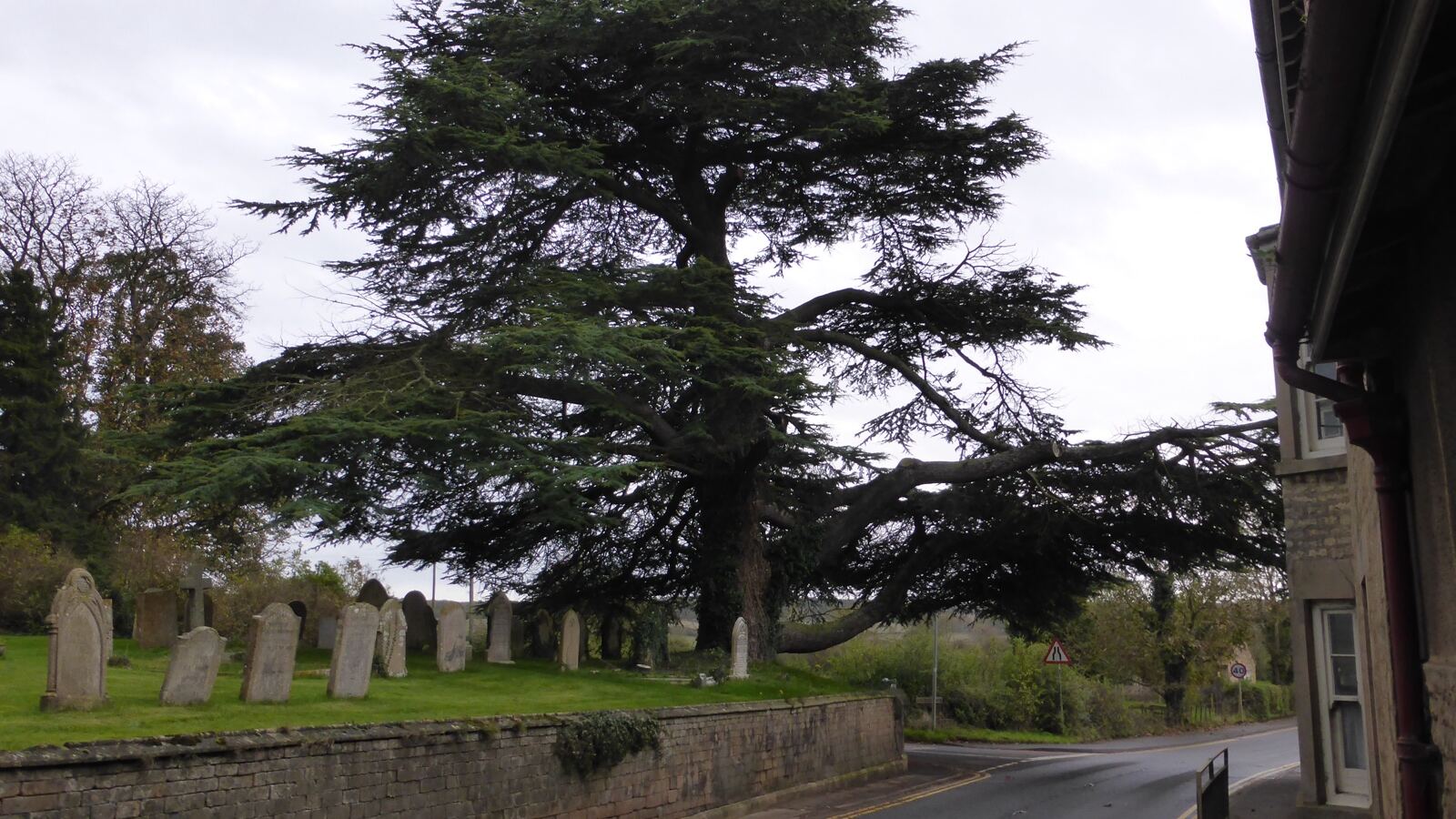
What it is
Cedrus libani, the cedar of Lebanon — a majestic evergreen conifer of the mountains of Lebanon, Syria, and Turkey, and one of the true cedars (the genus Cedrus), distinguished from the many unrelated trees that borrow the "cedar" name.
More than almost any other tree, it is a tree of history and scripture. For five thousand years it has been prized, revered, sung about, and cut down, and it is bound up with the earliest civilisations of the Near East — an emblem so potent that Lebanon put it on its flag and coat of arms, where the green cedar still stands.
The tree of the ancient world
The cedar of Lebanon's fragrant, rot-resistant, workable timber made it the most sought-after building material of the ancient Near East, and its exploitation runs through the earliest written records.
It appears in the Epic of Gilgamesh — the oldest great work of literature — in which the hero journeys to the Cedar Forest and fells its guardian; it is named repeatedly in the Bible, above all as the timber King Solomon obtained from Hiram of Tyre to build the Temple in Jerusalem and his palace, its cedar beams a byword for grandeur and permanence. The Phoenicians built their famous trading and war ships of Lebanon cedar, and the Egyptians imported it for coffins, temple doors, and the resin for mummification; Assyrians, Babylonians, and Persians all coveted and cut it. For millennia the cedar was, quite literally, the timber of kings and gods across the region. See historical ecology and frankincense and myrrh for the wider ancient trade in fragrant tree products.
Five thousand years of the axe
That very desirability is the cedar's tragedy. The great cedar forests that once clothed the mountains of Lebanon have been logged, continuously and heavily, for five thousand years — for temples, palaces, ships, and railways, from the Bronze Age to the modern era — until they have been reduced to a few small, scattered, protected remnants, most famously the grove known as the "Cedars of God" (Arz al-Rab) in northern Lebanon, whose ancient trees are among the last survivors of the once-vast forest.
It is one of the oldest and starkest examples of the over-exploitation of a forest, and of a magnificent tree logged toward the edge by its own value, the ancient counterpart of the fate of mahogany and rosewood. The surviving groves are now conserved as national and sacred treasures, and there are efforts to replant and restore cedar forest — slow work, for a slow tree, against the pressures of grazing, fire, development, and a warming, drying climate that now threatens the cedar's mountain range as well. See reforestation techniques, woodland management, and climate adaptation.
Growing it
A hardy, drought-tolerant mountain tree, the cedar of Lebanon wants full sun, deep well-drained soil, and space — a great deal of space, for it becomes a huge, broad, flat-topped tree with massive horizontal tiered branches, one of the most majestic of all specimen trees, needing decades to develop its characteristic form. It tolerates cold, heat, and drought once established, but dislikes waterlogging and pollution, and it is slow-growing and very long-lived.
It has been a treasured parkland and estate tree in Europe for centuries — the great flat-topped cedars on the lawns of grand houses are this species — and it is grown from seed. To plant a cedar of Lebanon is to plant for centuries and for the skyline, a tree that will outlive its planter many times over. See propagation and cedars for its relatives.
See also
- Cedars the true cedars, and the many trees that misuse the name
- Historical Ecology the cedar in Gilgamesh, the Bible, and antiquity
- Frankincense and Myrrh other trees of the ancient Near Eastern trade
- Mahogany and Rosewood and Sandalwood modern trees logged toward the edge
- Reforestation Techniques restoring the cedar forests
- Climate Adaptation the warming that now threatens the cedar's range