What it is
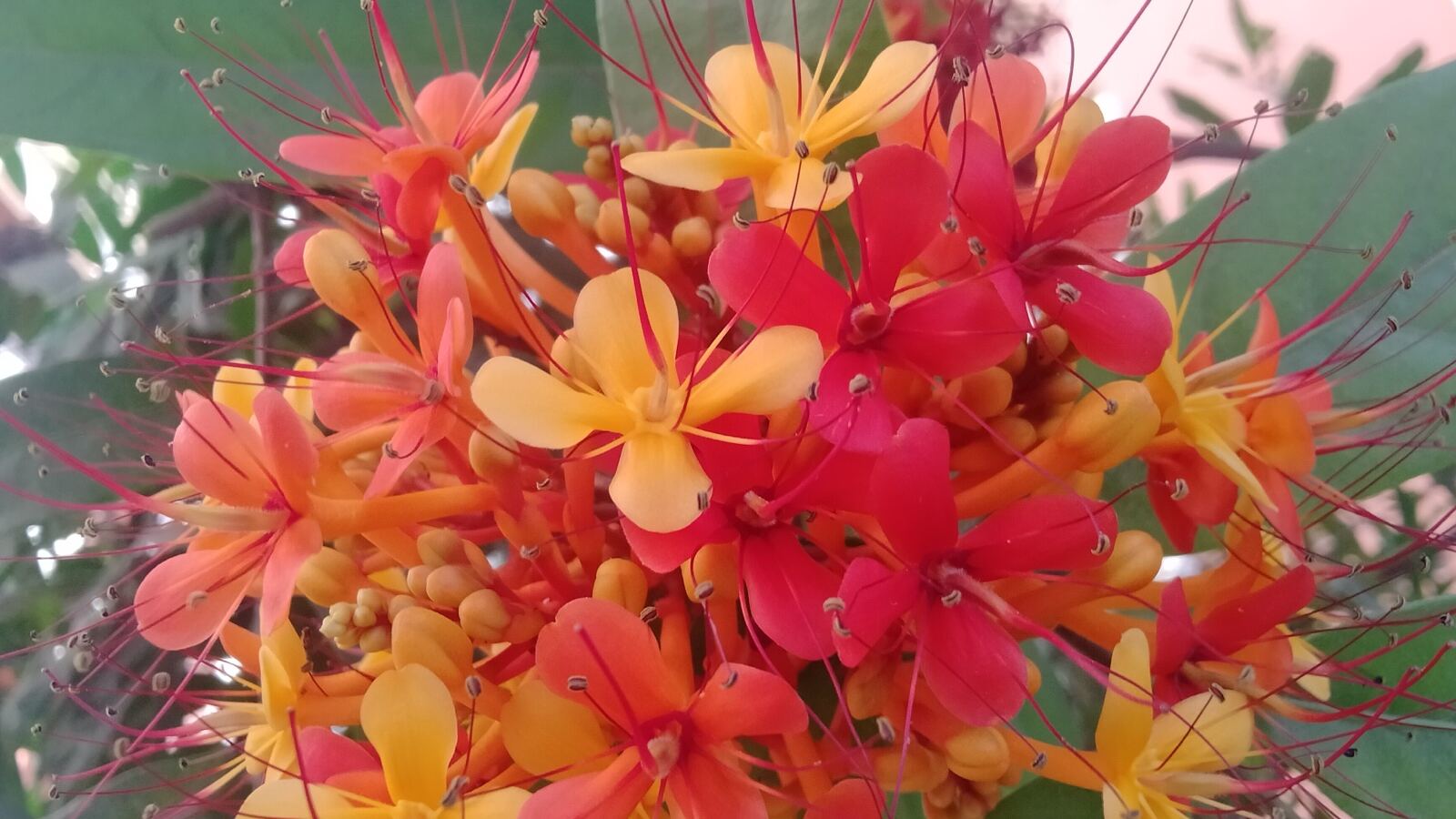
Saraca asoca, the ashoka tree — a small, evergreen, spreading tree of the Indian subcontinent, in the legume family (in the Detarioideae, the same broad group as the tamarind), and one of the most sacred and culturally significant trees of India.
The name "ashoka" means "without sorrow" or "sorrowless," and the tree is bound up with love, fertility, and the easing of grief throughout Indian religion, literature, and art. It bears dense, rounded clusters of fragrant flowers that open orange and deepen to red through the day, held among glossy, drooping, coppery-then-dark-green foliage — a beautiful small tree quite apart from its sacredness.
Sacred to three religions
Few trees carry such a weight of shared sacred meaning. The ashoka is holy in Hinduism, Buddhism, and Jainism alike.
In Hindu tradition it is associated with Kama, the god of love, and with fertility and married happiness; it is linked to the goddess Sita in the Ramayana (held captive in a grove of ashoka trees, the Ashoka Vatika); and it is worshipped by women for the blessing of children. In Buddhism, one tradition holds that the Buddha was born under an ashoka tree (others name the sal, below), giving it a place in the story of his birth. In Jainism it is one of the trees associated with the tirthankaras. Its flowers and foliage appear constantly in Indian temple carving, painting, and poetry. Like the banyan and peepal and the bael, this deep sacredness has helped protect and propagate the tree for millennia. See historical ecology.
A common confusion is worth noting: the tree widely planted along Indian roads and called "ashoka" for its tall, narrow, column shape is usually the false ashoka (Polyalthia longifolia), an unrelated tree; the true, sacred ashoka is the spreading, orange-flowered Saraca.
The women's medicine — and its threat
The true ashoka is one of the most important medicinal trees in Ayurveda, and specifically as a remedy in women's health: the bark has been used for centuries to treat menstrual and gynaecological complaints, and "Ashokarishta," a fermented bark tonic, is a widely-used traditional women's medicine still manufactured on a large scale. The bark contains compounds of genuine pharmacological interest, and this medicinal demand has become the tree's greatest danger.
Because the medicine is made from the bark, and demand is huge, wild ashoka trees have been heavily stripped and over-harvested, and — combined with habitat loss and the frequent substitution and adulteration of true ashoka bark with the false ashoka's — the genuine Saraca asoca is now considered threatened/vulnerable in the wild. It is a clear example of a valued medicinal tree endangered by the very demand for its healing bark, the same pressure seen in other bark-and-wood medicines like quinine and sandalwood, and a reason for cultivation, sustainable harvest, and careful sourcing. See restoration economics.
Growing it
Tropical to subtropical, frost-tender, wanting a warm, humid climate, partial shade when young (it is a naturally understorey tree), and moist, rich, well-drained soil; it dislikes drought, frost, and exposure, and does best in the warm, moist conditions of its native forests and gardens.
It is a slow-growing, small, evergreen tree, long-lived, and grown from seed (best sown fresh) and cuttings. The fragrant orange flowers feed bees and butterflies, and the tree is planted as a sacred, ornamental, and medicinal tree in temple grounds and gardens across South and Southeast Asia. Growing true ashoka, rather than stripping wild bark, is part of conserving it. See propagation.
See also
- Banyan and Strangler Figs the sacred peepal and banyan
- Bael and Amla fellow sacred, medicinal Indian trees
- Sal Tree the other tree named as the Buddha's birth tree
- Tamarind and Carob the ashoka's legume-family relatives
- Rosewood and Sandalwood another tree threatened by demand for its wood
- Historical Ecology sacredness and the fate of a tree