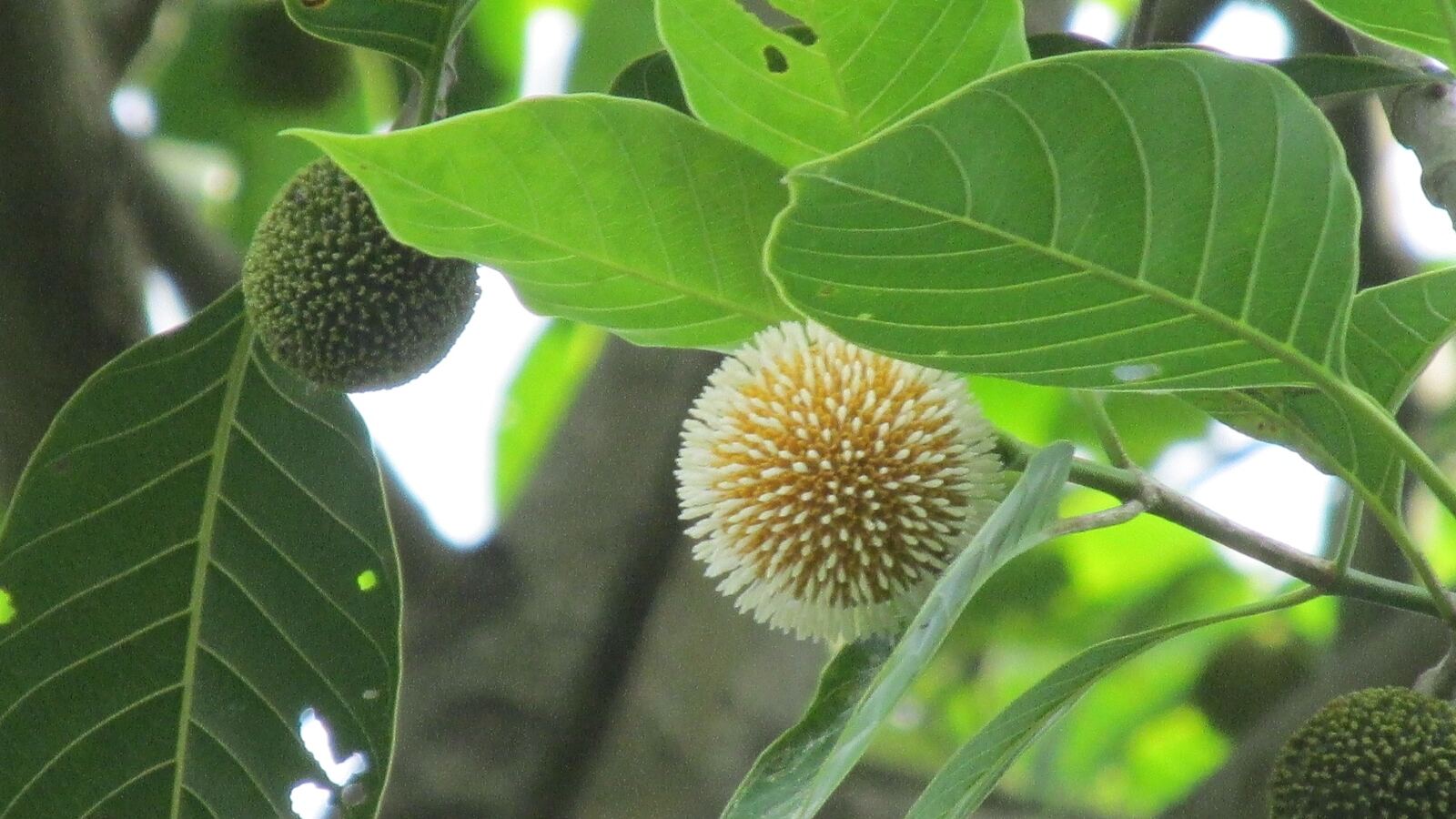
What it is
Neolamarckia cadamba, the kadamba or burflower tree — a large, fast-growing tropical tree of South and Southeast Asia, revered in Indian culture and religion and, in a quite different life, valued as a fast plantation timber.
It belongs to the coffee family, Rubiaceae — a relative of coffee, quinine, and the genipap — and it is instantly recognisable when in flower by its distinctive blooms: dense, round, orange-to-yellow flower-balls the size of a golf ball, bristling with tiny protruding flowers like a glowing pincushion or a small sun, sweetly fragrant and borne in the monsoon.
Krishna's tree
The kadamba is one of the most beloved sacred trees of Hinduism, bound up above all with the god Krishna. In myth and in the poetry and painting of the Krishna tradition, the kadamba is Krishna's tree: he plays his flute beneath it, dances with the gopis in its shade, and the tree is associated with the god's youth in Vrindavan and with the goddess. Its fragrant monsoon flowering — coming with the rains that end the hot season — made it a symbol of the monsoon, of love, and of longing in classical Indian literature, and it appears throughout Sanskrit poetry, temple art, and devotional song. It is planted at temples and revered across India, its cultural weight matching that of the banyan and peepal, the ashoka, and the other sacred trees. See historical ecology. The fragrant flowers also yield an attar (perfume) and feed pollinators.
The fast timber tree
In its second, modern life, the kadamba is prized for something entirely practical: it is one of the fastest-growing of tropical timber trees, and it has become an important plantation and agroforestry species across the tropics.
It grows very fast and straight, yielding a pale, light, easily-worked wood used for plywood, pulp and paper, light construction, boxes, and matchwood, and it is planted for quick timber and fibre, for reforestation and the greening of degraded land, and as a fast shade and nurse tree — in the same fast-wood role as the gmelina and falcataria. So the sacred tree of Krishna is also a workhorse of tropical forestry, a nice union of the reverent and the useful. See restoration economics.
Growing it
Tropical to subtropical and frost-tender, the kadamba wants heat, high rainfall or good moisture, and deep, rich, moist, well-drained soil; it is fast-growing and a strong light-demander, tolerant of a range of conditions including seasonal flooding, but intolerant of drought and cold. It becomes a large, spreading, handsome tree with big glossy leaves and a broad crown.
It is grown very easily from seed (which is tiny and produced in huge quantity) and from cuttings, and comes into flower and usable size fast. As a fast, beautiful, fragrant, sacred, and useful tree, the kadamba is one of the more appealing of the tropical timber-and-temple trees, and a natural component of a tropical food forest or shade planting. See propagation.
See also
- Cacao and Coffee, Quinine Tree, and Genipap its coffee-family relatives
- Gmelina and Falcataria other fast tropical plantation timbers
- Banyan and Strangler Figs and Ashoka Tree other sacred Indian trees
- Reforestation Techniques fast timber for restoration
- Historical Ecology the kadamba in the Krishna tradition
- Pollinator Habitat its fragrant monsoon flowers