What it is
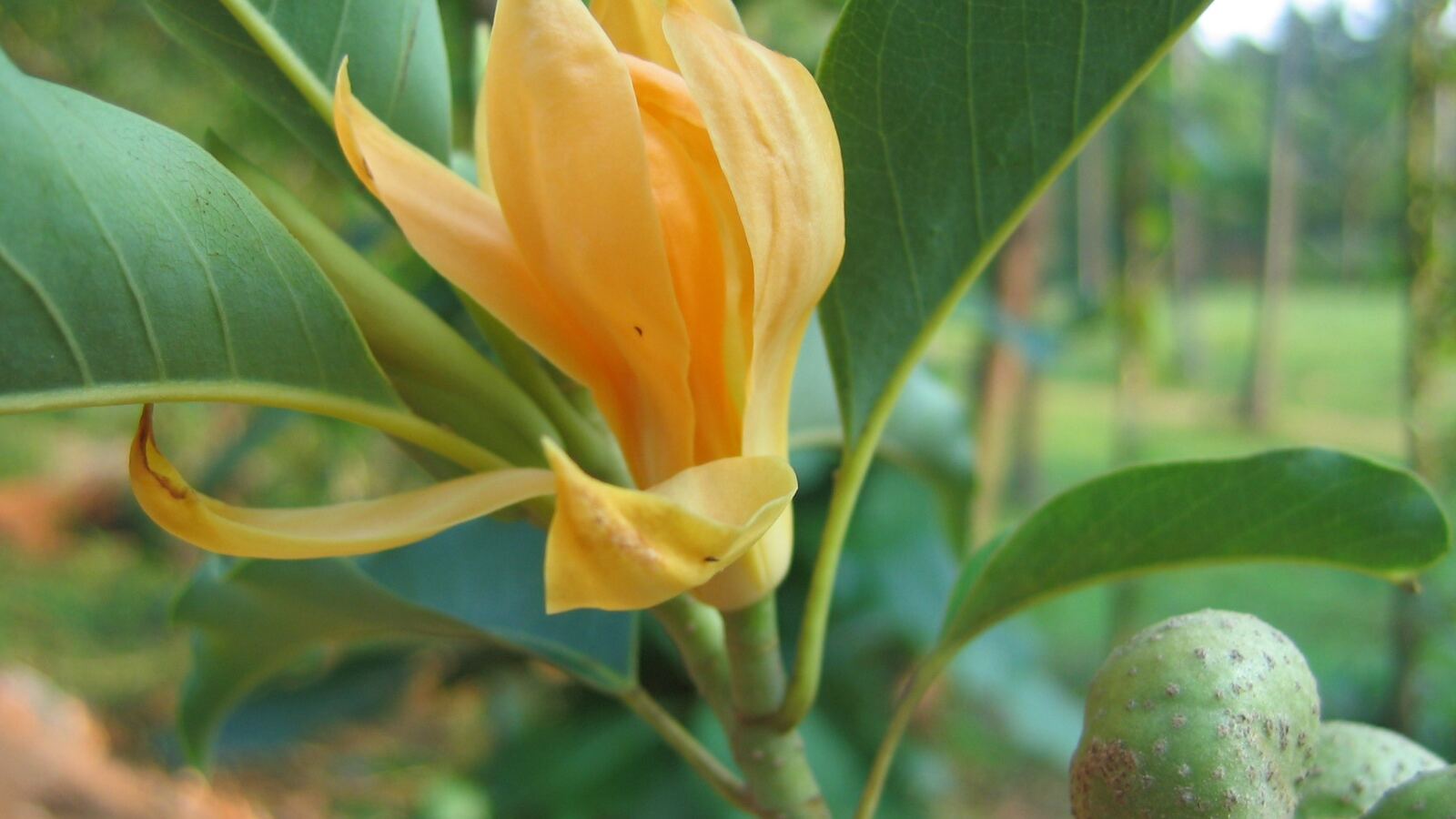
Magnolia champaca (long Michelia champaca), the champak or joy perfume tree — a tall evergreen tree of South and Southeast Asia, and a member of the magnolia family, though it looks quite unlike the big-flowered magnolias of temperate gardens.
Instead of large showy blooms it bears small, slender, golden-yellow to orange flowers — but what those modest flowers lack in size they more than make up for in scent: the champak is one of the most powerfully and beautifully fragrant of all trees, its perfume rich, sweet, heady, and far-carrying, especially in the evening.
The fragrance
The champak's fragrance is its whole reason for fame, and it is woven deeply into the life and culture of the regions where it grows. The flowers are:
- Worn and offered — strung into garlands, tucked into the hair (a classic adornment of women across South and Southeast Asia), floated in bowls, and offered at Hindu and Buddhist temples and shrines, where the champak is a sacred tree associated with several deities;
- Distilled for perfume — champak flowers yield a precious, intensely floral essential oil (champaca absolute) that is one of the prized materials of fine perfumery, used in luxury perfumes (it is a component of some of the most famous scents, and the tree's English name "joy perfume tree" recalls its use in the legendary perfume Joy), in the way ylang-ylang and sandalwood are;
- Used in medicine and ritual throughout its range.
So the champak, like the frangipani and ylang-ylang, is one of the great fragrant sacred trees of the tropics — a tree grown not for fruit or timber but for the scent of its flowers, and for its place in worship, adornment, and perfume. See historical ecology and pollinator habitat, for the strong scent, as in many magnolia relatives, is aimed at drawing in beetle and other pollinators, especially at night.
The tree is also handsome and useful in itself — a tall, straight, evergreen tree with glossy leaves, giving good shade and a valuable timber — but it is the flowers, and their fragrance, that everyone plants it for.
Growing it
Tropical to warm-subtropical and frost-tender, the champak wants heat, high humidity, ample moisture, and deep, rich, well-drained soil in full sun to light shade; it dislikes drought, cold, and poor dry ground, and it is strictly a warm-climate tree, grown outdoors only in frost-free regions (and, elsewhere, as a large conservatory plant for its scent).
It is a fast-growing, tall, long-lived evergreen, grown from seed (sown fresh) and by grafting and air-layering for reliable, earlier-flowering plants, and it flowers over a long season, perfuming whole gardens and streets in the evening. As a sacred, fragrant, magnolia-family tree that scents temples, hair, and perfume across half of Asia, the champak is one of the most beloved of the tropical flowering trees. See propagation and magnolias.
See also
- Magnolias the family the champak belongs to
- Ylang-Ylang and Frangipani other great fragrant sacred tropical trees
- Rosewood and Sandalwood the fragrant sandalwood of temple and perfume
- Star Anise another tree of the ancient magnolia lineage
- Historical Ecology the champak in temple and perfume
- Pollinator Habitat the scent that draws the champak's pollinators