What it is
Shorea robusta, the sal tree — a large, often semi-evergreen tree that dominates great tracts of forest across the northern and central Indian subcontinent, and one of the most important trees of the region ecologically, economically, and spiritually.
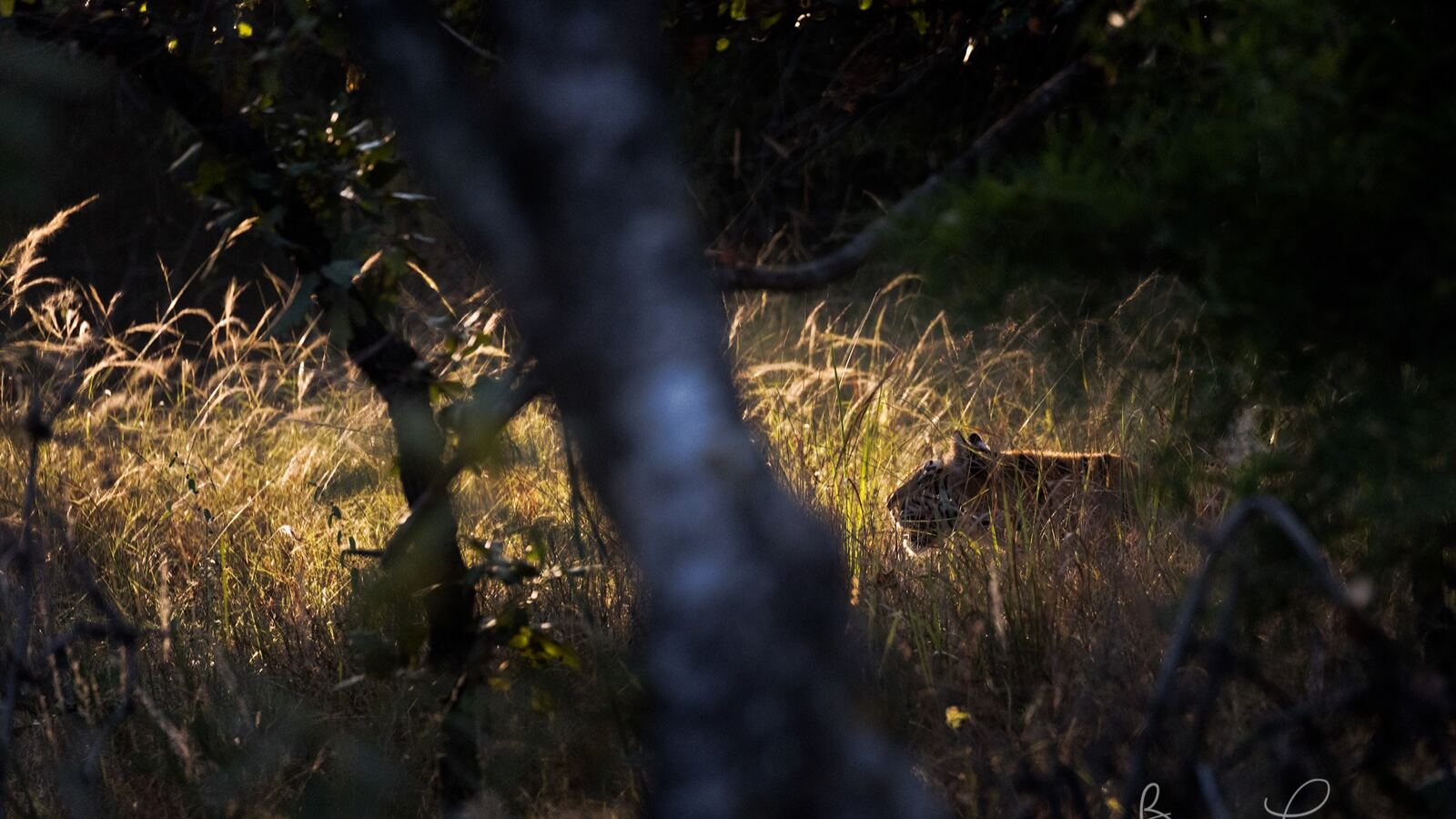
It is a dipterocarp — a member of Shorea, the same genus that supplies much of Southeast Asia's timber — and like its relatives it is a tall, straight forest tree with winged, spinning seeds. The sal forests are a defining ecosystem of the Indian subcontinent, ranging across the Himalayan foothills and the central Indian plateau, and they shelter tigers, elephants, and a great richness of life, making the sal a keystone forest tree of the region. See structural diversity.
The tree of the Buddha's birth and death
The sal holds a profound place in Buddhism, bookending the life of the Buddha in the traditional accounts.
The Buddha is said to have been born in a grove of sal trees at Lumbini, his mother Queen Maya reaching up to grasp a flowering sal branch as she gave birth; and he is said to have died (attained parinirvana) lying between two sal trees at Kushinagar, which — in the legend — burst into out-of-season bloom and showered their flowers upon him. So the sal frames the Buddha's earthly life at both ends, and it is deeply venerated in Buddhism, as well as being sacred in Hinduism (associated with Vishnu and with several deities) and Jainism. (It is one of the trees, with the ashoka, named in the birth story, and it is distinct from the unrelated cannonball tree, which is often planted and mislabelled as "sal" in temple grounds.) This sacredness, as ever, has helped protect sal groves. See historical ecology.
Timber, resin, and leaf-plates
The sal is a first-rank utility tree, and its products run through everyday life across northern India.
Timber. Sal wood is hard, heavy, strong, and durable — resistant to decay and termites — and it is one of the most important construction and railway timbers of the subcontinent, used for beams, sleepers, doors, and heavy building work, in the way teak is further south.
Resin. The tree exudes a resin (sal dammar or ral) that is tapped and used as incense, in caulking boats, and in varnishes and traditional medicine — one of the dammar resins of the dipterocarp family, in the tradition of frankincense and myrrh and the other tapped-resin trees.
Leaf-plates. The large, tough sal leaves are stitched together with tiny slivers of bamboo into the disposable leaf-plates and bowls (pattal and donna) used for serving food at festivals, weddings, and roadside stalls across India — a completely biodegradable, traditional tableware that supports a rural cottage industry and is enjoying renewed interest as a plastic-free alternative. The seeds yield an edible oil (sal butter), and the tree gives fodder, tannin, and more — little of it is wasted.
Growing it
Tropical to subtropical, wanting the warm, monsoon climate of its native range — a distinct wet and dry season, deep moist soil, and freedom from hard frost — and it is a large, slow-to-moderate, long-lived forest tree, a strong light-demander like its dipterocarp relatives.
It is grown from seed, which — as in the dipterocarps generally — is short-lived and must be sown fresh, one of the challenges of raising and restoring sal forest. It is central to the forestry, reforestation, and conservation of the Indian subcontinent's forests, and to the livelihoods (timber, resin, leaf-plates, seeds) of millions who live among the sal. See propagation and woodland management.
See also
- Dipterocarps the family sal belongs to, and its Southeast Asian relatives
- Teak the other great timber tree of the subcontinent
- Frankincense and Myrrh other resin-tapped trees
- Ashoka Tree and Cannonball Tree the other "Buddha's-birth" and mislabelled "sal" trees
- Banyan and Strangler Figs the sacred bodhi tree of the Buddha's enlightenment
- Historical Ecology the sal forests and their sacredness