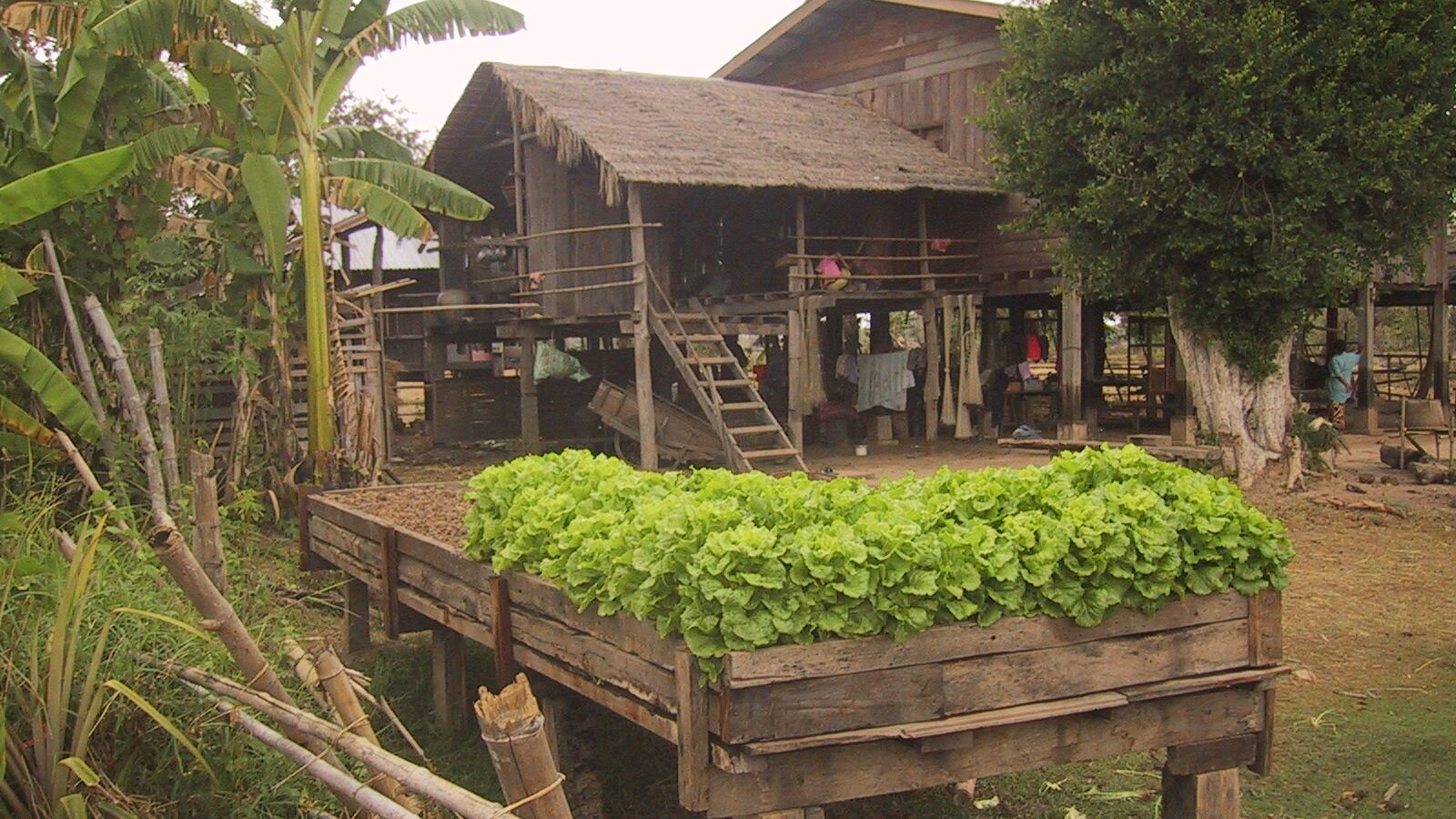
What they are
Not one family but a working category: fast leafy crops picked young and eaten raw.
Lettuce (Lactuca sativa), a daisy relative. Butterhead, cos, crisphead, and loose-leaf. Rocket, mustards, mizuna, komatsuna, radish leaf — all brassicas, and sharing their pests. Chicory and endive (Cichorium), bitter, hardy, and superb in winter. Spinach (Spinacia) and chard (Beta, a beet), both in the amaranth family. Corn salad, claytonia, land cress — the cold-hardy fillers that carry a garden through winter.
They share a growth habit rather than an ancestry: quick, leafy, shallow-rooted, and best in cool moist conditions.
Cut and come again
The technique that makes salad the highest-return crop per square metre in any garden.
Sow thickly in a band rather than spaced individually. When leaves reach 8 to 12 cm, cut the whole patch with scissors about 2.5 cm above soil level, leaving the growing point intact.
It regrows. A well-managed patch gives three or four cuts over several weeks before quality falls off.
Compare growing lettuce as individual hearts: one plant, one harvest, far more space and time. Cut-and-come-again is faster, denser, and gives a longer window from the same ground.
Sow a new patch every 2 to 3 weeks and you have salad continuously. This is succession planting at its most rewarding, because the cycle is short enough to see the results within the season.
Bolting is the enemy
Salad crops bolt — run to flower — and once they do, leaves turn bitter and tough and the plant is finished.
Lettuce bolts in response to heat and long days. Above about 25 C, and under high summer daylength, most varieties run.
The defences:
Shade in summer. 30 to 50 percent shade cloth, or growing between taller crops, keeps leaves usable through heat that would otherwise stop the crop. See shade management.
Choose the season's variety. Bolt-resistant summer lettuces, cold-hardy winter types. Growing one variety year-round guarantees failure in one direction or the other.
Sow in the cool. Lettuce seed goes dormant above about 25 to 28 C — thermodormancy — so midsummer sowings often fail to germinate at all. Sow in the evening, in shade, or start in modules somewhere cool.
Never let them dry out. Water stress triggers bolting, and shallow roots dry quickly. Consistent moisture is the single biggest factor in leaf quality. Mulch, and consider wicking beds, which suit salad particularly well.
Pick young and keep cutting. Regular cutting delays bolting.
Bitterness in lettuce comes from the milky latex, which increases with heat, age, and stress. A bitter lettuce is telling you it was too hot, too dry, or left too long.
Salad through the whole year
With the right species you need never buy a bag.
Spring: early lettuce under cover, land cress, overwintered chard. Summer: bolt-resistant lettuce in some shade, chard, New Zealand spinach, amaranth leaf — the heat-tolerant substitutes for spinach, which bolts readily. Autumn: the best season. Cooling weather and shortening days suit almost everything. Winter: corn salad, claytonia, land cress, mizuna, winter purslane, and forced chicory. Under a cloche, fleece, or in a cold greenhouse these crop through frost.
Winter salad grows slowly — it is mostly harvesting growth made in autumn rather than active production — so sow in late summer to establish plants before the light goes. See frost protection and seasonal planning.
Forced chicory is worth singling out: lift the roots in autumn, cut back, and force in complete darkness somewhere cool. The pale tight chicons that result are a genuine winter luxury from a bucket in a shed.
Growing them well
Rich, moisture-retentive soil with plenty of organic matter — the shallow root system depends on the top few centimetres staying moist and fertile. See no-dig, which suits salad especially well.
Nitrogen for leaf, but not excessive — soft over-fed growth attracts aphids and keeps badly.
They are ideal for containers, windowsills, and small spaces, and among the best crops for the intensive zone-one bed described in permaculture design. Nothing repays proximity to the kitchen door more.
Problems
Slugs and snails, the dominant problem. Salad is their preferred food and seedlings vanish overnight. Habitat for predators helps most in the long run — see slugs and snails and amphibians and reptiles.
Flea beetles shot-holing rocket and mustards, especially in dry spring weather. Fleece excludes them. See flea beetles.
Aphids, particularly in the hearts of lettuce and under cover. See aphids.
Downy mildew in crowded damp conditions — space, ventilate, and avoid overhead watering.
Birds stripping seedlings.
Fine mesh over hoops solves several of these at once. See row covers and barriers.
Harvest and keeping
Pick early in the morning, when leaves are turgid and full of water. The same leaf picked at midday wilts within minutes and never fully recovers.
Wash, spin dry, and store in a sealed box with a sheet of kitchen paper in the fridge. Handled that way, home-grown leaves keep a week.
Salad does not store beyond that, which is exactly why growing it is worthwhile — the gap between a leaf cut ten minutes ago and one shipped in a bag is larger than for almost any other crop. See harvest and storage.
Saving seed
Lettuce is self-pollinating and easy: let a plant bolt, flower, and set the small dandelion-like seed heads, then collect as they fluff. One plant supplies years of seed.
Let a few bolt deliberately anyway — lettuce, rocket, and chicory flowers are excellent for hoverflies and small parasitic wasps, whose larvae then work on your aphids. Letting a crop flower is a pest control decision as much as a seed one. See seed saving and predator-prey balance.
See also
- Succession Planting sowing every two weeks
- Slugs and Snails the main threat
- Container Growing salad by the kitchen door
- Frost Protection winter leaves under cover
- Shade Management keeping summer lettuce from bolting
- Brassicas rocket and mustards share their pests
- Spinach
- Buckwheat, Quinoa and Amaranth
- Fennel and Chicory