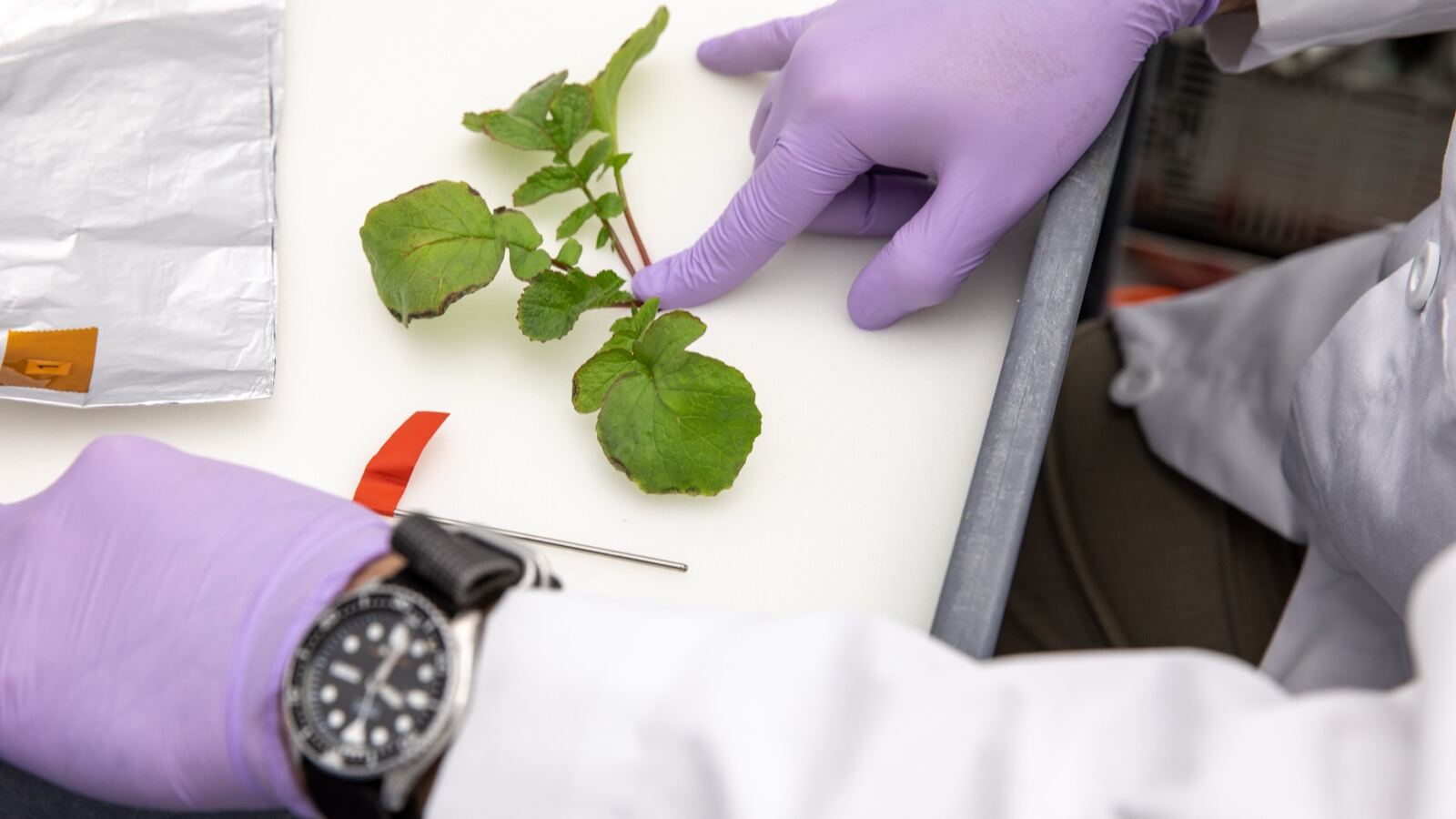
What it is
Raphanus sativus, a brassica — which surprises people, but the family resemblance is obvious once the plant flowers, and it shares the family's pests.
The edible part is a swollen hypocotyl and taproot. Types range from the small red summer radish ready in three weeks to daikon and mooli, which reach 40 cm and take three months.
The fastest crop there is
Summer radishes go from sowing to harvest in 18 to 30 days. Nothing else in a temperate garden is close.
That speed makes them useful well beyond their own merits:
Catch cropping. Sow radishes in ground that is waiting for something slower, and harvest before the main crop needs the space.
Intercropping. Sow radish between rows of slow germinators like carrots or parsnips. The radishes mark the row, break any surface crust, and are pulled before the main crop needs the room.
Testing new ground. A quick radish sowing tells you a lot about a bed's fertility, drainage, and pest pressure inside a month.
A crop for children and beginners, because the feedback loop is short enough to hold attention.
Because they are so fast, sow little and often — a short row every 10 to 14 days. A single large sowing produces a glut that goes woody within days. See succession planting.
Why they go hot, woody, or hollow
Almost every radish complaint is one of three things, and all three trace back to growing conditions rather than variety.
Excess heat and drought make them hot. The pungency comes from mustard oil glycosides, the family's chemical defence, and stress concentrates them. A radish grown fast and cool in moist soil is mild; the same variety grown slowly in dry heat is fierce.
Slow growth makes them woody and pithy. Radishes must be grown fast and without any check. Anything that stalls them — drought, compaction, poor fertility, overcrowding — produces a tough root.
Hollow or split roots come from irregular watering, especially a drought followed by heavy rain, or from leaving them too long.
All leaf and no root is the other common outcome, caused by too much nitrogen, too little light, or sowing too thickly. Radishes want moderate fertility and full sun — over-rich ground gives magnificent tops and nothing underneath.
So: sow thinly, water consistently, keep them moving, and pull them young.
Growing them
Direct sow, always. Like other root crops they resent transplanting.
Sow thinly, 2.5 cm apart, 1 cm deep, in rows 15 cm apart. Thin promptly if crowded.
Cool weather suits them. Spring and autumn are the best seasons; midsummer sowings bolt and turn hot. In hot climates grow them in light shade.
Moisture, consistently. This is the main lever on quality.
Do not over-feed. Ground manured for a previous crop is right.
Winter radishes are a different crop
Beyond the small salad types:
Daikon and mooli — large white winter radishes, sown midsummer for autumn and winter, reaching 30 to 40 cm. Mild, crisp, and a staple across East Asia, pickled, braised, or grated raw.
Black Spanish and other winter radishes — dense, pungent, and genuinely storable for months in damp sand like carrots.
These are a serious winter vegetable rather than a garnish, and they need the space and time of a maincrop root.
Daikon is also grown as a fodder radish and cover crop — a biodrilling green manure whose thick taproot punches through compacted subsoil and then rots in place, leaving a channel. It is one of the better biological answers to a compaction pan. See cover cropping and decompaction.
Problems
Flea beetles are the defining pest — tiny beetles that riddle the leaves with shot holes, worst on young plants in dry spring weather. Damage to the leaves slows growth and therefore ruins the root. Fine mesh over the row from sowing is the reliable answer, plus keeping the soil moist, which the beetles dislike. See flea beetles and row covers and barriers.
Cabbage root fly on larger winter types.
Slugs on seedlings. See slugs and snails.
Clubroot, since radishes are brassicas — they belong in the brassica slot of the rotation, which people frequently forget because radishes feel too small to matter.
Bolting in heat and long days.
Do not waste the rest of the plant
Radish leaves are edible and good — peppery, best young, excellent in soup or wilted.
Seed pods are the real secret. Let a plant bolt and it produces crisp green pods with a mild radish heat, superb raw or pickled. Some varieties, such as rat-tail radish, are grown for the pods alone and never make a root at all.
Letting a few radishes flower is worth it anyway: the flowers are excellent for hoverflies and small parasitic wasps, whose larvae then work on aphids elsewhere in the garden. See predator-prey balance and pollinator habitat.
Harvest and keeping
Pull young. Summer radishes are at their best for a matter of days and go woody quickly. When in doubt, pull.
Remove the tops immediately, as they draw moisture out of the root, then store in the fridge for a week or two.
Winter radishes store for months in damp sand, cold and humid, like other roots. See harvest and storage.
Saving seed
Easy, and one of the more satisfying seed crops — let a plant bolt, flower, and set pods, then dry the pods and thresh out the seed.
Radishes are insect-pollinated and cross readily with other radish varieties and with wild radish, so isolate for true seed. Seed is viable for around 5 years. See seed saving.
See also
- Brassicas the family, and the clubroot rotation
- Succession Planting little and often
- Flea Beetles the defining pest
- Carrots intercropping to mark slow rows
- Cover Cropping daikon as a biodrill
- Seed Saving pods as a crop in themselves