What they are
Apium graveolens, an umbellifer alongside carrots, parsnip, fennel, and parsley — selected two ways.
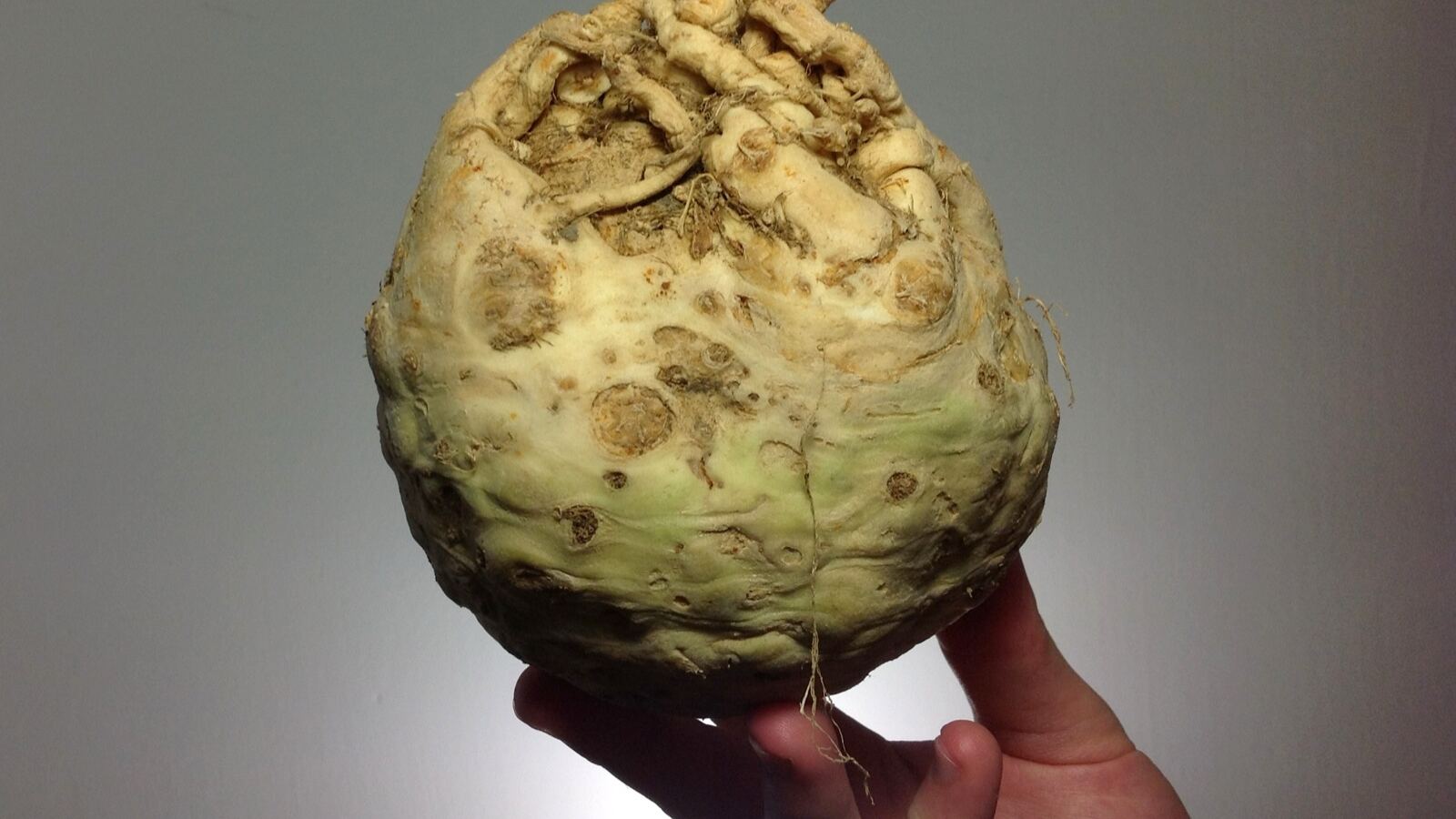
Celery (var. dulce) — for its thickened leaf stalks. Celeriac (var. rapaceum) — for a swollen knobbly stem base at ground level, not a true root.
Wild celery, sometimes called smallage, grows in salt marshes and wet ditches around European coasts. That origin explains almost everything about how these crops behave.
They are bog plants
The single most useful fact. Celery and celeriac evolved in permanently wet ground, and neither has ever lost the requirement.
They will not tolerate drying out. A single dry week produces stringy, bitter, hollow celery or a small woody celeriac, and there is no recovery — the damage is locked into the tissue already formed.
So:
Rich, deeply worked soil with as much organic matter as you can supply. Trenching celery into a manure-filled trench is the traditional method for exactly this reason.
Mulch heavily and keep it topped up. See mulching for moisture.
Water generously and consistently, and think of it as irrigation rather than watering. These are among the few garden crops that genuinely suit a boggy corner or the wet end of a bed, and they do well in wicking beds, where the reservoir removes the variability entirely.
If you cannot commit to consistent water, grow something else. This is the crop where that advice is most literally true.
Celery: two types
Self-blanching and green celery. Grown in a block rather than a row — 23 to 27 cm apart each way — so the plants shade each other's stems. Easier, and the modern default. Green varieties are not blanched at all and have a stronger flavour.
Trench celery. The traditional method: plants set in a trench and gradually earthed up, or wrapped in collars of cardboard or paper, to exclude light from the stalks. More work, hardier, later, and it produces the long white sticks of old kitchen gardens.
Blanching reduces bitterness and toughness. It also reduces flavour, which is why green celery has its advocates.
Whichever type, do not start earthing up or wrapping until the plants are well grown, and keep soil out of the heart.
Celeriac: the long game
Celeriac takes the entire season — sow indoors in early spring, plant out after frost, harvest from autumn into winter. Roughly 25 to 30 weeks.
Do not earth it up. Unlike most root crops, celeriac swells at the surface and wants to sit on top of the soil, not in it. Burying it causes rot and encourages roots to form up the sides.
Remove the lower side leaves through late summer as the crown swells, and rub off the side roots forming around the base. Both direct energy into the bulb and produce a cleaner, less knobbly vegetable that is far easier to peel.
Plant at 30 cm spacing, and feed and water throughout.
Starting them
Both are slow and fiddly from seed, which is the other reason they have a reputation.
Sow indoors 10 to 12 weeks before planting out.
Do not cover the seed, or barely — celery seed needs light to germinate. This is the usual reason a sowing fails entirely.
Germination is slow, 2 to 3 weeks, and wants 15 to 20 C.
Do not plant out too early. Both are prone to bolting if young plants experience temperatures below about 10 C for a sustained spell. A cold snap after planting out will send them to flower, and a bolted plant is finished. Harden off carefully and plant out only once the weather is settled — this is the crop where impatience costs the whole harvest.
Problems
Celery leaf miner, tunnelling blotches between leaf surfaces, the commonest pest. Remove affected leaves; fleece excludes the fly. See row covers and barriers.
Celery leaf spot, a seed-borne fungus producing brown spots. Use treated or clean seed, space for airflow, and remove affected foliage.
Slugs in the crowns, which thrive in exactly the damp conditions the crop needs. See slugs and snails.
Carrot fly, since they are umbellifers and share it. See carrots.
Boron deficiency causes cracked stems in celery and brown internal rot in celeriac. Uncommon, more likely on alkaline or over-limed soil, and easy to overdo — test before treating. See nutrient deficiency and soil testing.
Bolting, as above.
Harvest and keeping
Celery: cut whole heads at the base as needed, or pick outer stalks from green varieties. Self-blanching types are not frost-hardy and must be used before hard frost; trench celery stands considerable cold and is traditionally lifted after frost has sweetened it.
Celeriac: lift from autumn. It is reasonably hardy and can be left in the ground under a straw mulch in mild areas, which is the easiest storage. Otherwise trim the roots and tops and store cold and damp in sand, like carrots, for several months.
Celery leaves — the strong-flavoured tops usually discarded — are excellent dried or frozen for stock, and celeriac trimmings likewise. See harvest and storage.
The rest of the family
Leaf celery or cutting celery is the easiest of the three by a wide margin: grown for its leaves rather than stalks, far more tolerant of neglect, hardy, and often perennial-ish. If celery has defeated you, grow this instead.
Umbellifer flowers, if you let a plant bolt, are excellent for hoverflies and parasitic wasps. See pollinator habitat.
Saving seed
Biennial, insect-pollinated, and crosses within the species, so celery and celeriac left to flower together will cross. Overwinter plants and let them flower in year two. Seed is viable around 5 years. See seed saving.
See also
- Carrots the same family, and the same carrot fly
- Mulching for Moisture the crop's main requirement
- Wicking Beds removing the watering variability
- Harvest and Storage storing celeriac in sand
- Nutrient Deficiency boron and cracked stems
- Frost Protection avoiding the cold snap that bolts them
- Fennel and Chicory