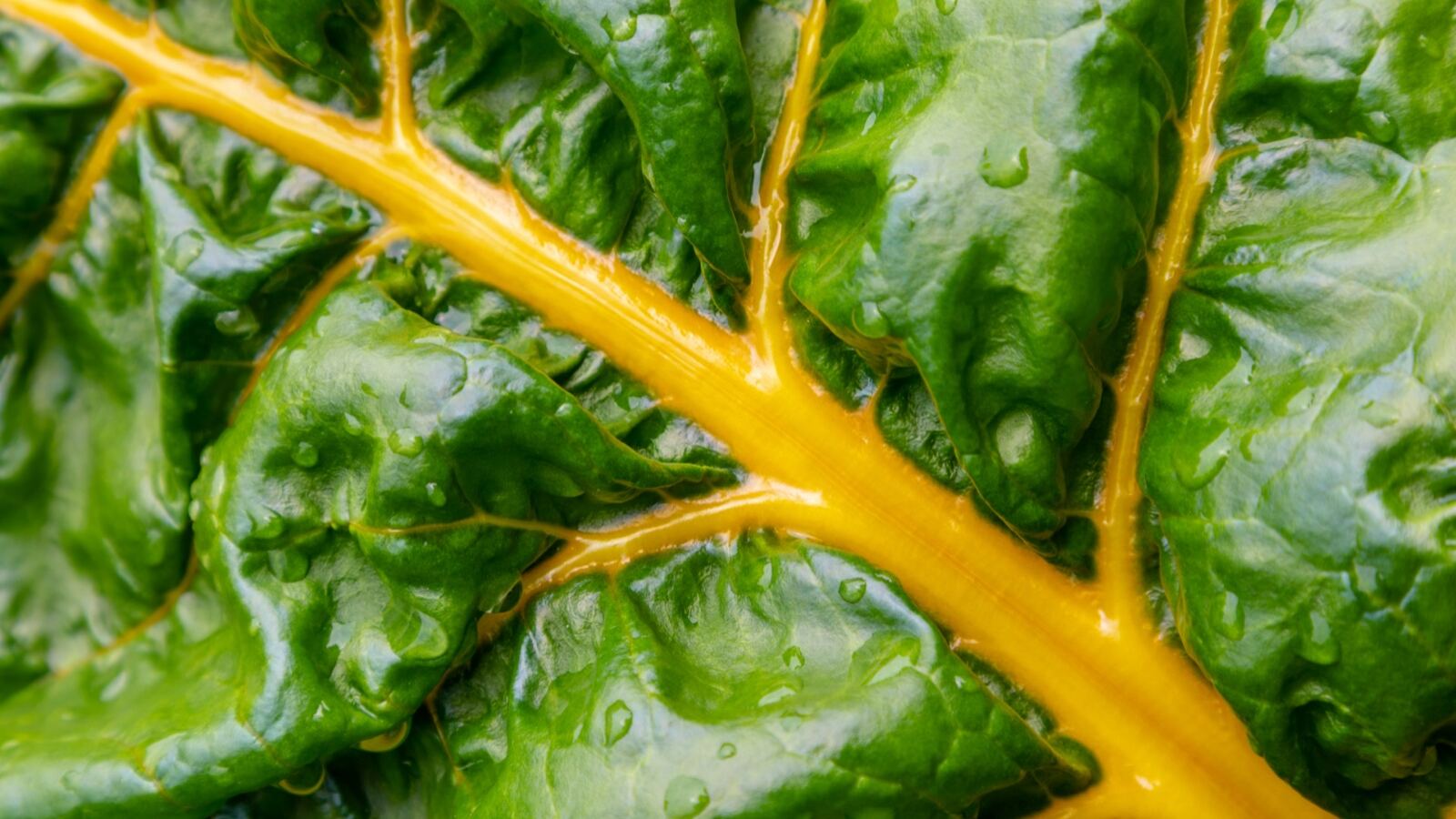
One species, two vegetables
Beta vulgaris. Beetroot, chard, spinach beet, sugar beet, and mangelwurzel are all the same species, selected in opposite directions — beetroot for a swollen root, chard for stems and leaves.
They descend from sea beet, a coastal plant of European shores, which explains the family's unusual salt tolerance and its indifference to poor ground.
Beet leaves are edible at every stage, so a beetroot crop is really two crops: the roots, and the thinnings and young leaves along the way. Growing beetroot and throwing the tops away wastes half of it.
Every seed is a cluster
Beet seed is not a seed. It is a dried fruit containing two to five embryos, which is why a single sowing produces a tuft of seedlings.
Practical consequences:
Expect to thin, even when you sowed thinly. Thin to one seedling per station, or you get a knot of small distorted roots competing.
Thin with scissors, not fingers. Pulling one seedling disturbs the roots of its neighbours.
Monogerm varieties exist, bred to carry a single embryo, and they remove the problem entirely.
Soaking seed overnight speeds germination noticeably, since the corky fruit wall contains germination inhibitors that need leaching out.
Growing beetroot
Direct sow from mid-spring, or start in modules and plant out — beetroot is one of the few root crops that transplants acceptably, provided it goes out young.
Space 7 to 10 cm apart in rows 25 to 30 cm. Closer for baby beets.
Soil should be fertile but not freshly manured, which causes forking as it does in carrots. Beetroot dislikes acid ground — aim for pH 6.5 to 7.0. See soil pH.
Water evenly. Irregular watering causes woody roots and splitting. Drought followed by rain is the classic cause of a cracked beet.
Sow in succession every 3 to 4 weeks for a continuous supply of tender young roots rather than one batch of giants. See succession planting.
Boron is the one micronutrient beet genuinely needs, and deficiency causes internal black rot and corky patches. It is uncommon except on very alkaline or heavily limed soils, and boron is easy to overdo to toxicity — confirm before treating. See nutrient deficiency.
Bolting is the main failure, triggered by cold shock in early sowings. Use bolt-resistant varieties for anything sown before late spring.
Growing chard
Chard is beetroot grown for the top, and it is one of the most useful crops in a temperate garden for one reason: it does not quit.
Where spinach bolts at the first warm spell, chard stands through summer heat and, in mild climates, through winter as well. A spring sowing can crop for the better part of a year.
Sow in spring for summer and autumn, and again in midsummer for winter and the following spring. Space at 25 to 30 cm for full-sized plants, or sow densely and cut young as part of a salad leaves mix.
Harvest by picking outer leaves, never by cutting the whole plant. Take the outside, leave the growing point, and the plant keeps producing for months. This is the same logic as cut-and-come-again but at a larger scale.
Perpetual spinach, also called spinach beet, is the same idea with a plainer stem and a flavour closer to true spinach.
The coloured-stem varieties are genuinely ornamental as well as productive, which makes chard one of the better crops for a front garden or an edible border.
Problems
Beet is among the least troubled crops in the garden.
Leaf miner — pale blotchy tunnels between the leaf surfaces. Squash the larvae in the leaf, or remove affected leaves. Cosmetic on chard, and worth controlling on young plants.
Downy mildew in crowded damp conditions.
Birds stripping seedlings, especially in spring.
Slugs on young plants. See slugs and snails.
Bolting, as above.
Beet has no major soil-borne disease requiring a long rotation gap, which makes it useful as a filler crop in a bed between more demanding families. It still belongs in a rotation, since scab and pests build up.
Harvest and storage
Beetroot: lift at golf-ball to tennis-ball size. Larger roots go woody, though modern varieties hold texture better than old ones.
Twist the tops off rather than cutting, leaving 3 to 5 cm of stalk. A cut beet bleeds and loses colour in the pan.
Do not damage the skin. Beetroot stores well precisely because the skin is intact.
Store cold and damp, 0 to 4 C at high humidity, in boxes of damp sand — the same conditions as carrots. They keep for months. In mild climates they can stay in the ground under a mulch. See harvest and storage.
Beetroot also pickles and ferments exceptionally well, which is the traditional answer to a glut.
Chard does not store. Pick and use within a couple of days, or blanch and freeze.
Saving seed
Biennial: the plant must overwinter and flower in its second year.
Beet is wind-pollinated and crosses freely across the whole species, so a beetroot flowering near chard, spinach beet, or a neighbour's sugar beet will produce unpredictable offspring. Isolation of a kilometre or more is the textbook figure, which makes this a crop most gardeners buy seed for.
Sea beet growing wild on nearby coasts will also cross with it. See seed saving.
See also
- Carrots the other main root crop, and why neither wants fresh manure
- Salad Leaves chard in a cutting mix
- Succession Planting spreading the beetroot sowings
- Harvest and Storage sand boxes for roots
- Soil pH beet dislikes acid ground
- Seed Saving why beet seed is hard to keep true
- Buckwheat, Quinoa and Amaranth