Two bitter crops
Both are grown for flavours most vegetables have had bred out of them, and both reward a grower willing to work with bitterness rather than against it.
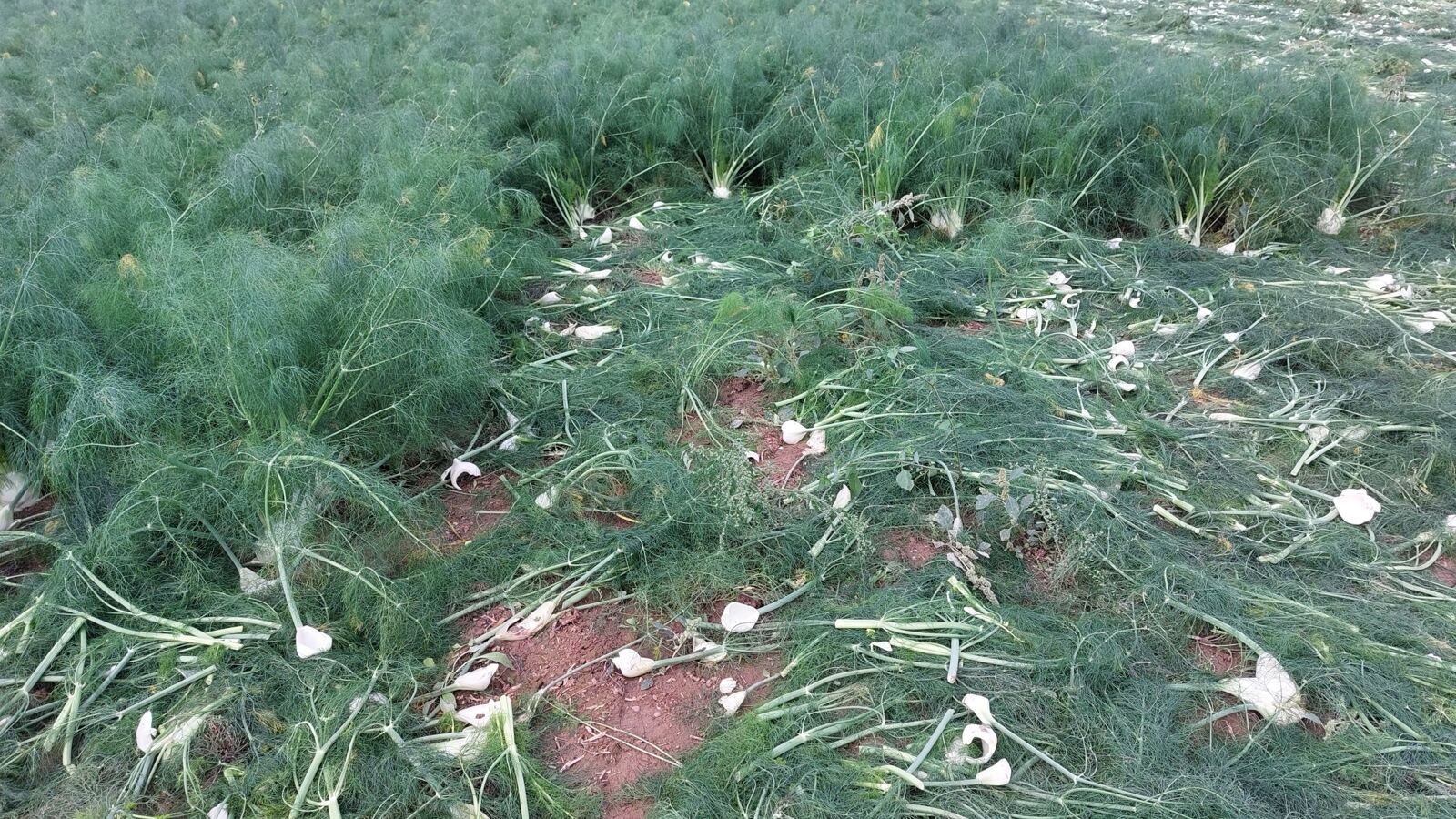
Fennel, Foeniculum vulgare, an umbellifer alongside carrots, celery, dill, and parsley. Anise-flavoured from anethole, the same compound as in aniseed and star anise.
Chicory, Cichorium intybus, and endive, C. endivia, in the daisy family with lettuce. Bitter from sesquiterpene lactones, principally lactucopicrin.
Two fennels
A distinction that catches people out when buying seed.
Herb fennel (F. vulgare) is a tall hardy perennial grown for its feathery foliage and seed. It does not form a bulb, it self-seeds enthusiastically, and it lives for years. Bronze fennel is an ornamental form of the same plant.
Florence fennel or finocchio (F. vulgare var. azoricum) is an annual grown for the swollen leaf-base bulb. It is the vegetable.
Sowing herb fennel and expecting a bulb is a common and entirely avoidable disappointment.
Note also that herb fennel is allelopathic — it inhibits the germination and growth of a range of neighbours, including beans, tomatoes, and dill. Plant it at a distance rather than in a mixed bed. See companion planting guide.
Fennel and dill also cross-pollinate, producing offspring with muddled flavour, so keep them apart if saving seed. See seed saving.
Florence fennel bolts
The defining difficulty of the crop, and the reason it has a reputation for being hard.
Florence fennel is a long-day plant that runs to flower in response to lengthening days, and it is additionally triggered by any check to growth — cold, drought, root disturbance, or transplanting.
Bolted fennel produces a tall flower stem and a thin, tough, unusable base.
The defences:
Sow after midsummer. This is the single most effective measure. Sowings made from around the summer solstice onward, as days shorten, bulb far more reliably than spring sowings. Fennel is an autumn crop in most temperate climates, and treating it as a spring one is why it fails.
Direct sow, or use deep modules and transplant very young. It has a taproot and dislikes disturbance.
Never let it dry out. Consistent moisture is essential, as with celery.
Choose bolt-resistant varieties for anything sown early.
Earth up the swelling bulb slightly to blanch it, which sweetens it.
Harvest when the bulb is the size of a tennis ball, cutting at ground level — the stump often produces useful small regrowth.
Chicory: bitterness as the point
Chicory divides into several distinct crops from one species.
Radicchio and the red Italian types form tight red heads, and they are improved by cold — the colour develops and the bitterness moderates after frost. Sown in summer for autumn and winter cutting.
Sugarloaf forms a large pale conical head, milder than radicchio.
Witloof or Belgian endive is the forcing type, grown for its root and then forced in darkness.
Catalogna and puntarelle are grown for their shoots and stems.
Root chicory is grown for roasting and grinding as a coffee substitute or additive — a use that expanded enormously during the Napoleonic blockade and the world wars, and which persists in New Orleans coffee and in French chicorée. The roots are also a major commercial source of inulin, the prebiotic fibre discussed in jerusalem artichokes, and the same digestive caution applies.
Endive (C. endivia), including frisée and escarole, is a separate species grown as a leafy salad, blanched by covering the heart to reduce bitterness.
Forcing chicons
The technique that turns a bitter root into a winter delicacy, and it is one of the more satisfying things to do with a shed.
Sow witloof chicory in late spring and grow it through summer to produce a substantial parsnip-like taproot. Do not harvest the leaves.
Lift the roots in late autumn, after frost. Trim the foliage to about 2 cm above the crown, and trim the root to 15 to 20 cm.
Store the roots cold for a few weeks — the cold period is needed before they will force properly.
Force in complete darkness. Pack the roots upright in a bucket or box of sand or compost, water, cover to exclude all light, and keep at 10 to 18 C.
In three to five weeks each root produces a chicon — a tight, pale, crisp, mildly bitter head. Cut it, and many roots produce a smaller second one.
Darkness is not optional. Any light greens the chicon and makes it aggressively bitter, which is why commercial witloof is grown in dark sheds and sold wrapped in blue paper.
The whole operation happens in a shed in midwinter using roots grown the previous summer, which makes it one of the genuinely useful hungry-gap crops. See harvest and storage and salad leaves.
Bitterness is a food, not a fault
Worth saying, because a great deal of vegetable breeding has run the other way.
The bitter compounds in chicory are associated with digestive stimulation, and the traditional European use of bitter leaves as an aperitif and digestive has a plausible physiological basis.
Bitterness is also reduced by blanching — excluding light — by cold, and by cooking, so the same plant offers a range from aggressive to mild depending on how it is grown and handled.
Growers who dislike chicory have usually met it grown in full light and eaten raw, which is the most bitter possible presentation.
Growing both
Fennel: full sun, fertile well-drained soil, consistent moisture, sown midsummer for autumn.
Chicory: far more forgiving. Tolerates poor soil, cold, and neglect, and is one of the hardiest salad crops — the red types stand hard frost and are among the few things worth cutting in a temperate midwinter.
Chicory is also a good deep-rooted forage and cover crop, used in herbal leys for its mineral content and its taproot's ability to break compaction. See cover cropping, decompaction, and rotational grazing.
Let some flower. Chicory's clear blue flowers and fennel's umbels are both excellent for pollinators, and fennel in particular is one of the best umbellifers for hoverflies and parasitoid wasps. See beneficial predators and pollinator habitat.
Fennel is also the larval foodplant of swallowtail butterflies in parts of its range. See butterflies and moths.
See also
- Celery and Celeriac the umbellifer relatives and the same moisture demand
- Salad Leaves chicory in the winter cutting mix
- Carrots the family, and the flowers that feed predators
- Harvest and Storage forcing and storing roots
- Jerusalem Artichokes the other inulin crop
- Hoverflies what the umbels feed