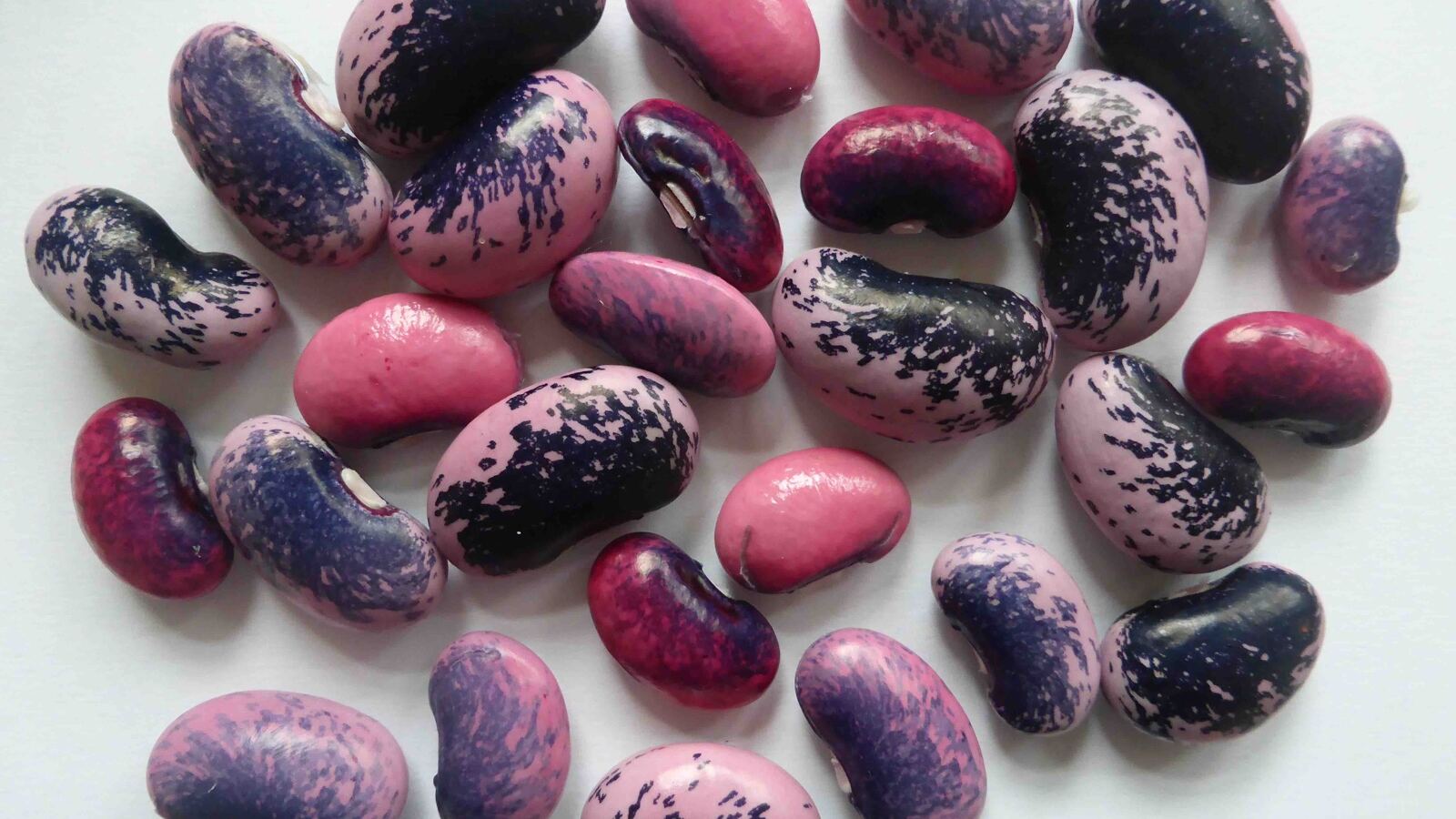
What they are
The legume family, Fabaceae — the third great crop family after grasses and brassicas, and the only one that manufactures its own nitrogen fertiliser.
Root nodules host Rhizobium bacteria that convert atmospheric nitrogen into a form the plant can use, in exchange for sugars. The mechanism is covered in nitrogen-fixing bacteria, and the same partnership underlies the trees in nitrogen fixers.
For a grower this means legumes need no nitrogen feeding, and they leave the ground better than they found it — which is why they sit immediately before the hungry brassicas in almost every rotation.
Cut the tops, leave the roots
The single most useful habit with legumes.
Most of the fixed nitrogen is in the nodules and root system. Pull the plant up and you remove it. Cut the plant off at ground level and leave the roots to decompose in place, and the nitrogen stays for the next crop.
The tops go on the compost heap or straight down as mulch. See chop and drop and composting methods.
One caveat worth knowing: a legume grown in rich soil fixes far less, because fixation is metabolically expensive and the plant will take free nitrogen if it is available. Legumes earn their keep on poorer ground.
The main players
Broad beans (Vicia faba). The hardiest. Autumn-sown varieties overwinter in mild climates and crop in late spring, well before anything else — one of the best gap-fillers in the year. Pinch out the growing tips once the first pods set: it removes the blackfly's favourite tissue and pushes energy into pods.
Peas (Pisum sativum). Cool-season, sown early, finished by midsummer heat. Shelling peas, mangetout, and sugarsnap are the same species with different pod walls. Sow in succession for a longer run. Pea shoots are a crop in themselves.
French beans (Phaseolus vulgaris). Frost-tender, sown after the last frost. Dwarf types need no support and crop in a flush; climbing types crop far longer from the same ground. Self-pollinating, so seed comes true easily.
Runner beans (P. coccineus). Perennial in their native highland Mexico, grown as an annual. Cross-pollinated by bees, so they need insects and they will cross with each other. Enormously productive from a small footprint.
All the Phaseolus beans need heat. Sowing into cold wet soil rots the seed — wait, or start in modules.
Support and spacing
Climbing beans and tall peas want a structure that will hold a very heavy, very windy sail in August. Wigwams of canes tied firmly at the top, or a double row with cross-bracing. Underbuilt supports collapse in the first summer gale with the crop on them.
Climbers are the best use of vertical space in a small garden, and they crop over months rather than in one flush.
Peas grab with tendrils and need something fine to hold — netting, twiggy sticks, or wire. Beans twine around the support itself, so canes or strings suit them.
Dwarf beans and peas need no support and suit windy sites and containers.
Growing them
Full sun, moisture-retentive soil, and shelter from strong wind.
Water matters most at flowering and pod set. Drought then causes flowers to drop and pods to be short and lumpy. Mulch heavily and water deeply in dry spells. See mulching for moisture and deep watering.
Do not feed nitrogen. It produces leaf at the expense of pods and suppresses fixation.
Pick constantly. This is the whole trick to yield. Every pod left to mature signals the plant that it has reproduced, and flowering slows or stops. Pick young, pick often, and beans and peas will crop for months. Miss a week and production falls off a cliff.
Problems
Blackfly on broad bean tips, which is why you pinch them out. Otherwise usually controlled by ladybirds and hoverflies if you have habitat for them. See aphids.
Pea moth, whose larvae are the maggots in the pods. Early and late sowings dodge the flight period; fleece during flowering excludes it. See row covers and barriers.
Pea and bean weevil, leaving neat semicircular notches in leaf margins. Ugly and rarely serious.
Mice, which dig up and eat sown pea and bean seed with impressive efficiency. Start in modules if this is a recurring problem.
Halo blight and chocolate spot, both worse in wet crowded conditions. Space for airflow.
Birds stripping pea seedlings and pods. Netting.
Powdery mildew on late peas in dry summers.
Harvest, and the two ways to use them
Fresh. Pick young and often, as above. Peas convert sugar to starch within hours of picking, which is the entire reason a home-grown pea tastes different from a shop one.
Dried. Leave pods on the plant until papery and rattling, then shell and dry thoroughly. Borlotti, cannellini, haricot, soup peas, and dried broad beans are all just the same crop taken to full maturity. Dried legumes store for years and are the most calorie-dense thing a temperate garden produces, which makes them disproportionately valuable for self-sufficiency.
Freeze fresh peas and beans after brief blanching. See harvest and storage.
Saving seed
Peas, broad beans, and French beans are largely self-pollinating, so seed comes true with little isolation — among the easiest seed to save. Runner beans are insect-pollinated and cross freely, so isolate varieties.
Let the pods dry fully on the plant, shell, dry further indoors, and freeze for 48 hours to kill bean weevil larvae before storing. See seed saving.
In wider systems
Legumes are the nitrogen engine of nearly every traditional polyculture: the beans of the three sisters, the clovers of a ley, the vetch of a winter cover crop, and the Inga and Gliricidia of tropical alley cropping.
Their flowers are also a significant nectar source, and broad beans in particular flower very early when little else is open for bumblebees. See native bees and pollinator habitat.
See also
- Nitrogen-Fixing Bacteria the partnership that feeds them
- Crop Rotation legumes before brassicas
- Brassicas the crop that follows them
- The Three Sisters beans in a classic polyculture
- Cover Cropping legumes as green manure
- Seed Saving the easiest seed to keep
- Spindle and Dogwood
- Lentils and Chickpeas