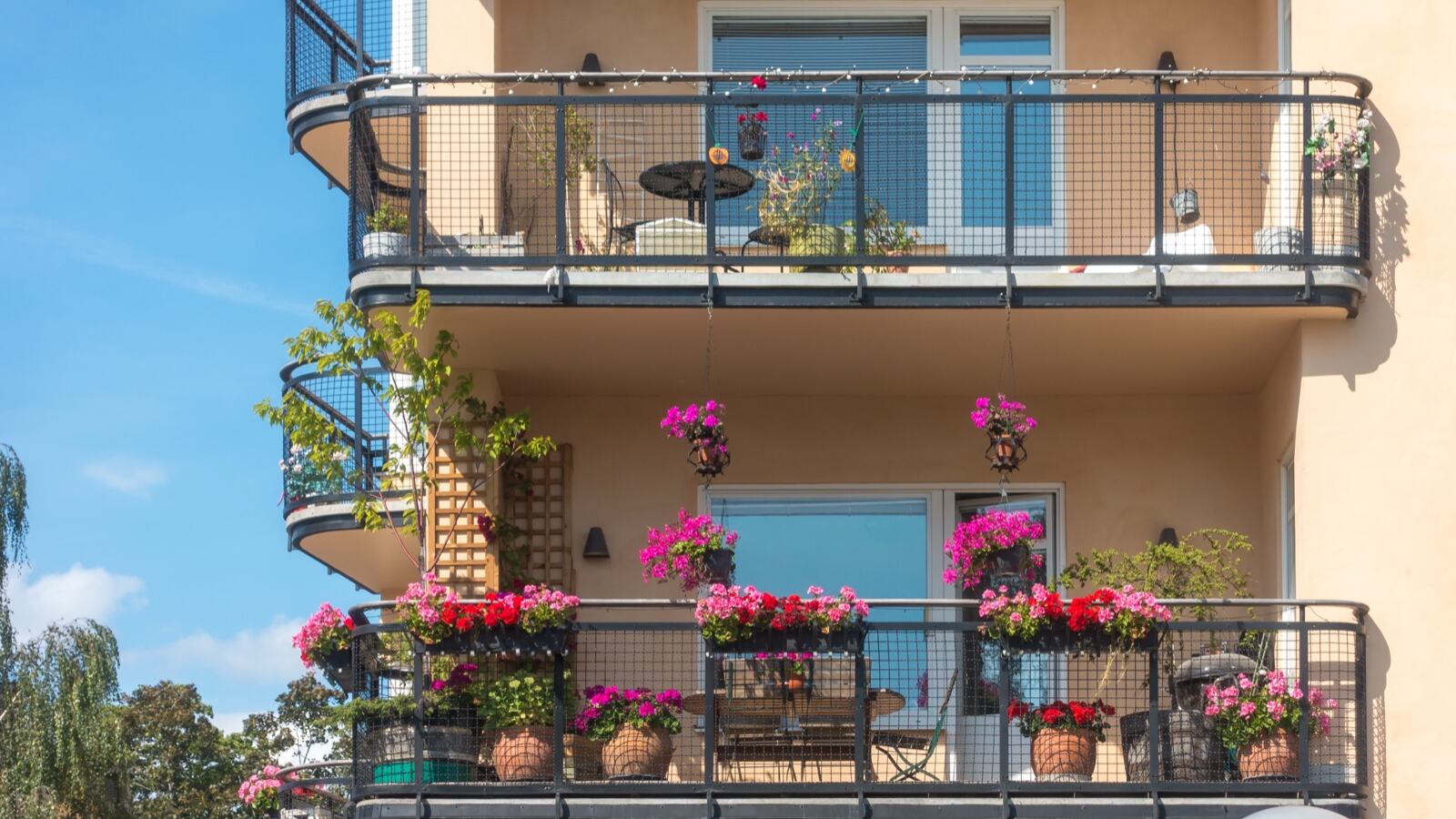
Why a pot is difficult
A container is a tiny, isolated, unbuffered version of soil, and every property that makes ground reliable is missing.
It dries out. A small volume with a large surface, often in full sun with wind on all sides. A pot can go from saturated to critically dry in a summer day, whereas the ground has a reservoir metres deep.
It has no nutrient reserve. Ground soil holds nutrients on clay and organic matter. A container holds what you put in, and every watering flushes some out of the bottom.
It has no biology to speak of. No functioning soil food web, few earthworms, limited mycorrhizal networks. Nutrient cycling that happens for free in the ground has to be supplied.
It swings in temperature. Ground temperature at 30 cm barely moves through a day. A black pot in sun can reach temperatures that cook roots, and in winter a container freezes solid while the same plant in the ground survives easily.
Every technique below is a response to one of those four.
Size is the main variable
The commonest mistake is containers that are too small, and it is worth being specific.
Herbs and salad: 20 to 30 cm depth is workable.
Most vegetables: 30 to 40 cm, and 20 to 40 litres per plant for tomatoes, peppers, and courgettes.
Root crops: 40 cm plus for carrots and parsnips, less for radish and short-rooted carrot varieties.
Dwarf fruit trees: 50 to 90 litres minimum, and larger is better.
Bigger containers are more forgiving in every respect. They dry more slowly, buffer temperature, and hold more nutrients. One large container beats three small ones of the same total volume, because the surface-to-volume ratio is better.
Grouping pots together also helps: they shade each other and raise humidity between them.
Material matters less than size, with two exceptions. Terracotta is porous and dries much faster. Thin black plastic in full sun overheats roots badly, and can be fixed by shading the pot rather than replacing it.
The growing medium
Do not fill containers with garden soil. It compacts in a pot, drains badly, and brings weed seed and pathogens.
A durable mix needs three functions:
Structure that holds air. Coir, composted bark, or wood fibre. Roots need oxygen, and a waterlogged pot kills faster than a dry one.
Water holding. Compost, coir, and a proportion of fine material.
Nutrient reserve and biology. Good quality compost, worm castings, and a slow-release organic component.
A serviceable general mix is roughly one third good compost, one third coir or composted bark, and one third loam or fine composted material, plus some biochar charged with compost tea, and perlite or grit where drainage needs help.
Peat-based composts are best avoided. The horticultural peat trade drains bogs that are irreplaceable carbon stores, for a product that is easily substituted. See peatland restoration.
Vermiculture is particularly well matched to container growing: a small worm bin on a balcony produces castings and liquid feed continuously from kitchen waste, which is exactly what containers need.
Watering
The single biggest cause of container failure, in both directions.
Water thoroughly, not often. Until it runs from the base. A splash on the surface wets the top few centimetres and encourages shallow rooting.
Check by weight, not by eye. Lift the pot, or push a finger in to the second knuckle. Surface appearance is unreliable.
Never let it dry completely. Coir and peat-based media become hydrophobic when fully dry and then shed water down the sides without wetting the rootball. If that happens, stand the container in water for an hour.
Do not leave pots standing in saucers of water in wet weather. Roots suffocate.
Mulch the surface. Gravel, bark, or compost cuts evaporation substantially, exactly as it does in the ground. See mulching for moisture.
The self-watering approaches are worth the effort in containers, because they buffer the swings that cause most problems. Wicking beds work extremely well at container scale, with a reservoir below and water drawn up by capillary action. Ollas, buried unglazed clay pots, do the same job in larger containers. Both cut watering frequency and produce far steadier moisture than hand watering.
Drip irrigation on a timer is the practical answer for anyone who travels. See drip irrigation.
Rainwater is better than tap water for containers, particularly for acid-loving plants, and a small rainwater butt on a balcony downpipe is easy to fit.
Feeding
Container plants must be fed, because there is no reserve and watering leaches what there is.
Start with a medium containing slow-release organic matter. Then supplement through the growing season with liquid feed: compost tea, worm bin leachate diluted, comfrey or nettle tea for potassium and nitrogen respectively.
Top-dress annually on perennials and trees, scraping off the top few centimetres and replacing with fresh compost. Repot or root-prune every two to three years, or the container becomes solid root and stops functioning.
Watch for deficiency symptoms, which appear faster and more clearly in containers than in the ground. See nutrient deficiency.
What actually produces
Be realistic. Containers will not feed a household, and they produce some things extremely well.
Excellent: herbs, salad leaves, chillies and peppers, tomatoes, dwarf beans, radish, spring onions, strawberries, and anything picked repeatedly in small quantities.
Good with a large container: courgettes, chard, kale, bush beans, potatoes in sacks, dwarf fruit trees on very dwarfing rootstock, blueberries.
Poor value: maincrop potatoes, brassicas that need months of space, sweetcorn, pumpkins, anything grown for bulk storage.
The highest return is on things that are expensive to buy, deteriorate fast after picking, or are used in small amounts constantly. A pot of herbs by the kitchen door is worth more than a square metre of onions. This is permaculture design zone thinking applied to a balcony.
Blueberries deserve a specific mention: they need acid soil, which most gardens do not have, and a container filled with ericaceous medium solves that problem completely. See blueberry and acid shrubs.
Fruit trees work on very dwarfing rootstock in large containers, and trained forms suit hard surfaces well. See espalier and training and grafting and rootstocks.
Winter
Roots are far more frost-tender than the top growth, and in a container they are exposed on all sides.
A plant hardy to minus 20 in the ground may die at minus 5 in a pot. Move containers against a wall, group them, wrap with fleece or hessian, or sink them in the ground for winter.
Equally, waterlogging in winter kills more container plants than cold. Raise pots on feet so they drain, and move them out of the worst of the rain.
The wider case
Container growing is often the entry point to everything else. It is also, in dense cities, sometimes the only option, and a balcony that produces herbs and salad through the season is a real contribution rather than a token one.
Hard yards, rooftops, and paved areas can be converted this way without touching the surface beneath, which matters for rented property. Combined with permeable surfaces and rain gardens at street level, it is part of how dense urban areas get greener at all. See urban forestry.
See also
- Wicking Beds self-watering at container scale
- Vermiculture the ideal small-space fertility source
- Espalier and Training fruit in minimal space
- Nutrient Deficiency reading the symptoms early
- Blueberry and Acid Shrubs the classic container crop
- Mulching for Moisture cutting evaporation from the surface
- Salad Leaves
- Culinary Herbs
- Tomatoes
- Sweet Potatoes
- Soil-Dwelling Pests
- Strawberries
- Ginger and Turmeric
- Pomegranate
- Curry Tree
- Frangipani
- Miracle Fruit