What it is
Allium ampeloprasum, the same species as elephant garlic and a close relative of onions and garlic.
Unlike an onion, a leek does not bulb. It builds a cylinder of tightly wrapped leaf bases — the shank — and keeps growing until it is either harvested or triggered into flowering.
That difference is what makes it the most useful winter vegetable in a temperate garden. A leek is not stored; it stands in the ground, fully hardy, and is pulled as needed from autumn through to spring.
The dibbed hole
The technique that defines leek growing, and it looks wrong the first time.
Raise seedlings until they are roughly pencil-thick and 20 cm tall. Then:
Make a deep hole with a dibber — 15 to 20 cm deep, 3 to 5 cm wide.
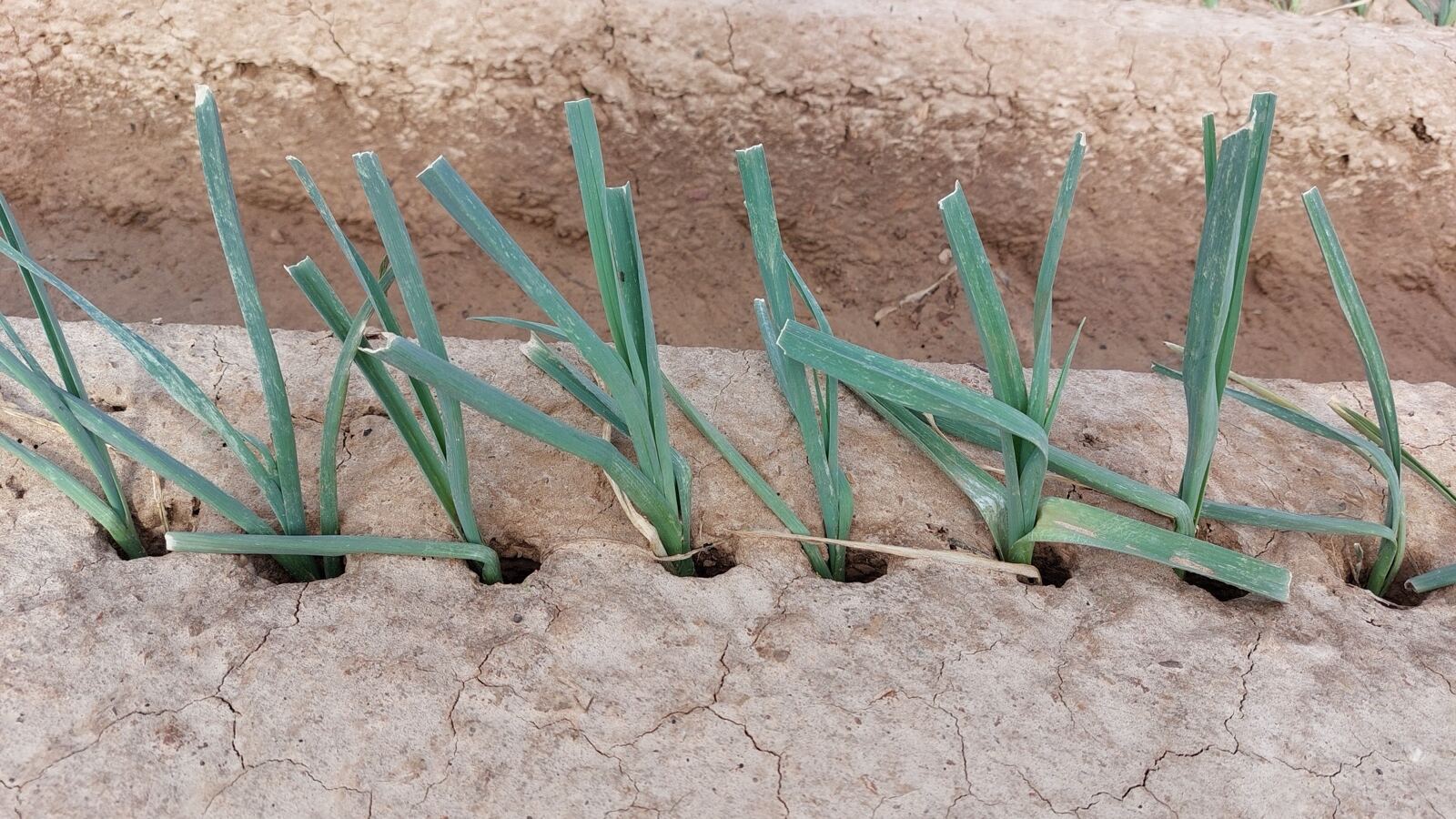
Drop the seedling in. It disappears almost entirely, with only the leaf tips showing.
Do not backfill with soil. Fill the hole with water instead — puddling in. The water washes just enough soil around the roots to settle them, and the rest of the hole is left open.
The plant then swells to fill the cavity as it grows, and the buried portion stays white because no light reaches it.
Trimming the roots and leaf tips slightly before planting is traditional, makes handling easier, and does no harm, though it is not essential.
Spacing at 15 cm apart in rows 30 cm apart for full-sized leeks; closer for slim ones.
Blanching
The white shank is the prize, and it is white because it grew in the dark.
The dibbed hole does most of the work. Beyond that, earth up gradually as the plants grow, drawing soil around the shank two or three times through the season.
Do it in dry conditions and take care not to spill soil down between the leaves, which is how you get grit in the middle of a leek — the commonest complaint about home-grown ones. Some growers slip a cardboard tube or a length of pipe around the shank instead, which blanches cleanly with no grit at all.
Earth up little and often rather than in one heap.
Growing them
Long season. Sow indoors in late winter or outdoors in a seedbed in spring, and transplant in early summer. From sowing to harvest is 30 weeks or more for maincrop types.
Soil. Rich, deep, moisture-retentive, and firm — ground manured for a previous crop is ideal. Leeks are hungry and respond to nitrogen through the growing season, though not late in autumn.
Water through summer. Leeks are shallow-rooted and check badly in drought.
Weed diligently. Like all alliums they have sparse upright leaves, cast little shade, and lose to competition. See weed management.
Choose varieties by season. Early types are longer, paler, faster, and less hardy. Late maincrop types are shorter, thicker, blue-green, and stand hard frost. Growing both spreads the harvest from early autumn to spring.
Problems
Leek rust — bright orange pustules on the leaves. The most common leek problem, worse in mild wet seasons and on crowded, nitrogen-rich plants. Rarely kills, but it cuts yield and looks bad. Space widely for airflow, avoid excess nitrogen, remove badly affected leaves, and rotate. Resistant varieties help. It is a different rust species from the one on garlic, but the conditions are the same.
Leek moth and allium leaf miner, both spreading across Europe. Larvae tunnel into the shank and ruin it. Fine mesh over the crop through the flight periods is the only reliable defence. See row covers and barriers.
White rot, the same soil fungus that ends allium growing in onions, with sclerotia persisting 15 to 20 years. Long rotation and strict hygiene about soil and tools. See crop rotation.
Bolting, usually from cold shock to young plants or from overwintering an early variety. A bolted leek develops a hard woody core and is finished, though the outer layers are still usable.
Harvest and the winter store
Lift with a fork, never by pulling — the shank snaps and leaves the base in the ground.
The great advantage of leeks is that they need no storage at all. They stand in the ground in freezing weather and can be dug through winter, which is exactly the argument made in harvest and storage: in-ground storage is the cheapest and often the best there is.
The practical limits are ground frozen too hard to dig, and slug damage in mild wet winters. Lifting a few in advance during a cold spell and heeling them into a bucket of sand in a shed solves the first.
Leeks also freeze well once sliced and blanched, which is worth doing with anything still standing when they start to bolt in spring.
Saving seed
Biennial. Leave a few plants to overwinter and flower in their second year — the flower head is a large globe, extremely attractive to bees, and worth leaving for that reason alone.
Leeks cross with each other and with elephant garlic. Seed is viable for 2 to 3 years. See seed saving and native bees.
See also
- Onions the close relative and shared diseases
- Garlic the third allium in the rotation
- Harvest and Storage leaving crops in the ground
- Crop Rotation white rot and the long gap
- Row Covers and Barriers leek moth and leaf miner
- Weed Management alliums lose to competition