What it is
Pinus sylvestris, and by range the most widely distributed pine in the world — from Spain to eastern Siberia, from the Arctic Circle to Turkey.
Identify it by two things. Needles in pairs, twisted, blue-green, 4 to 7 cm. And the bark: fissured grey-brown at the base, turning a distinctive flaking orange-pink on the upper trunk and limbs, which is unmistakable in low sun.
Young trees are conical. Old ones lose the lower branches and develop the flat, broad, wind-sculpted crown that makes a veteran Scots pine one of the most characterful trees in Europe.
The Caledonian pinewood
Scots pine is one of only three conifers native to Britain, with yew and juniper, and the only native pine.
After the last glaciation it spread across much of Britain, then retreated as the climate warmed and broadleaves took the better ground. What survived became the Caledonian pinewood of the Scottish Highlands — an open, structurally varied forest of pine with birch, rowan, juniper, and aspen over a ground layer of heather and bilberry.
It once covered perhaps 1.5 million hectares. Around 1 to 2 percent remains, in roughly 80 fragments, most of them small and many with no young trees at all.
The causes were felling for timber, charcoal, and iron smelting; burning; and, decisively, sustained grazing. The remnants are now a restoration priority, and the work is a good illustration of the arguments in minimum viable populations and assisted regeneration.
It needs bare ground and no deer
Two constraints govern whether Scots pine regenerates, and both are frequently missed.
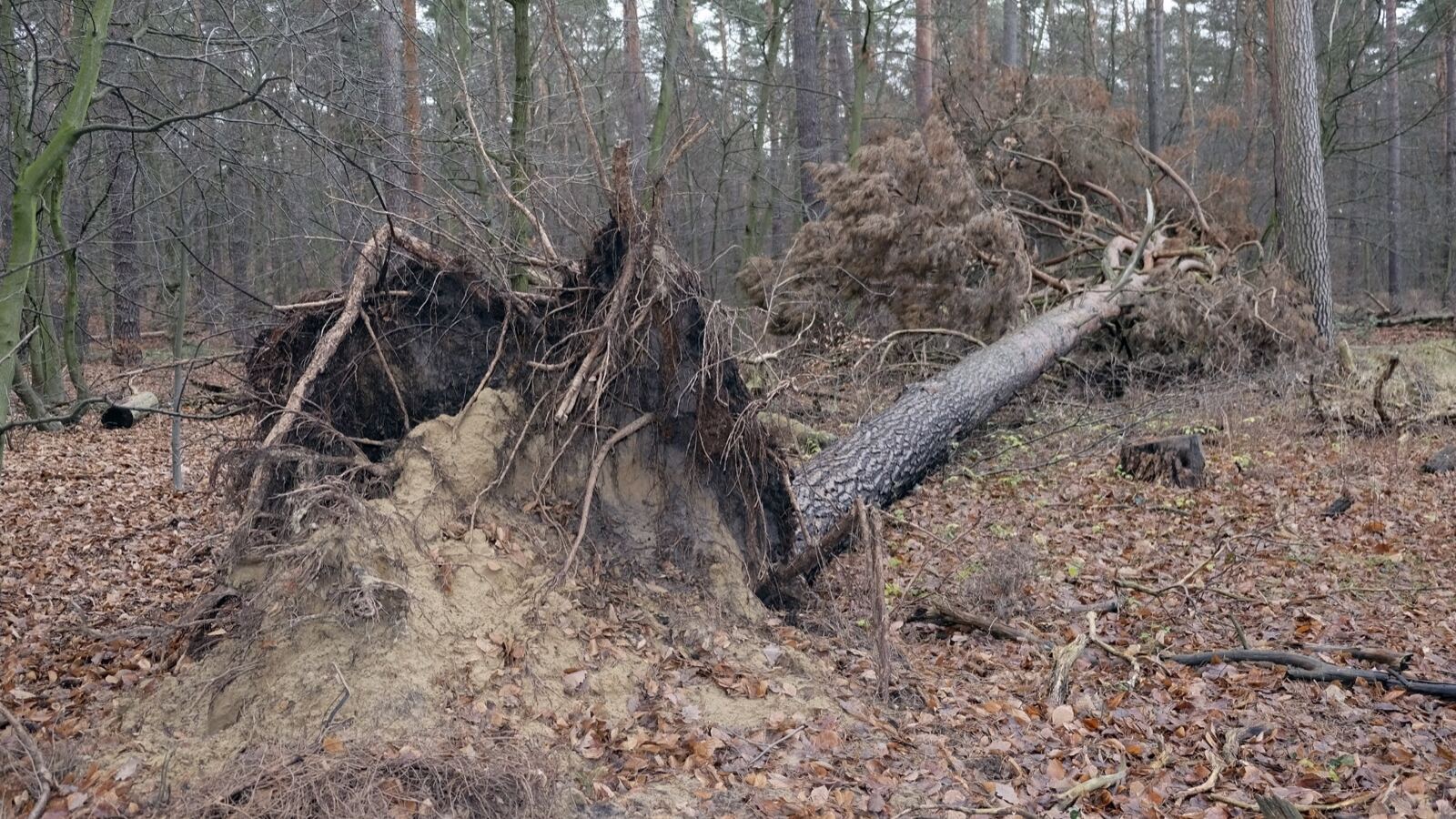
Seed needs mineral soil. Pine seed is small and germinates on exposed mineral ground, disturbed soil, or burnt patches. It does not establish through a thick mat of heather, moss, or grass litter. Traditional regeneration came from windthrow, fire, and animal disturbance breaking the ground open.
Where those disturbances are suppressed, an intact heather layer effectively sterilises the site. Scarification — deliberately breaking the surface — is a standard restoration technique for this reason.
Seedlings must survive browsing. Red deer at high densities remove essentially all regeneration. Many Caledonian remnants are even-aged stands of very old trees with nothing beneath them, sometimes called granny pines, standing over a heather carpet with no successor.
The fix is deer management or fencing, and where it has been done — Abernethy, Glen Affric, Mar Lodge, Creag Meagaidh — regeneration returns quickly and often needs no planting at all. See deer and rabbits, site protection, and assisted regeneration.
It is one of the clearest demonstrations that the cheapest restoration is usually removing the thing preventing recovery.
Light-demanding, and what that means
Scots pine is strongly light-demanding. Seedlings will not establish in shade, and the species cannot regenerate under its own closed canopy.
That makes it a pioneer in the successional sense — it colonises open ground, and on fertile sites is eventually replaced by broadleaves. It persists as a dominant only where conditions are too poor, cold, dry, or exposed for beech and oak to outcompete it. See pioneer species and structural diversity.
Practically: it needs gaps. Continuous-cover management works with pine only if the gaps created are large enough to admit real light. See woodland management.
Wildlife
Native Scots pinewood supports a distinctive and largely irreplaceable assemblage.
Scottish crossbill — the only bird species endemic to Britain — feeds on pine cones with a bill shaped for the job. Capercaillie depends on pinewood with a bilberry understorey. Crested tit, red squirrel, and pine marten are all strongly associated.
Old pines with rot holes and standing deadwood support specialist saproxylic invertebrates found on nothing else, and the wood ant mounds of a pinewood floor are a system in their own right. See dead wood habitat and insectivorous birds.
The open canopy also lets a real ground flora develop — heather, bilberry, cowberry, and the associated fungi — which is why pinewood is not the biological desert that a dense spruce plantation is. See blueberry and acid shrubs.
Timber and use
Sold as redwood or red deal — not to be confused with the redwoods of California.
Strong, resinous, moderately durable, and easy to work. The general-purpose European softwood: construction timber, joinery, flooring, furniture, poles, and pulp. Takes preservative treatment well, which is how most of it is used outdoors.
Historically it supplied ships' masts, mine props, and railway sleepers, and the resin was tapped for turpentine and rosin.
It grows straight and fast on poor ground, which is why it is planted far outside its native range across the northern hemisphere.
Growing it
Full sun, free drainage, and poor soil are all fine. Scots pine tolerates acid sand, thin peat over rock, drought, extreme cold, and exposure. It dislikes waterlogging, shade, and heavy alkaline clay.
Hardy to about minus 40 C.
Plant small — bare-root transplants establish far better than large stock, as with most conifers. Protect from browsing. See tree planting and nursery stock.
Provenance matters more than usual. A Scots pine from Spain and one from Scotland are the same species with very different growth rhythms, frost timing, and form. For restoration in native pinewood, local provenance is a requirement rather than a preference. See climate adaptation.
Do not cut into old bare wood. Like almost all conifers other than yew, it will not resprout. See conifers.
Susceptible to Dothistroma needle blight, which has increased markedly with wetter warmer summers, and to pine beauty moth in plantations. See tree diseases.
See also
- Conifers the wider group and how they differ
- Nut Pines the edible-seed relatives
- Assisted Regeneration letting pinewood come back on its own
- Deer and Rabbits the browsing that stops it
- Dead Wood Habitat what old pines support
- Juniper the pinewood understorey companion
- Firs
- Pines