What it is
Putting a tree in the ground is the cheapest part of growing one. It is also where most of them are killed.
Not immediately. A badly planted tree can take six years to die. It leafs out, looks fine, puts on a little growth, then stalls and declines while everyone blames the weather.
Almost all of it comes down to three things: depth, root contact, and what happens in the first two summers.
Why most planting fails
The tree arrives with a compromised root system. A bare-root whip has lost 80 to 95 percent of its fine roots in lifting. A containerised tree has roots that have circled the pot and learned to grow in a spiral.
Neither can supply a full canopy. The tree has to rebuild its root system before it can do anything else, and it has one or two growing seasons of stored energy to do it with.
Everything below is about making that rebuild as fast as possible.
Dig a saucer, not a pot
The old advice was a deep hole with rich compost in the bottom. Both halves are wrong.
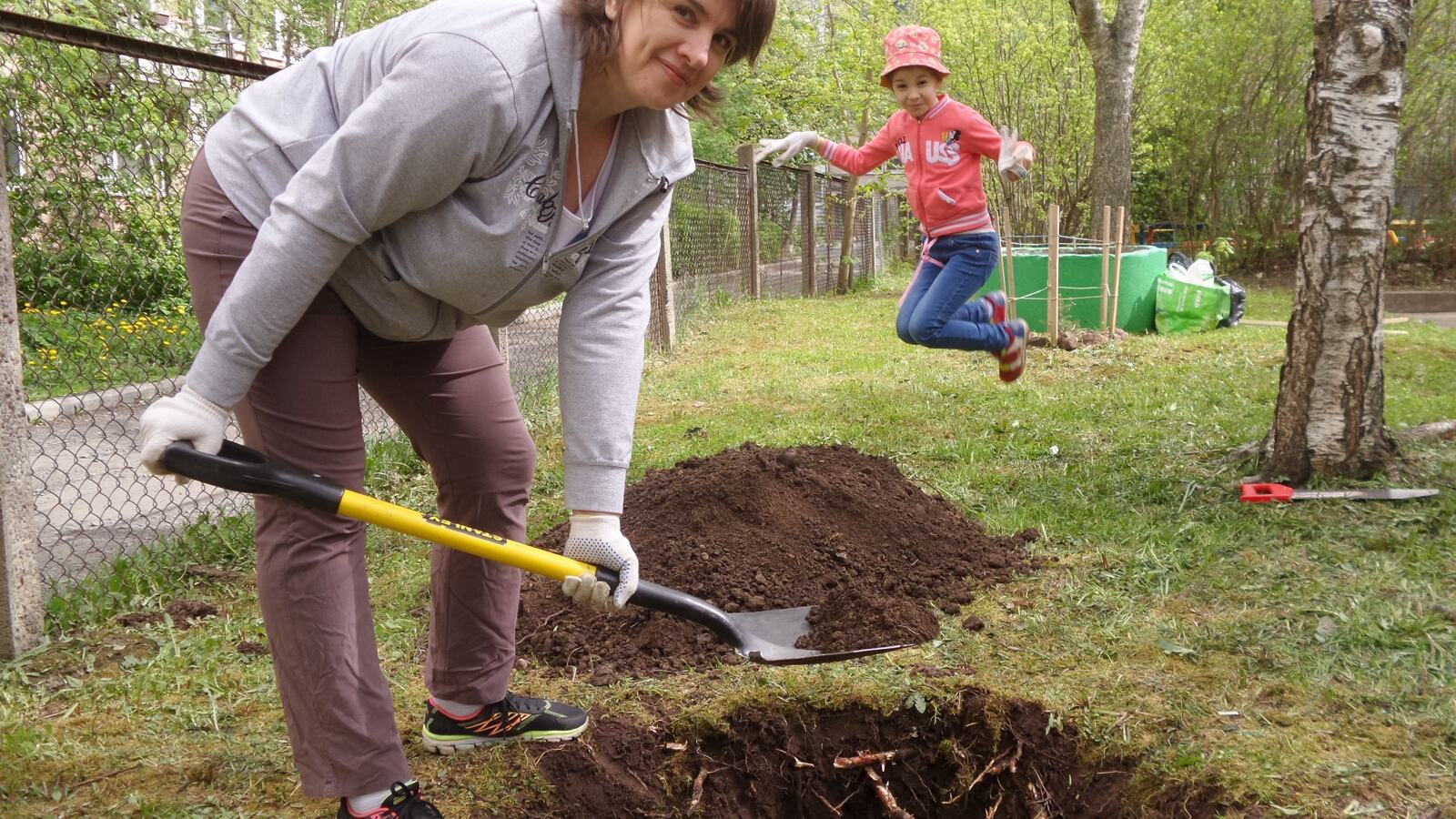
Dig wide and shallow. Three times the width of the root spread, no deeper than the roots themselves. Roots spread out, not down, and the top 30 to 60 cm is where the oxygen is.
A deep hole backfilled with loose material lets the tree settle. It sinks, the flare buries, and you have created the problem in the next section.
Glazed sides are the other trap. In clay, a spade slicks the wall of the hole into a smooth face roots will not cross. You have dug a pot in the ground. Break the sides up with a fork before you backfill.
If the ground is compacted, fix that first. See decompaction for the wider problem.
The root flare rules everything
Find where the trunk widens into the first structural roots. That is the flare, and it belongs at or slightly above finished soil level.
Nursery stock lies about this constantly. Trees are potted deep, and the flare is often 5 to 15 cm below the surface of the container. Scrape the top of the rootball away until you find the first roots, then plant to that line, not to the pot line.
A buried flare stays wet. Bark that evolved to be dry rots, the tree girdles itself, and you get the slow six-year decline. It is the single most common killer of planted trees.
Sort the roots out
Bare-root: spread them over a low mound of soil in the base of the hole so they radiate outward. Cut off anything broken or blackened with a clean cut.
Containerised: tease the outer roots free. If they circle the pot, be ruthless. Slice four vertical cuts down the rootball and pull the base apart. A circling root left in place becomes a girdling root in fifteen years.
This feels like vandalism. Do it anyway. Roots that circle will keep circling.
Backfill with what you dug out
Do not enrich the hole. A pocket of compost in poor ground makes a luxury zone the roots refuse to leave, and you get the same pot effect by a different route.
Backfill with the native soil, broken up. Firm it in stages with your heel, not by stamping. You want no large air voids and no compaction pan.
Save the organic matter for the surface, where it belongs. That is what soil cover and mulch are for.
Water in, then keep watering
The first watering is not about moisture. It is about settling soil into contact with roots. 20 to 40 litres, poured slowly, even in the rain.
Then commit to two summers. A young tree needs a deep soak every week to ten days through the dry season, not a daily sprinkle. Shallow watering builds shallow roots. See deep watering and watering timing.
Most planting programmes budget for the tree and not the water. That is why most planting programmes have a 40 percent survival rate.
Mulch, but not a volcano
A 5 to 8 cm layer of coarse organic mulch over the root zone, out to a metre radius. It cuts evaporation, suppresses competition, and feeds the soil biology as it breaks down.
Keep it 10 cm clear of the trunk. Mulch piled against bark does exactly what buried flare does: keeps it wet, rots it, kills the tree. The mulch volcano you see around municipal trees is a slow execution.
Grass is the real competitor, not weeds. A clear mulched circle can double early growth rates on its own. More on this in weed management.
Stake only if you have to
Most trees do not need a stake. Stems thicken in response to movement, and a rigidly staked tree grows tall, thin, and dependent.
Stake when the site is genuinely exposed or the rootball is too small to anchor the top. When you do: one low stake, driven in at an angle outside the rootball, tied at a third of the tree's height. Low and loose.
Then remove it after two growing seasons. Ties left on become the thing that kills the tree. Check them every year without exception.
Protect it from teeth
A tree that survives planting still has to survive browsing. Deer and rabbits will strip a whip in a night, and voles work under snow where you cannot see them.
Guards, tubes, or fencing, decided before you plant rather than after you lose the first batch. See site protection.
When to plant
Dormant season for bare-root: leaf fall to bud burst, ideally into soil that is moist and not frozen. Autumn planting gives roots months to establish before the first summer demands anything.
Containerised stock can go in almost any time, which mostly means people plant it in May and then fail to water it.
If you are matching species to the site rather than the other way round, start with native plant selection and site reading.
See also
- Weed Management grass competition is the main brake on young trees
- Deep Watering how to water the first two summers
- Site Protection fence before you plant
- Grafting and Rootstocks what determines the size of what you plant
- Decompaction when the ground has to be fixed first
- Pruning Basics the formative cuts that follow