What it is
Carpinus betulus in Europe, C. caroliniana in eastern North America, plus around 40 species across the northern temperate zone. In the birch family, despite the resemblance to beech.
Two features identify it instantly. The trunk is fluted — muscled and sinuous rather than round, as if the wood had been twisted and pulled tight. And the seed hangs in clusters of three-lobed papery bracts that spin as they fall.
The leaves are similar to beech but with a sharply serrated margin and deeply impressed parallel veins, where beech leaves have a wavy edge and silky hairs when young.
Beech's understudy
Hornbeam occupies almost the same ecological niche as beech, and the useful distinction is soil.
Beech demands drainage and fails on heavy wet ground.
Hornbeam tolerates it. Wet clay, seasonal waterlogging, and compacted soils that would kill beech outright. It is also more tolerant of shade, cold, and exposure.
So on any site where beech is marginal, hornbeam does the same job better — which is why it is the standard substitution for beech hedging on heavy soil, and why it appears in ancient wood pasture on clays across southern England and central Europe.
It casts dense shade, like beech, and produces a similarly sparse ground flora under a closed canopy.
The hedge that keeps its leaves
Hornbeam is marcescent when clipped: a cut hedge holds its dead coppery-brown leaves through winter, dropping them only as new growth pushes them off in spring.
That gives winter screening from a deciduous plant, which is unusual and valuable. Beech does the same, and the choice between them comes down to soil — hornbeam for wet or heavy ground, beech for free-draining.
Hornbeam leaves go a slightly duller brown than beech's warm copper, which is the aesthetic argument beech growers make.
It also pleaches superbly. Trained into a hedge on stilts, hornbeam is the classic material for formal allées and raised screens across European gardens, along with lime.
Clip once in late summer for a dense hedge, or twice for a very formal one. See hedgerow care.
Wood that blunts saws
Hornbeam is the hardest and densest native timber in much of Europe — the name means literally hard tree, from horn for toughness and beam, the old word for tree.
It is extremely tough, resists splitting and abrasion, and turns and wears well. Historically it went into anything that had to survive punishment:
Cogwheels and gear teeth in windmills and watermills, where hornbeam teeth ran against iron. Butchers' blocks, plane soles, mallet heads, tool handles, and skittles. Piano actions — the moving parts of a piano mechanism are still hornbeam. Ox yokes and cart parts.
It is also outstanding firewood, burning hot and slow with high calorific value, and it makes excellent charcoal.
The drawbacks are that it is difficult to work by hand, blunts edges quickly, is not durable outdoors, and moves and warps as it dries. It is a wearing wood, not a construction one.
Coppice and pollard
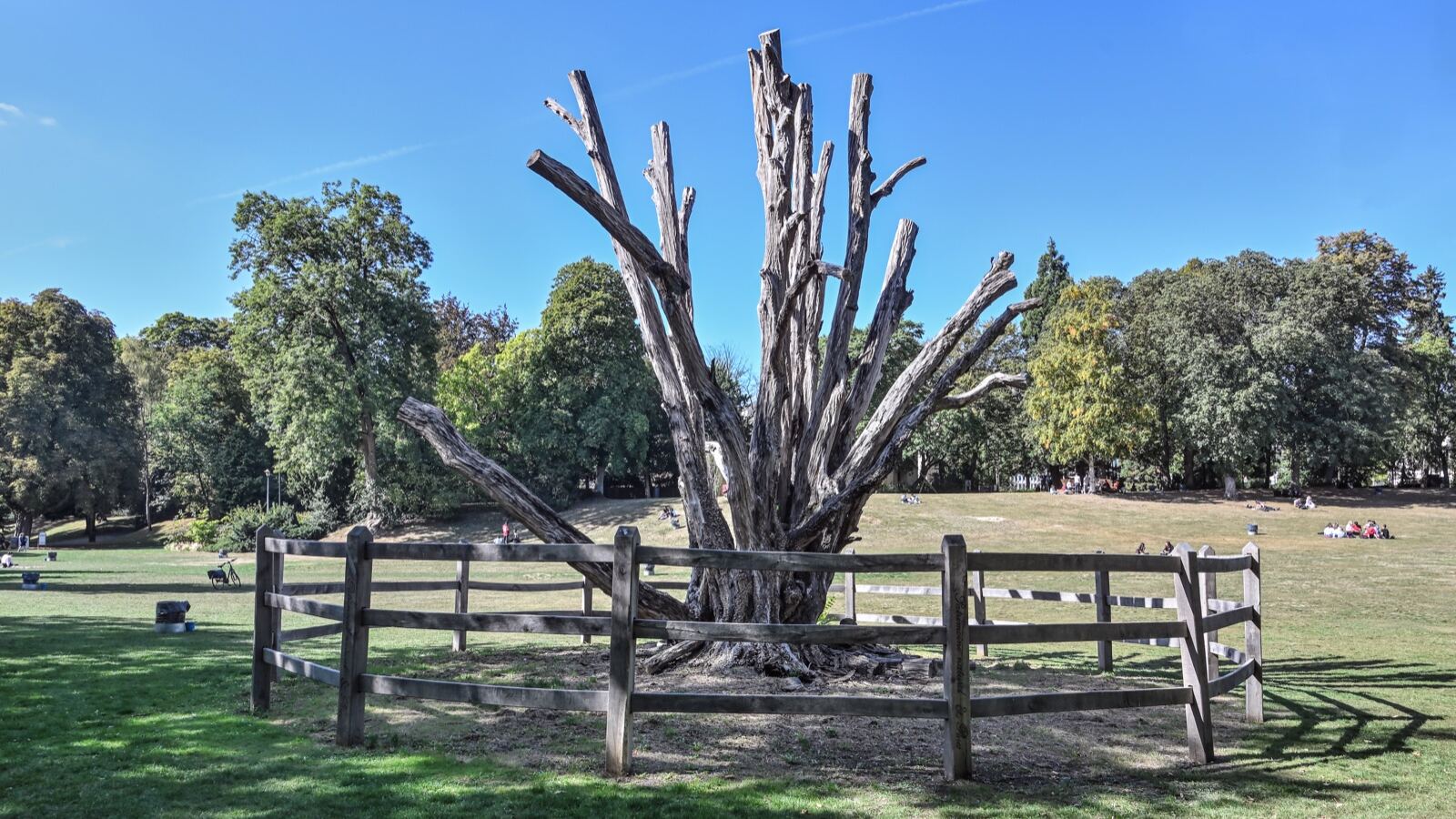
Hornbeam coppices and pollards vigorously, and it was managed that way for centuries — the Epping Forest pollards outside London are the best-known example, ancient trees cut repeatedly at head height for fuel and charcoal for the city.
Those old pollards are now enormously valuable habitat: hollow, rot-holed, and supporting large communities of invertebrates, bats, and hole-nesting birds. See dead wood habitat and coppice rotation.
Where old pollards have been left uncut for a century, the heavy overgrown limbs are prone to collapse. Restoring them is delicate work, taken in stages over years rather than in one cut.
Wildlife
Seed is taken heavily by hawfinch — a bird strongly associated with hornbeam — plus tits, finches, and small mammals.
The dense twiggy structure of a clipped or coppiced hornbeam makes good nesting cover, and it supports a reasonable range of moth larvae, though fewer than oak or willow. See insectivorous birds and caterpillars.
Old trees carry good lichen and bryophyte communities on their fluted bark. See lichens and mosses.
Planting it
Easy and forgiving. Tolerates heavy soil, moderate waterlogging, shade, exposure, cold, and hard cutting. Transplants readily as a bare-root whip, which makes it cheap for hedging in quantity. See nursery stock.
Plant hedging at 3 to 5 plants per metre in a double staggered row.
It is slower than beech in the first few years and then catches up, and it is markedly less fussy about establishment conditions.
For woodland planting it is a useful component of the sub-canopy and a good partner where the soil is too wet for beech and too heavy for a light-demanding species. Being shade-tolerant it can be underplanted into an existing canopy. See structural diversity and woodland management.
American hornbeam, also called musclewood or blue beech, is a smaller understorey tree of moist woods in eastern North America and behaves similarly.
See also
- Beech the close analogue, and the drainage distinction
- Hedgerow Care clipping and pleaching
- Coppice Rotation the pollarding tradition
- Dead Wood Habitat ancient hornbeam pollards
- Native Oaks the usual woodland partner
- Nursery Stock bare-root whips for hedging
- Cypresses and Thujas
- Hop-Hornbeam
- Box and Privet