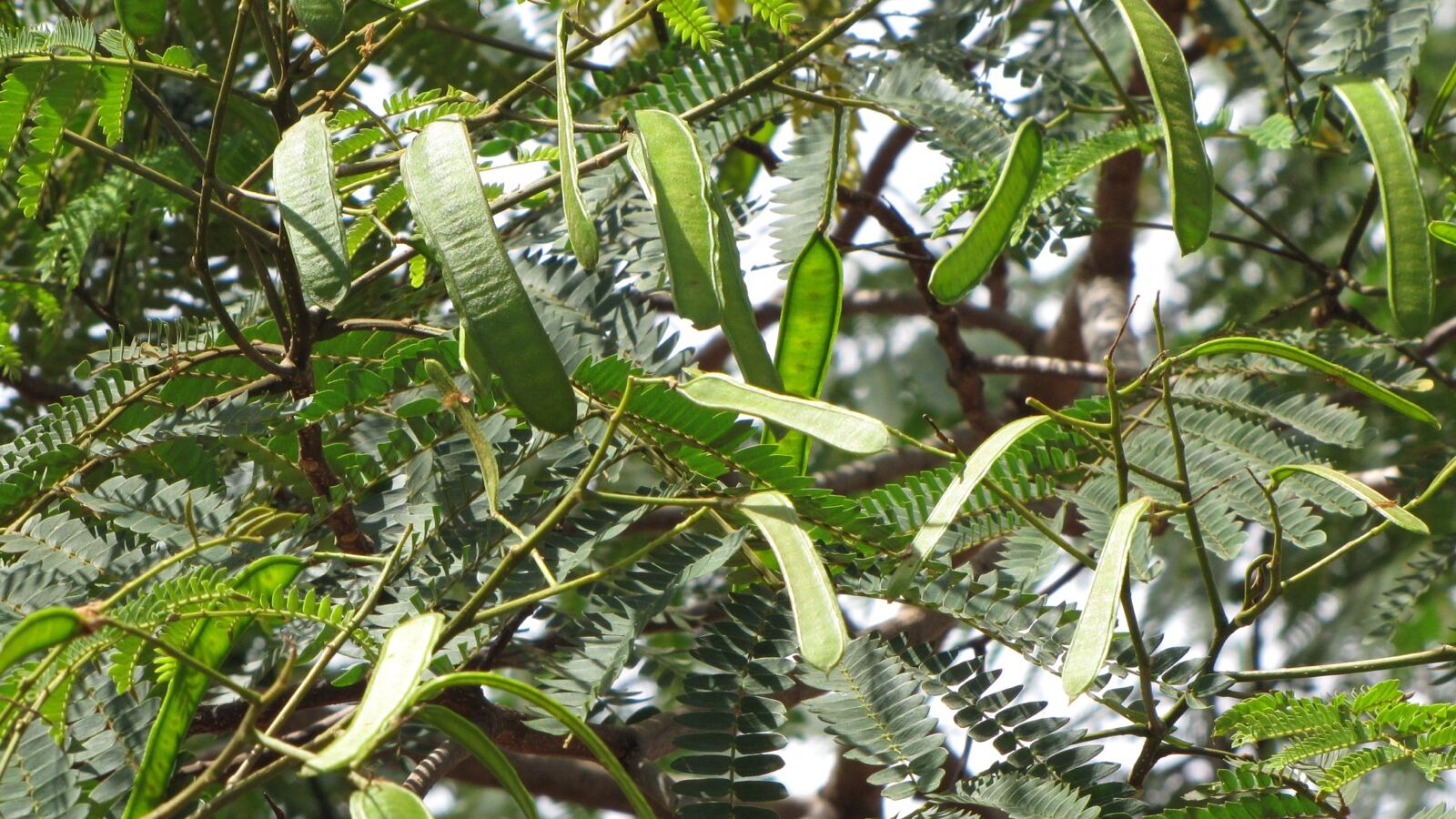
What it is
Falcataria moluccana (long known as Albizia falcataria or Paraserianthes falcataria), the Moluccan albizia or batai — a tropical legume of the islands of Southeast Asia and the western Pacific, and one of the fastest-growing trees in the world.
It is a close relative of the silk tree, rain tree, and the other mimosa-type legumes, sharing their fine, ferny, doubly-compound foliage and their wide, flat-topped crowns — but taken to an extreme of speed that has few rivals in the tree kingdom.
Astonishing speed
Falcataria's growth is genuinely record-breaking. Under good tropical conditions it can put on as much as 7 metres in a single year as a young tree, and reach 15 m or more in a few years, making it one of the fastest-growing trees ever recorded — a living demonstration of how fast a tree can build wood when it has heat, water, and its own nitrogen supply.
That speed makes it a valued plantation timber across the wet tropics, especially in Indonesia, Malaysia, and the Philippines, grown on short rotations for light, pale, soft wood used for pulp, plywood, matchwood, packing, light construction, and (increasingly) as a fast, sustainable furniture wood ("albasia" or "batai" wood). It also gives quick fuelwood and, as a legume, does more than produce fibre — see below. Its speed and toughness make it a mainstay of fast tropical reforestation, in the company of gmelina and eucalyptus. See restoration economics.
Nitrogen and shade
Being a legume, falcataria is a nitrogen fixer, and this doubles its usefulness. Its fast growth and light, ferny, high shade, combined with the nitrogen it adds and the leaf litter it drops, make it an excellent shade and nurse tree and a soil-improver: it is widely used to shade coffee, cacao, and other crops, to nurse slower valuable timber trees, and to quickly rebuild fertility on degraded land — the large-scale, super-fast version of what the inga and gliricidia do. Its flowers feed bees.
The brittle invader
Falcataria's speed has a dark side, and it is the recurring one. That same fast, tough, nitrogen-fixing, prolific-seeding profile has made it a serious invasive species where it has been introduced, above all in Hawaii and other Pacific islands.
There it has invaded native forest and towns, growing enormous with alarming speed and — crucially — building a huge canopy on soft, weak, brittle wood with shallow roots, so mature falcataria trees drop massive limbs and topple in storms, becoming a genuine public danger over roads, houses, and power lines; they have caused deaths and major storm damage. By fixing nitrogen, they also enrich the volcanic soils in ways that favour other invaders and disadvantage the native flora adapted to lean ground, the same fertility-driven damage done by other nitrogen-fixing invaders like autumn olive and gorse. It is now a target of major control efforts in Hawaii — another cautionary tale of a useful, fast, fixing tree becoming a menace far from home.
Growing it
Tropical, frost-tender, and wanting the hot, wet, lowland tropics — warmth, high rainfall, and deep, well-drained soil — where it grows with extraordinary speed; it does poorly in cool, dry, or seasonal climates. It is a strong light-demander.
It is grown very easily and cheaply from seed, coppices and regrows fast, and is planted for timber, pulp, fuel, shade, nurse, and soil-improvement on short rotations. But it should be planted only where it is not invasive — emphatically not in Hawaii and similar island ecosystems — and, given its brittle wood, never where falling limbs would endanger people. Handled in the right place, it is a remarkable fast, fixing, multi-purpose tree; in the wrong place, a hazard and a weed. See propagation.
See also
- Silk Tree and Rain Tree its mimosa-legume relatives
- Gmelina another fast tropical plantation timber
- Nitrogen Fixers the fixing that speeds and enriches
- Inga and Leucaena and Gliricidia the smaller fast fixing trees
- Invasive Species falcataria in Hawaii and the Pacific
- Elaeagnus another nitrogen-fixing invader that enriches soil to the natives' cost
- Kadamba