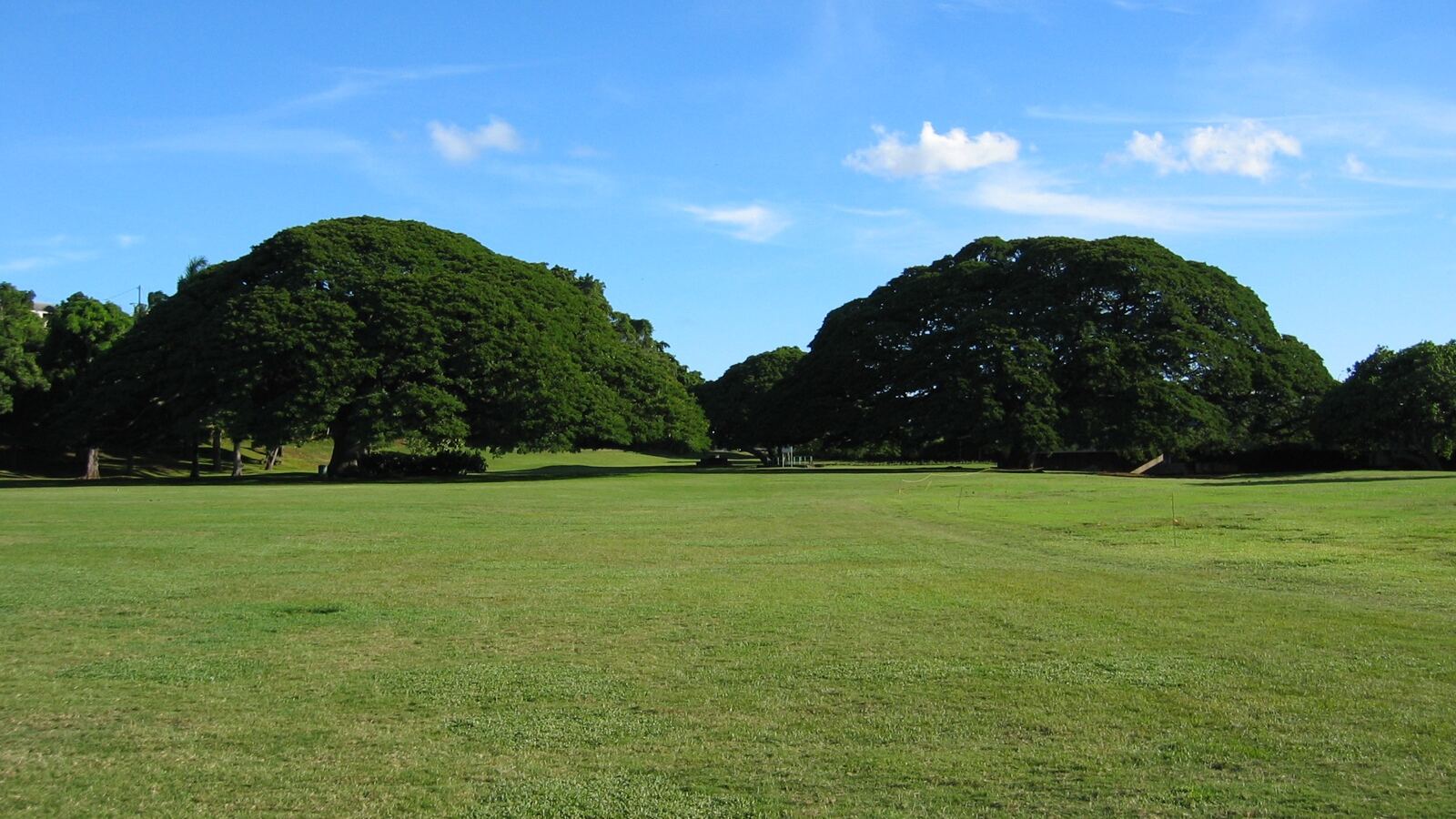
What it is
Albizia saman (also Samanea saman), the rain tree — a large tropical American legume, kin to the silk tree and the other mimosa-type legumes, now planted across the whole tropical world as one of the great shade trees.
Its defining feature is its shape: a low, hugely wide-spreading, flat-topped, umbrella crown far broader than the tree is tall, casting dense shade over an enormous area — a single old rain tree can shelter a whole courtyard, market, or village green, and famous specimens spread their canopy 50 metres or more across.
Why it is called the rain tree
The name has two explanations, and both are true, which is part of the tree's charm.
The sleeping leaves. The rain tree's fine, ferny, doubly-compound leaves perform a daily movement (nyctinasty): at nightfall, and also when the sky darkens before rain, the leaflets fold together and droop, closing up the canopy — and they reopen in the morning or when the light returns. This folding is easy to watch and quite dramatic in a big tree, and because the leaves close before rain, it earned the name "rain tree." The closing of the canopy at night also lets dew and light rain fall straight through to the ground beneath, keeping the earth under the tree moist — another reason for the name, and a boon to the grass and crops grown in its shade.
The dripping. Rain trees are often colonised by sap-sucking insects (cicadas and others) that excrete fine mists of sweet honeydew, so that a light "rain" seems to fall from the canopy on a dry day — a third source of the name.
The multi-purpose giant
The rain tree is far more than shade and a pretty name; it is a model multi-purpose tropical tree.
As a legume it fixes nitrogen, enriching the soil beneath it, and — unusually — grass and crops often grow better under a rain tree than in the open nearby, because of the nitrogen, the shade, the dew let through at night, and the leaf litter. This makes it a valued tree for silvopasture and shade-cropping: it is a classic shade tree over pasture, coffee, and cacao, doing the fertility-and-shelter job of the inga and gliricidia at a much larger scale. Its long, dark, sweet-pulped pods are relished by cattle, horses, and pigs — a valuable protein-rich fodder that drops in quantity — in the same dry-season tree-fodder tradition as the carob, mesquite, and honey locust. It bears fluffy pink-and-white powderpuff flowers, rich in nectar for bees and a good honey source. See nitrogen fixers.
Monkeypod wood
The rain tree has one more gift: its timber. Known in the wood trade as "monkeypod," the rain tree's wood is a beautiful, rich, golden-to-dark-brown timber with dramatic figure, and it is prized for carving and turning — above all in Hawaii and the Pacific, where monkeypod is the classic wood for the large hand-carved bowls, platters, and craftware sold across the islands, as well as for fine furniture. The wood is easy to work, stable, and takes a lovely finish, so the same tree that shades the plantation also, eventually, becomes the treasured bowl on the table. See restoration economics.
Growing it
Tropical and warm-subtropical, frost-tender, wanting heat, full sun, and space — a great deal of space, since it becomes vast and its shallow, spreading roots and wide low limbs need room and can lift pavement and damage nearby structures.
It is fast-growing, tough, and drought-tolerant once established (it is briefly deciduous in a dry season), tolerant of a range of soils, and long-lived, making a magnificent shade, park, avenue, and pasture tree where there is room for it. It is grown easily from seed (which is long-lived and hard-coated, scarified to speed germination) and from cuttings. In some Pacific islands its very vigour and free seeding have made it a mild invasive, the usual caution for a tough, prolific tropical tree. For a large tropical space, few trees give more — shade, fertility, fodder, flowers, and, in the end, fine wood. See propagation.
See also
- Silk Tree the ferny-leaved mimosa relative with the same leaf-folding
- Inga and Leucaena and Gliricidia the smaller shade-and-fertility legumes
- Nitrogen Fixers the rain tree's soil-enriching role
- Silvopasture the rain tree over pasture and crops
- Tamarind and Carob other sweet-podded fodder legumes
- Golden Shower Tree another great tropical flowering legume
- Pongamia
- Falcataria