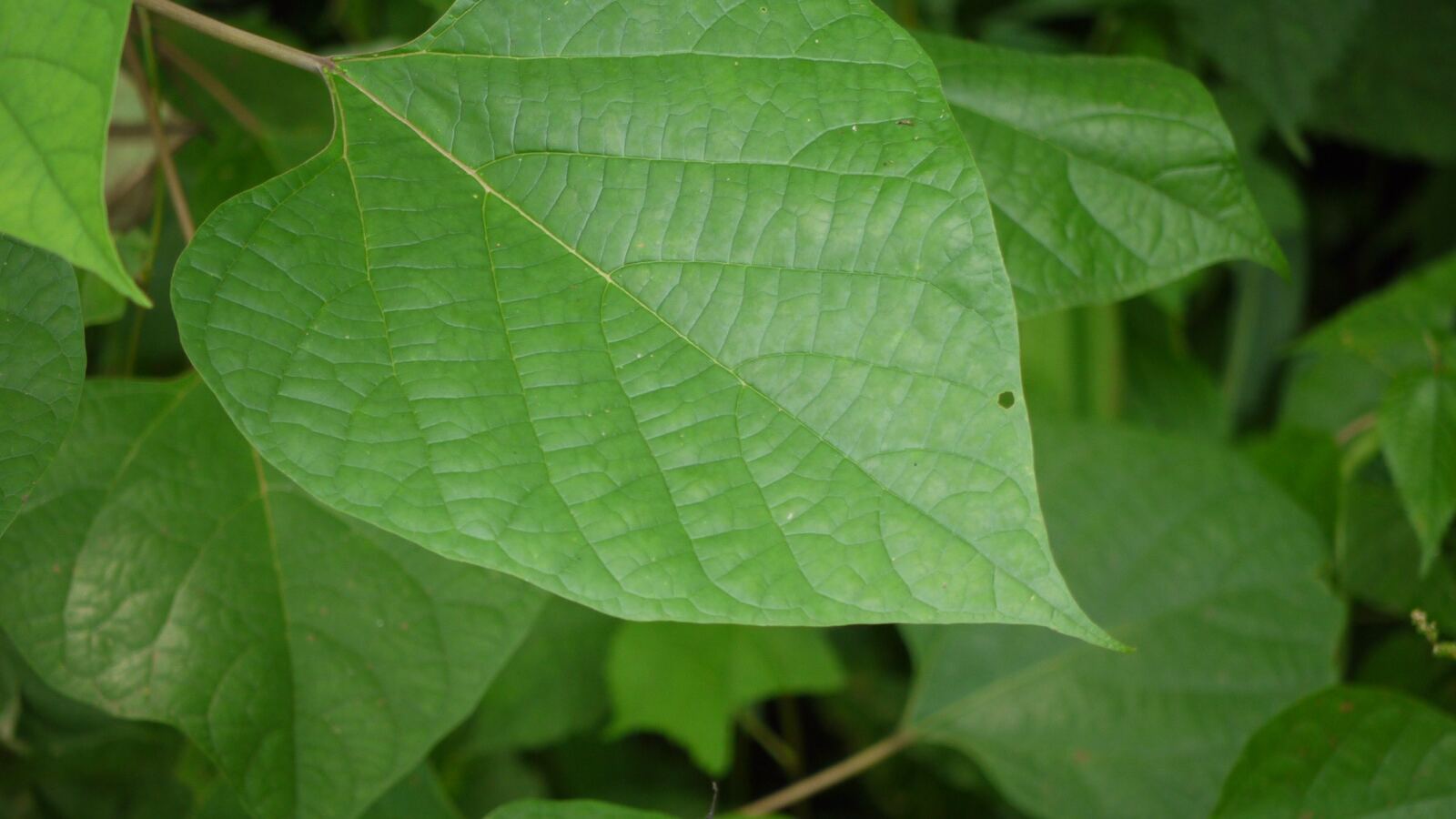
What it is
Gmelina arborea, gmelina (also called white teak, beechwood, or gamhar) — a fast-growing deciduous tree of South and Southeast Asia, and one of the most widely planted fast-wood plantation timbers in the tropical world.
It belongs to the mint family, Lamiaceae — which makes it, surprisingly, a relative of the teak (also a Lamiaceae) — and, like teak, it is grown primarily for timber, though it occupies the opposite end of the spectrum: where teak is slow, dense, and premium, gmelina is fast, light, and everyday.
The fast-wood workhorse
Gmelina's value is speed. It is one of the fastest-growing of tropical hardwoods, reaching harvestable size in as little as a few years to a couple of decades depending on the product, and it coppices and regrows readily — so it is planted on a huge scale across the tropics (in Asia, Africa, and Latin America) as a plantation crop for products that need volume rather than premium quality:
- Pulp and paper, its pale fibres making it a major pulpwood;
- Matchwood and matchboxes, its light, even, easily-split wood being ideal;
- Light construction, plywood, particleboard, boxes, crates, and furniture frames;
- Fuelwood and charcoal.
Its light, pale, moderately durable wood is not in the class of teak or mahogany, but it does not need to be: gmelina fills the vast demand for cheap, fast, renewable wood-fibre, taking pressure off slower and more valuable trees, and it is a mainstay of tropical reforestation and industrial forestry alongside eucalyptus and fast pines. Like all such fast monoculture plantations, it carries the usual cautions about biodiversity and soil, and it can self-seed and naturalise where introduced. See restoration economics and woodland management.
More than timber
Gmelina is not only a fibre factory. It bears attractive yellow-brown, bell-shaped flowers, rich in nectar and worked by bees (a good honey tree), followed by fleshy yellow fruit that is edible and eaten by wildlife and people. The flowers and fruit are used as food and the plant throughout Ayurvedic medicine — gmelina (gambhari) is a recognised medicinal tree in the Indian tradition, one of the ingredients of classic tonic formulas, used for a range of complaints. It also provides fodder and shade. So the fast plantation tree has a gentler, older life as a flowering, fruiting, medicinal tree of the Indian countryside.
Growing it
Tropical to subtropical, frost-tender, wanting warmth, a seasonal climate, and moist, deep, well-drained, fertile soil — it is fast and vigorous on good ground but performs poorly on poor, dry, or waterlogged soils, which (unlike some tough dryland trees) it does not tolerate well. It is a strong light-demander.
It is very fast-growing, coppices well (allowing repeat harvests without replanting), and is grown easily from seed and cuttings, cropping within a few years for pulp and poles. As a fast, renewable, multi-purpose plantation and agroforestry tree — timber, pulp, fuel, fodder, flowers, and medicine — gmelina is one of the quiet workhorses of tropical forestry. See propagation.
See also
- Teak its slow, premium relative in the same family
- Eucalyptus the other great fast-wood plantation tree
- Reforestation Techniques fast-wood plantations
- Falcataria an even faster tropical plantation tree
- Restoration Economics the economics of fast-wood forestry
- Woodland Management managing plantation timber
- Kadamba