What it is
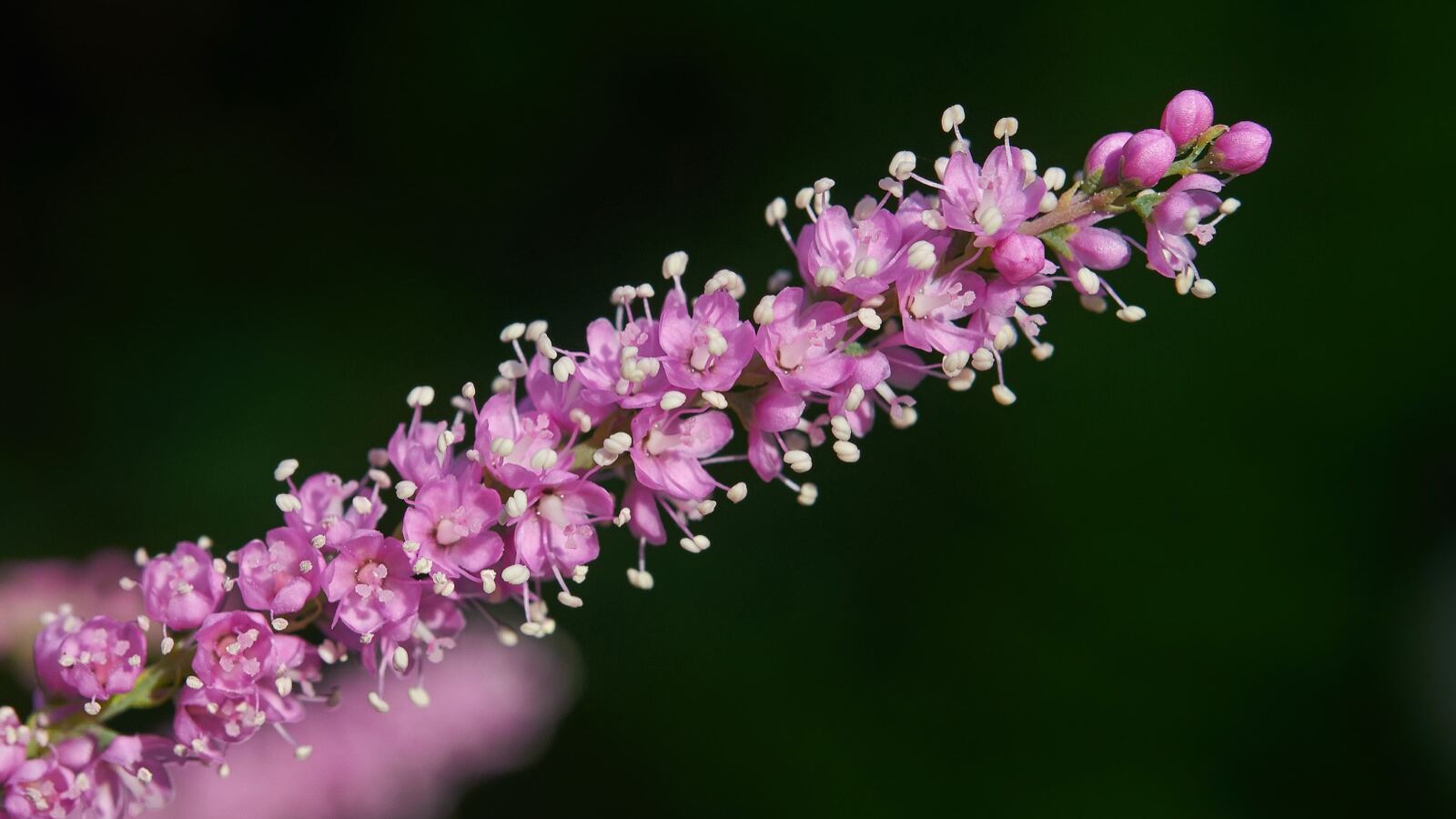
Tamarix, the tamarisks or saltcedars — a genus of wispy, feathery shrubs and small trees of the drylands of Eurasia and Africa, with tiny scale-like leaves clothing slender green twigs and clouds of pale pink flowers, giving the whole tree a soft, plumose, almost misty look.
At home around the Mediterranean, the Middle East, and Central Asia, tamarisk is a valued tree of hot, dry, salty country — a shade and shelter tree, a windbreak, a stabiliser of desert and coastal sand. Introduced to North America in the nineteenth century for exactly those uses, it became one of the continent's most notorious invasive trees.
Living on salt
Tamarisk's defining trick is its relationship with salt, and it is a formidable one.
The tree is a halophyte — it thrives in saline soil and can take up salty groundwater that would kill most plants. But it does not merely tolerate salt; it weaponises it. Tamarisk draws saline water up through its roots and excretes the salt from glands on its foliage, so that salt accumulates on the leaves and is then shed to the ground below. Over time a tamarisk stand deposits a crust of salt on the soil surface around it, raising the surface salinity to levels that native plants cannot tolerate — a chemical clearing of the competition, the salt-based equivalent of the allelopathy used by other aggressive plants. Combined with its deep roots and heavy salinity tolerance, this lets tamarisk hold ground that few other trees can contest. See drought-tolerant species.
Drinking the river dry
The second charge against tamarisk in the American West is water. As a deep-rooted phreatophyte, it taps the water table directly and transpires heavily, and where it forms dense stands along desert rivers it was long blamed for lowering water tables, drying up springs and seeps, and consuming water that scarce desert streams could ill afford — the same deep-rooted, water-hungry profile as invasive mesquite. It spread explosively along the rivers of the Southwest — the Colorado, the Rio Grande, the Gila — replacing the native cottonwood and willow galleries with dense saltcedar thickets, crowding channels, increasing fire risk, and degrading the riparian habitat that desert wildlife depends on. See aquifer recharge.
The picture is more contested than it once was — research has shown tamarisk's water use is closer to the native trees' than the old "water-guzzler" reputation claimed, and where rivers have been dammed and salinised by human management, tamarisk is partly a symptom of a degraded, salty, regulated river rather than the sole cause. In one twist, the endangered southwestern willow flycatcher now nests in tamarisk where the native willows are gone, which complicated efforts to eradicate it.
The beetle that was released
Control of tamarisk in the West became a large and cautionary enterprise. Mechanical removal and herbicide are slow and expensive on the scale involved, so a biological control was introduced: the tamarisk leaf beetle (Diorhabda), from Asia, which defoliates the trees.
The beetle worked — it spread and knocked back tamarisk across large areas — but it also spread faster and further than intended, defoliating tamarisk in the flycatcher's nesting areas and raising exactly the conflict that makes biological control of a naturalised plant so fraught: once the invader has been woven into the degraded ecosystem, removing it abruptly can harm the very species conservation is trying to protect. It is a rich case study in the unintended consequences of fighting an invasion. See invasive species.
In its own range
None of this makes tamarisk a villain at home. Across the Mediterranean, the Middle East, and Central Asia it is a genuinely useful dryland tree — for shade, shelter, windbreaks, fuel, honey, and the stabilising of shifting sand and salty coastal ground where little else grows, a role in dryland restoration and erosion control. The lesson, once again, is that the same qualities — salt tolerance, drought tolerance, deep roots, prolific seed — make a tree a valued native and a catastrophic invader depending only on where it is.
Growing it
Full sun, heat, and dry, sandy, or saline soil, including coastal and alkaline ground; extremely drought- and salt-tolerant, and intolerant only of shade and deep cold.
Fast, wispy, and short-lived, tamarisk grows readily from seed and very easily from cuttings — a pushed-in branch will root — which is part of why it spreads so well. Plant it for coastal and desert shelter only where it is native or non-invasive, and never near natural desert rivers in regions where it is a listed weed. See propagation.
See also
- Mesquite the other deep-rooted, water-hungry dryland invader
- Salinity the salt tolerance that defines tamarisk
- Invasive Species saltcedar in the American West
- Poplar and Aspen the native cottonwoods it displaces
- Riparian Buffers the desert river habitat at stake
- Casuarina another tough salt-tolerant tree turned invader