What they are
Two tropical American trees of the mallow family, Malvaceae — the same family as cacao, the baobab, and the durian — that occupy opposite extremes of size and wood.
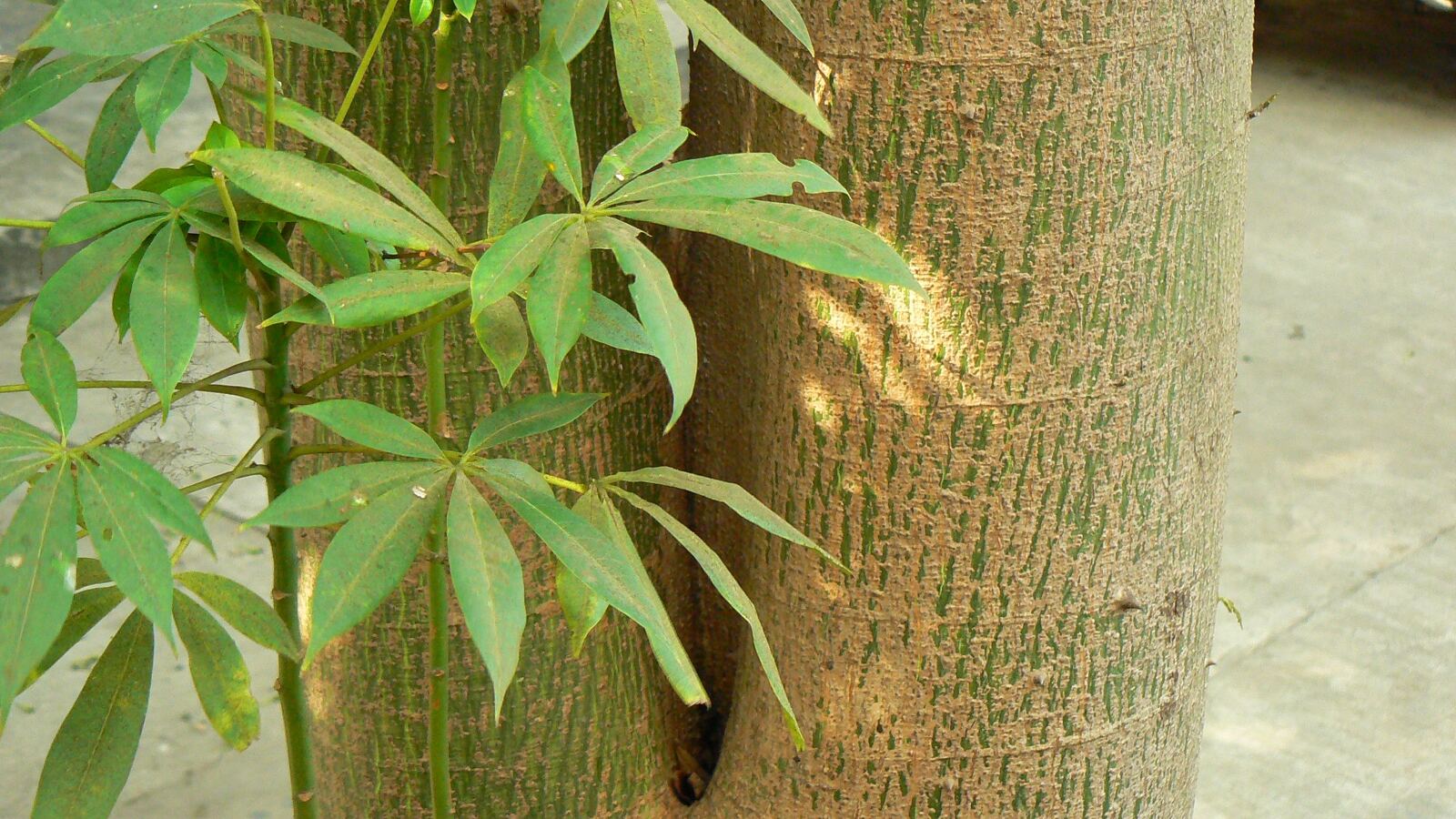
Kapok, Ceiba pentandra: one of the tallest trees of the American and African tropics, a rainforest emergent towering to 60–70 m above the canopy, with a huge buttressed trunk and a wide flat crown.
Balsa, Ochroma pyramidale: a fast, short-lived pioneer of forest gaps and clearings, famous for the lightest commercial wood in the world.
Kapok: the silk-cotton giant
The kapok, or silk-cotton tree, is one of the great trees of the tropics, both ecologically and culturally.
The fibre. Its seed pods split to release seeds embedded in a mass of fine, silky, water-repellent, buoyant fibre — kapok, or silk-cotton. Too short and brittle to spin like true cotton, kapok is instead used loose as a stuffing: it is extraordinarily light and about five times more buoyant than cork, so before synthetic foams it was the standard filling for life jackets, life buoys, and flotation gear, as well as mattresses, pillows, cushions, and insulation. It remains in use for these where a natural, buoyant, hypoallergenic filling is wanted. In the forest the light fibre carries the seeds on the wind.
The tree. As a towering emergent with a broad crown, the kapok is a keystone of the rainforest canopy, its flowers (which open at night) feeding bats, and its great limbs carrying whole gardens of epiphytes. Its huge buttress roots are a classic feature of the tropical forest floor. It is a sacred tree across many cultures — the central world-tree of Maya cosmology (the yaxché), and revered across West Africa — one of those trees whose ecological dominance is matched by its place in human belief, like the baobab. It flowers spectacularly, often while leafless, and is planted for shade and as a landmark.
Balsa: the fastest, lightest wood
Balsa is the opposite kind of tree in almost every way — small, short-lived, and disposably fast.
It is one of the fastest-growing of all trees, a classic pioneer species that shoots up in forest gaps and abandoned clearings, reaching 20 m in a handful of years, then dying young. To grow that fast it builds wood with very little dense material and a great deal of air, which is why balsa is the lightest wood in commercial use — light, soft, and, weight for weight, remarkably strong and stiff.
Those properties made balsa the material of model aircraft and boats, rafts (Thor Heyerdahl's Kon-Tiki was a balsa-log raft, and the name balsa is Spanish for "raft"), surfboard and boat cores, insulation, packaging, and — in large volume today — the core of wind-turbine blades, where its stiffness-for-weight is hard to beat. Ecuador supplies most of the world's balsa, and the wind-energy boom has driven a balsa planting rush there. As a fast pioneer it also has a role in tropical reforestation and as a quick nurse shading slower hardwoods while they establish.
The family thread
The contrast between the two is a neat lesson in what wood is for. Both are Malvaceae, both tropical, but the kapok invests in a huge, long-lived, buttressed frame to hold a crown above the canopy for decades, while the balsa builds the cheapest possible tall stem to win a race for light and is gone in twenty years. Dense slow wood and light fast wood are two solutions to the same problem of getting to the light, the trade-off that runs right through the trees, from oak to poplar.
Growing them
Both are hot, frost-free lowland tropical trees wanting good moisture; both grow fast (balsa astonishingly so) and want full sun as light-demanders.
Kapok needs space — it becomes vast — and deep soil; it is grown for shade, fibre, and amenity, from seed and cuttings. Balsa is grown as a short-rotation plantation crop from seed, cut at 4 to 8 years for its wood, then replanted. Neither belongs outside the true tropics. See tropical fruit trees for the wider tropical-tree context, and propagation.
See also
- Baobab the other great sacred Malvaceae tree
- Cacao and Coffee the family's most famous crop
- Pioneer Species balsa as a gap coloniser
- Nurse Trees fast pioneers shading slow hardwoods
- Poplar and Aspen the temperate fast-light-wood parallel
- Reforestation Techniques fast pioneers in tropical restoration
- Kola Nut
- Kurrajong and Bottle Trees
- Silk-Floss Tree
- Chinese Parasol Tree
- Bombax