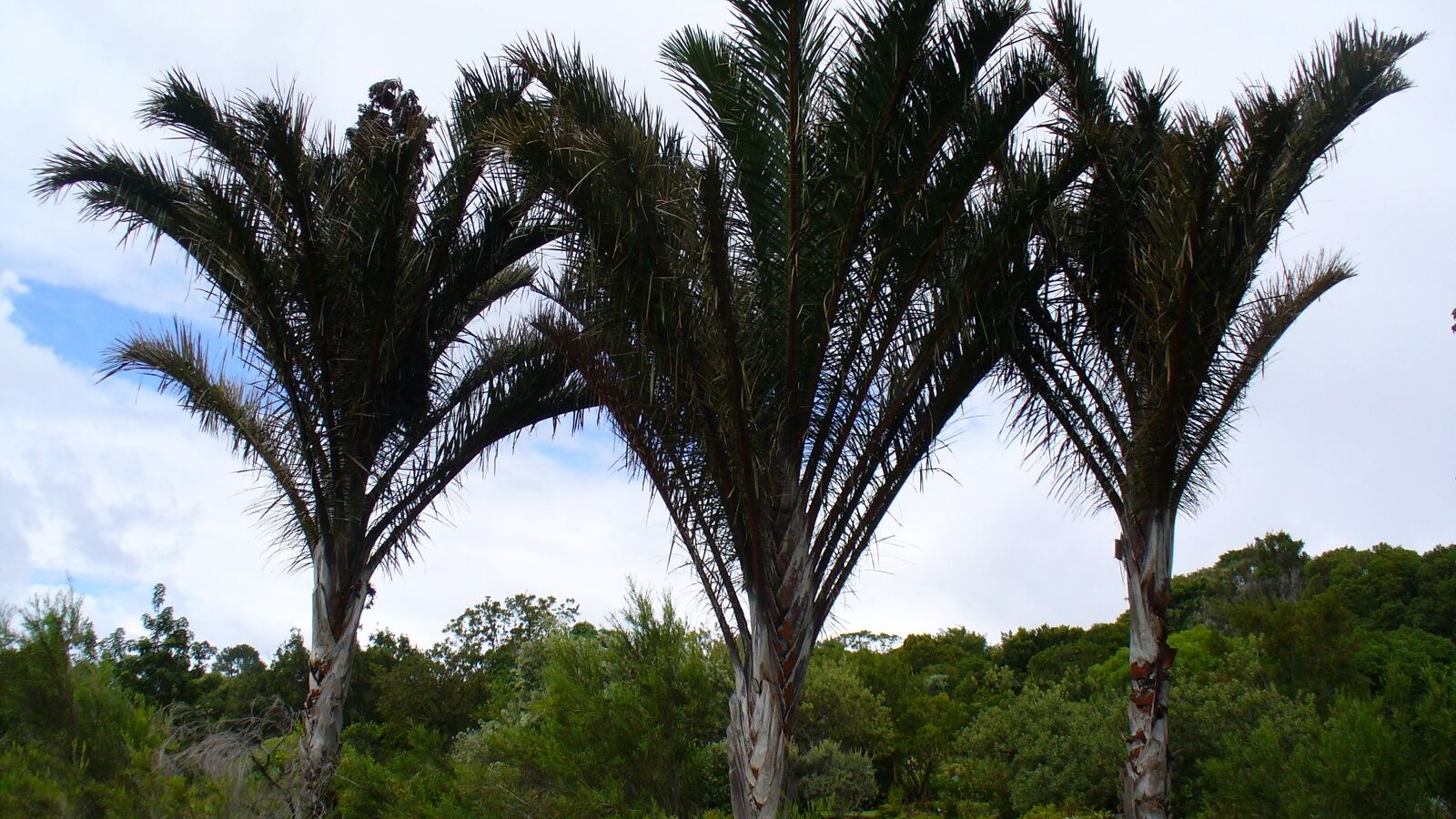
What it is
Raphia, the raffia palms — a group of palms of the swamps and wet forests of tropical Africa (and Madagascar, with one in South America), grown and gathered above all for raffia, the versatile natural fibre, and remarkable for growing the largest leaves in the entire plant kingdom.
They are stout, clumping palms of wet, swampy ground, and — like the sago palm — several of them are "monocarpic," growing for years and then flowering once, massively, before dying, throwing up an enormous flower stalk at the end of life.
The largest leaves of any plant
The raffia palms hold a genuine world record: they grow the longest leaves of any plant on Earth. A single raffia frond — one leaf — can reach 20 to 25 metres in length, longer than many trees are tall, an immense feathery structure of a central rib carrying hundreds of long leaflets. A clump of raffia palms in a swamp, arching these gigantic fronds overhead, is one of the more astonishing sights in the plant world.
Those colossal leaves are the source of the fibre. The soft, pliable, straw-coloured membrane stripped from the underside of the young leaflets is raffia fibre — soft, strong, flexible, and easily dyed — one of the most useful of all natural plant fibres.
Raffia: the gardener's and weaver's fibre
Raffia fibre is familiar the world over. It is the classic soft, natural tying material of the garden — used to tie in plants, bind grafts (its softness will not cut into stems), and label and bundle — and it is a staple of weaving and craft: raffia is woven and plaited into hats, bags, mats, baskets, table mats, and shoes, embroidered, and used to make the famous textiles of Central Africa (the "raffia cloth" and "Kuba cloth" of the Congo, woven from raffia fibre, is a celebrated art form). It is strong, biodegradable, and pleasant to handle, and it remains a significant export from Madagascar and West Africa.
Beyond the fibre, the raffia palms give much else to the peoples of the African wetlands: the sap is tapped for palm wine (raffia is a major palm-wine source across West Africa, in the way the palmyra and nipa are elsewhere); the huge leaf-ribs (the strong, light "bamboo" of the raffia) are a key construction material for furniture, roofing frames, and building; the leaves thatch roofs; and the scaly, reddish-brown, reptilian-looking "snake fruit" (a piassava relative also gives a stiff bristle fibre) and other products are used for food, oil, and materials. Like the palmyra and coconut, a raffia palm is a whole economy of a tree for the wet tropics. See restoration economics.
In the wetland
Raffia palms are important components of African swamp forest and wetland, stabilising wet, muddy ground with their clumping stems and providing habitat, and they are protected and managed as part of the wetlands they define — their cultivation and sustainable harvest tied, like so many useful trees, to keeping the wet forest that grows them. See wetland restoration.
Growing them
Tropical, frost-tender, and plants of hot, wet, swampy ground, the raffia palms want heat, high rainfall or standing water, and rich, wet, poorly-drained soil — the swampier the better — and they will not grow in dry conditions. They are large, clumping palms, and several die after their single great flowering, replaced by suckers or seed.
They are grown from seed (large, and best sown fresh in wet ground) and managed as self-renewing swamp stands, the fronds cut for fibre and building, the sap tapped for wine, on a rotation the clump renews. As the source of the world's raffia fibre and the growers of the largest leaves on Earth, the raffia palms are among the most extraordinary and useful of wetland trees. See palms and propagation.
See also
- Palms the family, and the monocarpic (flower-once-and-die) habit
- Sago Palm another swamp palm that flowers once and dies
- Doum and Palmyra and Nipa Palm other multi-purpose, sap-tapped palms
- Wetland Restoration raffia in African swamp forest
- Bamboo another great structural plant of the tropics
- Restoration Economics raffia fibre as a wetland-forest product
- Nipa Palm