What they are
Two groups of tropical trees prized for precious wood — one for its beauty, one for its scent — and both pushed to crisis by that value:
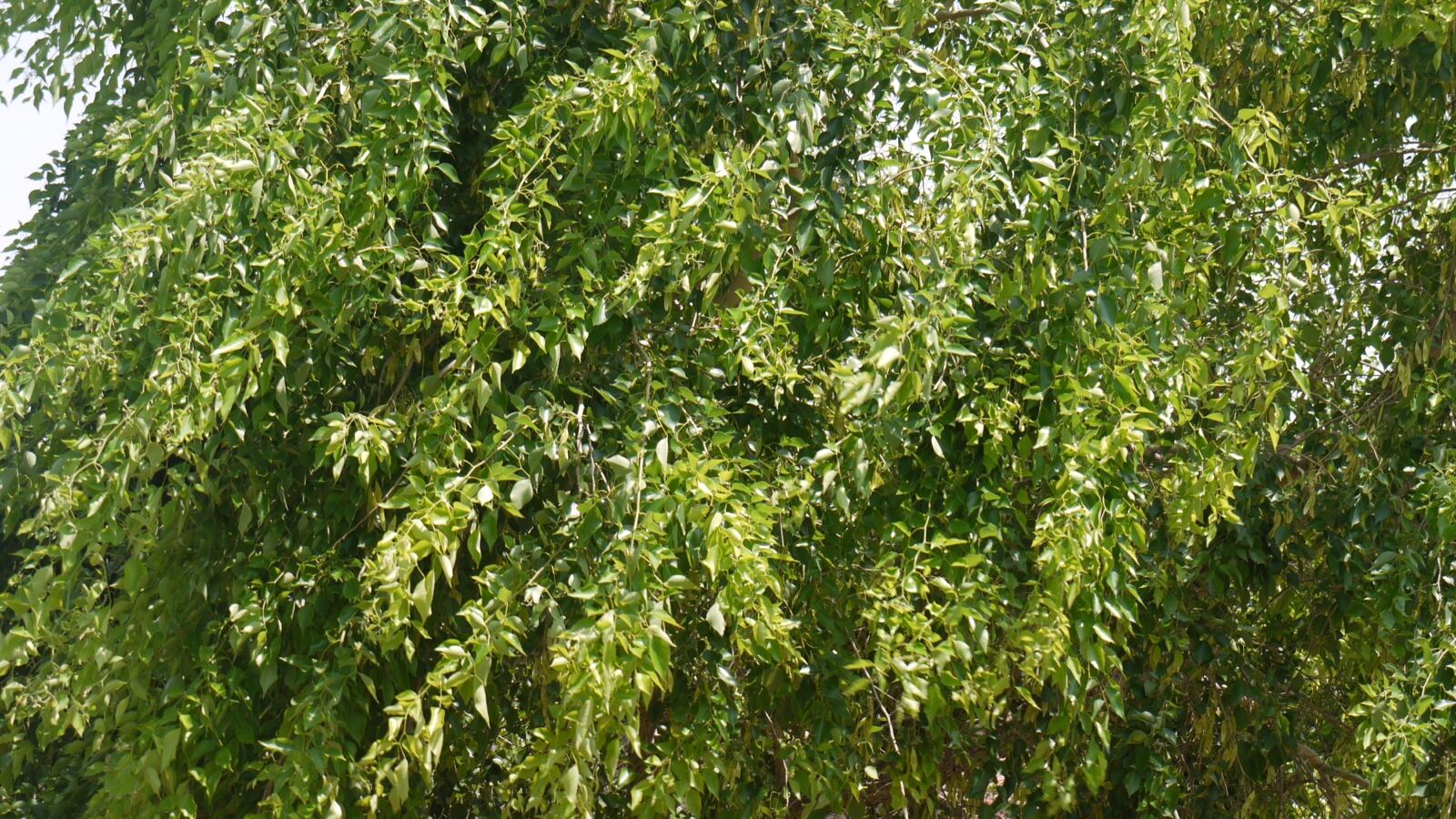
Rosewood, the Dalbergia species (Brazilian, Indian, Honduran, Madagascar, Siamese rosewoods, and the related African blackwood), leguminous trees giving dense, richly-figured, dark, fragrant timber;
Sandalwood, the Santalum species (Indian sandalwood, Australian sandalwood, and Pacific-island kinds), small trees whose pale, fine, aromatic heartwood is the source of sandalwood oil and incense.
Rosewood: beauty in the grain
Rosewood takes its name from the sweet, rose-like scent of the freshly-cut wood, but its fame rests on the timber's beauty and tone: dark chocolate-and-black streaked grain, high density, a fine polish, and superb acoustic and working properties.
It has been the wood of choice for the finest furniture, cabinetry, and musical instruments — the backs and sides of premium guitars, piano cases, marimba and xylophone bars, and luxury furniture and veneer. Brazilian rosewood in particular was the classic guitar and piano wood, and its scarcity is now legendary among luthiers.
That demand — driven in recent decades by an enormous appetite in East Asia for rosewood ("hongmu") reproduction classical furniture — has made rosewood the centre of a staggering illegal trade. Rosewood is now, by value, the single most trafficked category of wild product in the world — more than ivory, rhino horn, and pangolins combined — and the logging has stripped forests across Madagascar, Southeast Asia, West Africa, and Central America, often illegally and violently. In response, in 2017 the entire genus Dalbergia was listed on CITES, one of the broadest such protections ever enacted, so that all rosewood trade now requires permits. It is the starkest modern example of a tree logged to the edge by its own value, the extreme of the mahogany and ebony story. See restoration economics and woodland management.
Sandalwood: the tree that feeds on others
Sandalwood is prized not for its look but for its fragrance — the sweet, warm, long-lasting scent of its heartwood and the oil distilled from it, used for millennia in incense, perfume, cosmetics, carving, and religious ritual across South and East Asia, and central to Hindu and Buddhist practice.
But sandalwood has a botanical secret that shapes everything about growing it: it is a hemiparasite. A sandalwood tree photosynthesises with its own green leaves, but it cannot thrive alone — it taps into the roots of neighbouring plants with specialised structures (haustoria), drawing water and nutrients from a host. So sandalwood must be grown alongside host plants (often nitrogen-fixing shrubs and trees), and a sandalwood plantation is really a community of sandalwood and its hosts, an unusual requirement among timber trees and a fascinating one — the fragrant treasure is, quietly, a partial parasite on its neighbours. See nitrogen fixers.
Indian sandalwood (Santalum album), the most prized, was so over-exploited — every wild tree in India was for a time declared government property to control it — that supply collapsed, and much sandalwood oil is now produced from plantations in Australia, where Indian sandalwood is grown commercially with host trees, a rare conservation success in giving a raided resource a farmed source. Overharvest and slow growth still threaten wild sandalwoods, several of which are endangered. See reforestation techniques.
Growing them
Both are tropical to subtropical, frost-tender, and slow-growing, the perennial problem of precious woods — decades to a valuable heartwood.
Rosewoods are leguminous, many of them tough and drought-hardy, some nitrogen-fixing, and are grown from seed in restoration and (increasingly) plantation and agroforestry, both for timber and to relieve the pressure on wild trees. Sandalwood must be grown with compatible host plants from the start, in well-drained soil and full sun, and is propagated from seed sown near its hosts. For both, the responsible path is certified, plantation, or salvaged material and patience with their slowness. See propagation and dryland restoration.
See also
- Ebony and Blackwood African blackwood, a Dalbergia rosewood
- Mahogany the other great CITES-listed furniture timber
- Frankincense and Myrrh the other great aromatic, traded tree products
- Nitrogen Fixers the host plants sandalwood taps and rosewoods enrich
- Restoration Economics plantations as an alternative to raiding wild trees
- Teak a valuable timber that plantations supply successfully
- Ashoka Tree
- Padauk
- Brazilwood
- Champak
- Shisham
- Quandong