What it is
Bombax ceiba, the red silk-cotton tree, semal, or Indian bombax — a large, fast-growing deciduous tree of South and Southeast Asia, and one of the most spectacular flowering trees of the Indian spring.
It belongs to the mallow family, Malvaceae, and is a close relative of the kapok (Ceiba) — indeed the two are so alike that both are called "silk-cotton tree" — as well as of the silk-floss tree, baobab, and Chinese parasol tree. Like the kapok it is a tall tree with a buttressed trunk (often armed with conical spines when young), it produces silky floss in its pods, and it flowers dramatically on bare branches — but the bombax does it in blazing red.
Fire on the bare tree
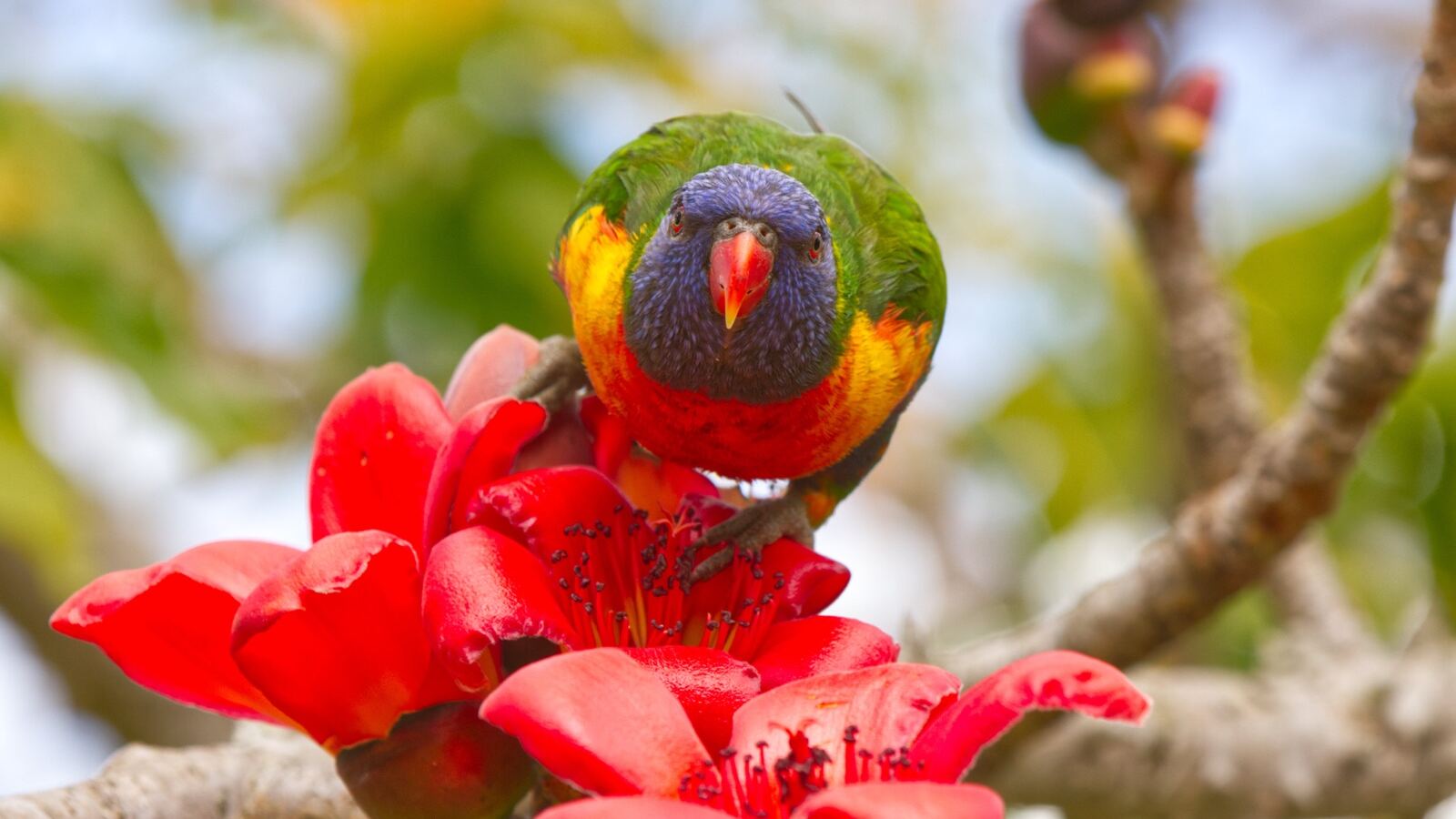
In late winter and spring, before its leaves appear, the bombax covers its bare, spreading branches in masses of large, cup-shaped, waxy, brilliant red (sometimes orange) flowers — a whole leafless tree set alight against the sky, one of the signature sights of the North Indian spring, and a counterpart to the flame of the forest and the coral tree.
Those flowers are built for birds: big, sturdy, cup-shaped, and brimming with copious nectar, they are thronged by mynas, crows, sunbirds, parakeets, and a host of other birds that come to drink and, in doing so, pollinate the tree — a great bird-nectar feast at a lean time of year, making the bombax a keystone pollinator and wildlife tree of the season. The fallen flowers carpet the ground and are eaten by animals; and the fleshy flower parts (the calyces) are eaten as a vegetable by people across India, and the flowers dried for medicine, so the bombax's bloom feeds birds, beasts, and people alike. See historical ecology.
Floss and timber
After flowering, the bombax produces pods that split to release seeds embedded in a mass of white, silky floss — the "silk cotton" of its name — used, like kapok, as a stuffing for pillows, mattresses, and cushions, buoyant and light. Its soft, light, pale timber is of low durability but is widely used for matchwood and matchboxes, plywood, packing cases, and light construction — the bombax is a significant matchwood tree — and the tree yields a gum and various medicines. It is thus, like its kapok cousin, a thoroughly useful tree as well as a magnificent flowering one.
Growing it
Tropical to subtropical and frost-tender, the bombax is fast-growing and tough, wanting heat and full sun and tolerating a range of soils and a seasonal dry period (it is drought-deciduous, dropping its leaves and flowering leafless in the dry season); it dislikes only hard frost and deep shade. It becomes a large, spreading tree needing plenty of room.
It is grown very easily from seed (which is carried on the floss) and from large cuttings, and it flowers young and spectacularly. As a fast, spectacular, bird-feeding, useful flowering tree, the bombax is a magnificent choice for a large tropical or subtropical space, a park, or an avenue, and a natural part of the Indian and Southeast Asian landscape. See propagation and tropical fruit trees for the wider warm-climate context.
See also
- Kapok and Balsa its close silk-cotton relative
- Silk-Floss Tree, Baobab, and Chinese Parasol Tree more mallow-family trees
- Flame of the Forest and Coral Tree other red, bird-pollinated spring-flowering trees
- Pollinator Habitat the bird-nectar feast of the bombax bloom
- Bats and birds among its many flower visitors
- Historical Ecology the silk-cotton tree in Indian life