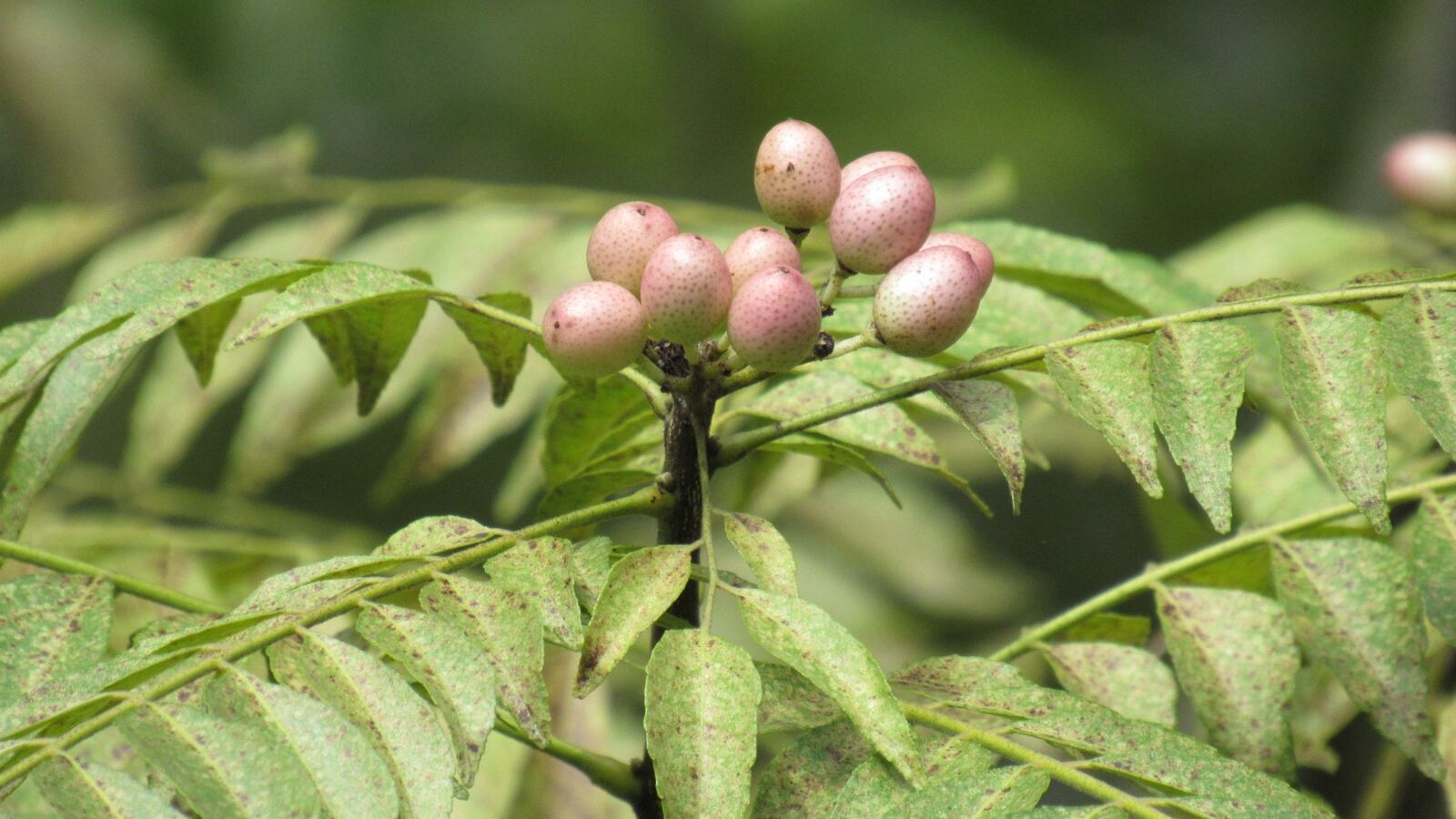
What it is
Murraya koenigii, the curry tree or curry leaf tree — a small tree or large shrub of the Indian subcontinent, grown for its intensely aromatic leaves, which are one of the essential flavourings of South Indian and Sri Lankan cooking.
It belongs to the citrus family, Rutaceae, which makes it a relative of the citrus trees — and the kinship shows in the leaves, which, crushed, give off the same kind of volatile, aromatic oils from tiny glands, though the curry tree's scent is quite its own: warm, nutty, citrusy, and unmistakable.
Not curry powder
A common confusion is worth clearing up at once: the curry tree and its leaves have nothing to do with "curry powder."
"Curry powder" is a British-invented blend of ground spices (turmeric, coriander, cumin, and so on), and the word "curry" for a spiced dish is an English catch-all. The curry leaf, by contrast, is a specific fresh herb — the leaves of this one tree — with its own distinct aroma, unrelated to the spice blend, and it would not be found in a tin of curry powder. The naming coincidence causes endless muddle, but the two are entirely different things.
How the leaf is used
The curry leaf is used in a very particular way that is central to South Indian, Sri Lankan, and much South and Southeast Asian cooking.
The glossy little leaves are almost always used fresh (they lose most of their aroma when dried, so dried curry leaves are a poor substitute), and the classic technique is the tempering or tadka: whole curry leaves are dropped into hot oil or ghee at the start or finish of a dish, where they splutter and fry for a few seconds, releasing their fragrant oils into the fat, which then flavours the whole dish. They go into dals, sambars, rasams, chutneys, curries, and rice dishes across the region, usually fried whole and left in (they are edible, though often left on the plate). The fresh leaf is so prized, and so much better than the dried, that home cooks in the South Asian diaspora frequently grow their own tree just to have fresh leaves on hand — which is easy, because the curry tree grows happily in a pot.
The leaves are also valued in Ayurvedic medicine, and the tree bears small fragrant white flowers followed by small black berries (the flesh is edible, but the seeds are toxic and must not be eaten). It is a good small pollinator plant, its flowers worked by bees.
Growing it
Subtropical to tropical, and frost-tender — the curry tree is damaged or killed by frost, which is why, in cool climates, it is grown as a container plant brought indoors or under glass for winter, a very common practice among cooks who want fresh leaves.
Soil and site. It wants full sun to light shade, warmth, and moist, well-drained soil, and it is otherwise easy and forgiving — tolerant of a pot, of pruning (which encourages the bushy leafy growth you want), and of being harvested regularly. It can be kept as a small bush a metre or two tall in a container, or grow into a small tree in the ground in a frost-free climate.
Propagation. From seed (which must be sown fresh, as it loses viability quickly), and from the suckers it throws up around the base, which are easily separated and potted — the simplest way to share a plant. Pick leaves as needed; the more you harvest and prune, the bushier and more productive it becomes. See propagation and container growing.
A curry tree on a sunny windowsill or patio is one of the most rewarding of culinary plants — a supply of a fresh herb that simply cannot be bought at the same quality, from an easy little citrus-family tree.
See also
- Citrus the aromatic family the curry tree belongs to
- Bay and Laurels another tree grown for its culinary leaves
- Cinnamon and Camphor more aromatic-leaved culinary trees
- Container Growing keeping a curry tree in a pot
- Pollinator Habitat the nectar of its flowers
- Propagation raising curry trees from seed and suckers
- Amla
- Sichuan Pepper
- Finger Lime