The pests you diagnose after the fact
Above-ground pests announce themselves. Soil pests do not — the first sign is usually a plant wilting, toppling, or simply vanishing overnight, with nothing visible on it.
Diagnosis therefore means digging, and knowing what you are looking at.
Wireworms
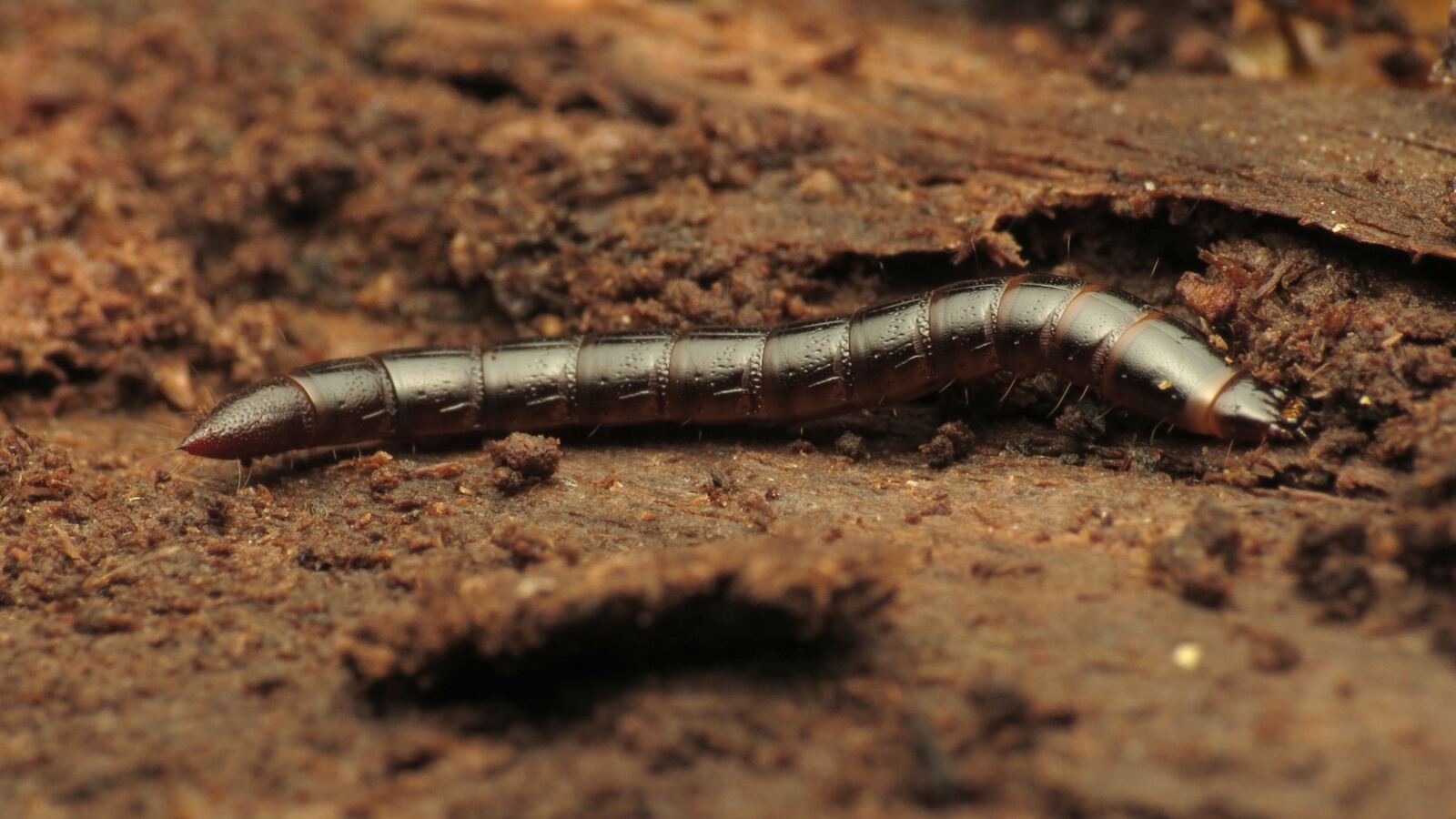
Larvae of click beetles, Elateridae. Slender, hard, shiny, orange-brown, wire-like, 1 to 3 cm, with three pairs of small legs at the front.
They live in soil for three to five years before pupating, which is the crucial fact: a single infestation persists for years regardless of what you do to the current crop.
Damage is narrow tunnels bored into potatoes, carrots, beetroot, and other roots — small round entry holes leading to a network inside. Cosmetically ruinous and an entry route for rot. They also kill seedlings by tunnelling into stems at soil level.
They follow grassland. Click beetles lay in permanent grass, so wireworm populations are highest in the first two or three years after turf is broken. Any new plot dug from lawn or pasture will have them.
Management:
Wait. Populations fall as the years since grassland increase. Grow less susceptible crops for the first two or three years — brassicas, legumes, onions — and delay maincrop potatoes and carrots.
Lift potatoes early. Damage accumulates the longer tubers sit in the ground, so harvesting as soon as they are ready dramatically reduces it.
Cultivate in autumn and winter, exposing larvae to birds and frost.
Trap crops. Pieces of potato or carrot buried on sticks, lifted and destroyed every few days, genuinely reduce local numbers in a small plot.
Keep the ground clean of grassy weeds, which sustain them.
The adult click beetle is harmless and named for the audible snap it makes flipping itself upright.
Leatherjackets
Larvae of crane flies, daddy-long-legs. Grey-brown, legless, tough-skinned, 2 to 4 cm, with no obvious head.
They eat roots and stem bases, and the classic damage is patches of lawn or a seedbed turning yellow and lifting away with no root attached. In vegetables they sever seedlings at ground level.
Peak damage is spring, when overwintered larvae are large and feeding hard.
Like wireworms, they are associated with grassland — adults lay in turf in late summer, especially in a wet autumn, which is why leatherjacket years follow wet Septembers.
Management:
Birds do most of it. Starlings, rooks, and corvids probing a lawn are working on leatherjackets, and a flock on the grass is a diagnosis. Badgers and foxes tearing up turf are after the same thing. See insectivorous birds.
Parasitic nematodes, Steinernema feltiae, applied to warm moist soil in autumn while larvae are small. Genuinely effective within those conditions. See soil microarthropods.
The black plastic trick. Water the turf heavily in the evening, cover with black plastic overnight, and remove it at dawn — larvae come to the surface and can be collected, or left for birds.
Improve drainage, since they favour damp ground.
Cutworms
Larvae of several noctuid moths. Fat, smooth, greasy-looking caterpillars, grey-brown or greenish, 3 to 5 cm, that curl into a tight C when disturbed.
They feed at night at soil level, severing seedlings and transplants at the base — the plant is found lying beside a neatly cut stump, which is the signature. They also bore into root vegetables and potatoes.
By day they rest just below the surface within a few centimetres of the damage, which is where to dig for them.
Management:
Search at the scene. Scrape the soil around a freshly cut plant and you will usually find the culprit within a few centimetres.
Collars. A cardboard or plastic collar pushed a couple of centimetres into the soil around a transplant physically prevents access, and it works well for the small number of high-value plants where it is practical.
Keep the ground weed-free before planting, since moths lay on weedy ground and larvae move onto the crop.
Cultivation and birds.
Nematodes and Bacillus thuringiensis both work against them.
Night patrols with a torch are genuinely the most effective small-scale control, and the same is true for slugs and snails.
Chafer grubs
Larvae of chafer beetles. Fat, white, C-shaped, with a distinct brown head and three pairs of obvious legs — the legs and head separate them from leatherjackets.
They eat roots, and cause the same lawn symptoms as leatherjackets plus secondary damage from badgers and birds digging for them.
Nematodes, Heterorhabditis bacteriophora, applied in late summer while grubs are small.
Vine weevil
Adults are dull black, flightless, and notch the edges of leaves in a distinctive scalloped pattern — cosmetic but diagnostic.
The larvae are the problem: creamy white, C-shaped, brown-headed, and legless, which distinguishes them from chafer grubs. They eat roots and can hollow out the base of a plant entirely.
Container plants are the main casualties, and the classic presentation is a healthy-looking plant that wilts suddenly and lifts out of the pot with no roots left. Heucheras, primulas, fuchsias, and strawberries are favourites. See container growing.
All adults are female and reproduce parthenogenetically, so a single individual founds an infestation.
Nematodes, Steinernema kraussei, in late summer and again in spring, are the standard control and work well in the confined volume of a pot.
The common thread
Almost everything above is worse in recently broken grassland, in damp ground, and in bare or weedy soil.
And almost every control is the same short list: rotation and timing, encouraging birds and ground-dwelling predators, targeted nematodes, physical barriers, and patience through the first few years of a new plot.
Broad-spectrum soil insecticides are largely unavailable to gardeners now and would in any case remove the ground beetles, predatory mites, and nematodes that are suppressing these populations already.
That last point is the important one: a soil with a functioning predator community has these pests at levels you never notice. The ones that become outbreaks are usually in soils where the food web has been thinned. See predator-prey balance and soil food web.
See also
- Beneficial Predators the ground beetles that eat them
- Soil Microarthropods predatory nematodes as controls
- Garden Pests the wider framing
- Crop Rotation timing crops around wireworm decline
- Insectivorous Birds what the starlings are doing
- Potatoes the crop most affected by wireworm
- Neem
- Ground Beetles
- Moles