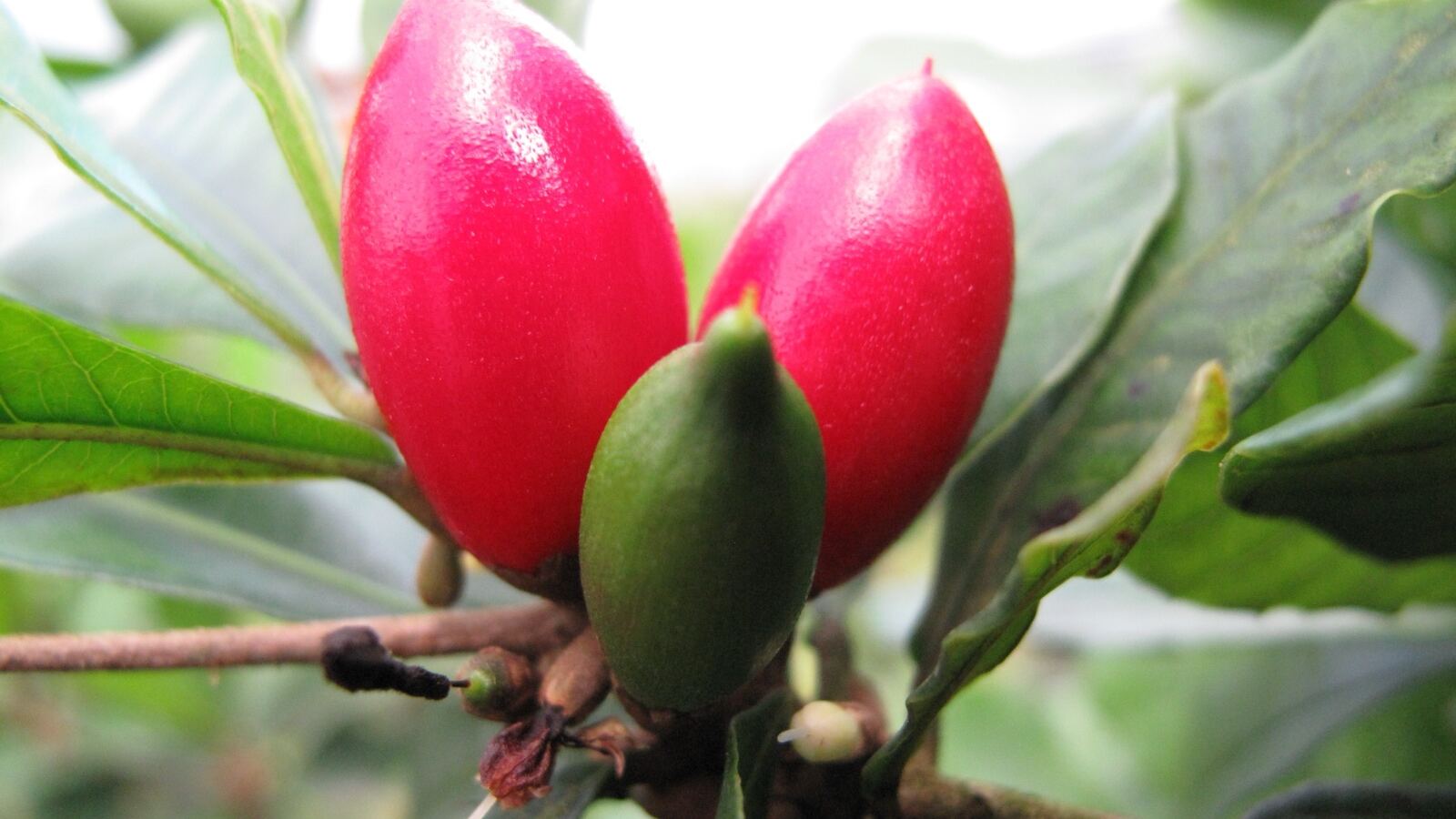
What it is
Synsepalum dulcificum, the miracle fruit or miracle berry — a small evergreen shrub or tree of West Africa, bearing small, bright-red, glossy berries with a modest, mildly sweet flavour of their own.
It belongs to the sapodilla family, Sapotaceae — a relative of the sapotes and the mahua — but it is grown for none of the usual reasons. The miracle fruit is grown for what it does to everything you eat afterwards.
Rewiring the tongue
The berry's "miracle" is a genuine and well-understood phenomenon. The flesh contains a protein called miraculin, and when you eat a berry and let the pulp coat your tongue, miraculin binds to the sweet-taste receptors — but in a peculiar way: at normal (neutral) pH it does little, but in the presence of acid, it switches those sweet receptors on.
The result is that, for about thirty minutes to an hour after eating a miracle berry, everything sour tastes intensely sweet. Bite a lemon and it tastes like sweet lemonade; vinegar tastes like sweet syrup; sour beer, tart fruit, and even strong cheese are transformed. It does not add sugar — it tricks the tongue — and the effect wears off as the miraculin is washed away. It is one of the most dramatic and reliable examples of a plant compound directly altering human perception, and it is completely harmless.
Flavour-tripping and real medicine
This strange power has given the miracle fruit two very different lives.
Flavour-tripping. It has become a novelty and party phenomenon — "flavour-tripping parties," where people eat a berry and then work through a spread of sour and acidic foods, marvelling as lemons, limes, vinegars, and sour sweets turn deliciously sweet. It is a genuine, repeatable piece of edible magic.
Medicine and diet. More seriously, the miracle fruit has real medical and dietary interest. It has been studied as a way to make food palatable for chemotherapy patients, many of whom suffer a metallic, distorted sense of taste that makes eating miserable — miracle fruit can restore pleasure in food and help them keep eating. It has also been explored as a natural, calorie-free sweetener for diabetics and dieters, letting them enjoy sour foods as sweet without sugar. Its history includes a notorious episode in which an attempt to develop miraculin as a commercial sweetener in the 1970s was blocked by the US regulator under contested circumstances — a story often cited by those who suspect the sugar industry's hand. Research and small-scale use continue.
Growing it
Tropical, frost-tender, and — being a West African rainforest understorey plant — wanting warmth, humidity, partial shade, and acidic, well-drained soil; it dislikes cold, drought, alkaline soil, and full harsh sun, which makes it a somewhat particular plant.
It is a slow-growing small shrub or tree, well suited to container growing and to a heated greenhouse or bright indoor spot in cool climates, where enthusiasts grow it for a home supply of berries. It fruits over a long season once mature. Grown from seed (which must be sown very fresh, as it loses viability within days) and from cuttings. The small white flowers can be hand-pollinated indoors. For the curious grower, few plants offer a stranger reward than a home-grown berry that turns a lemon sweet. See propagation, container growing, and food forest design.
See also
- Sapotes and Mahua its relatives in the sapodilla family
- Tropical Fruit Trees the wider warm-climate fruit palette
- Container Growing raising miracle fruit indoors in cool climates
- Guavas another small tropical fruit for the greenhouse
- Amla a fruit valued for a different tongue-challenging quality — extreme sourness
- Food Forest Design a curiosity for the tropical understorey layer
- Canistel and Abiu