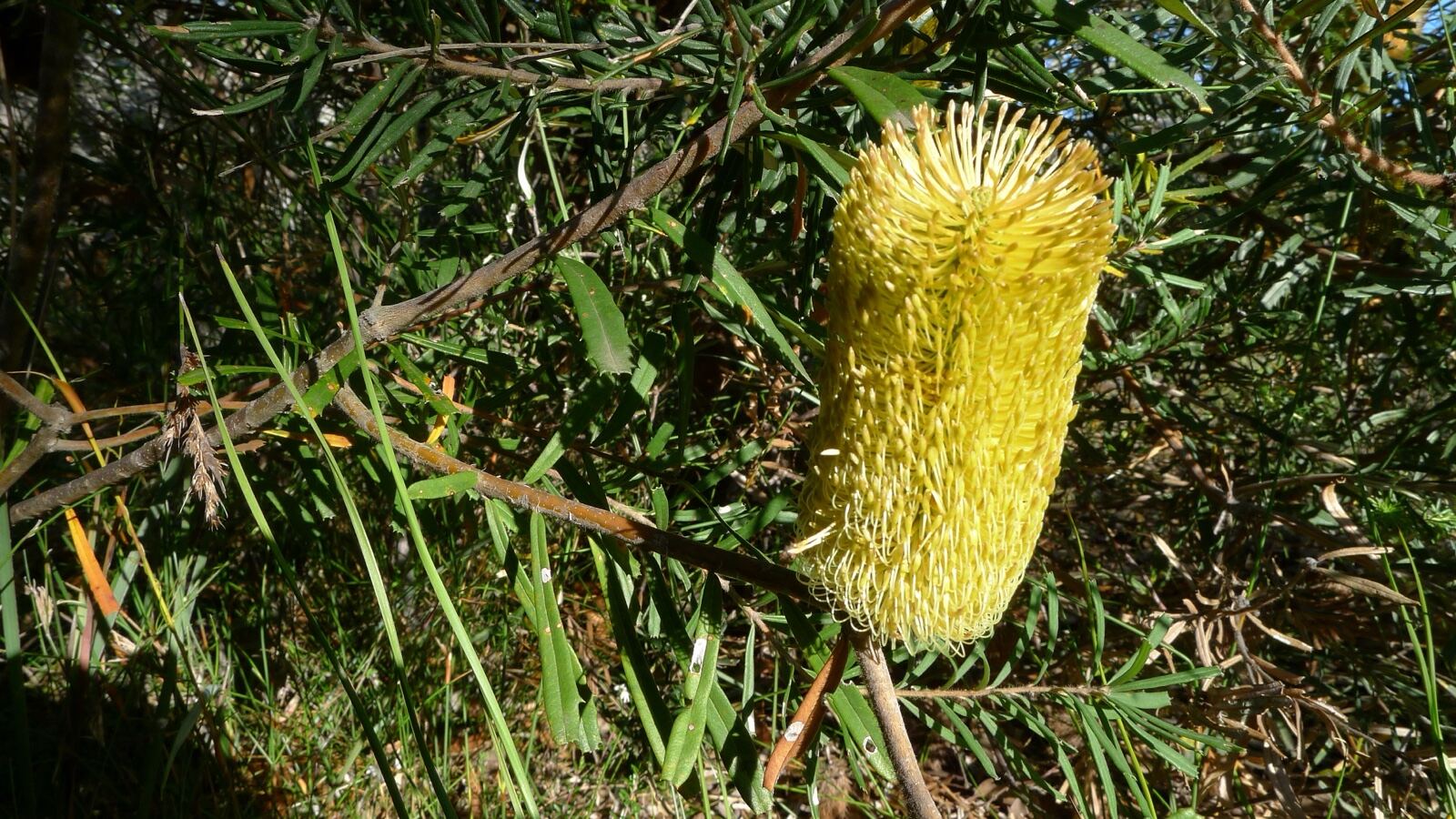
What they are
Banksia, Grevillea, and their relatives — Australian and southern-hemisphere members of the ancient protea family, Proteaceae, the same family as the South African proteas and the macadamia nut.
Banksias are shrubs and small trees with stiff, serrated leaves and dense cylindrical or dome-shaped flower spikes — thousands of tiny flowers packed into a brush or cone, the "banksia cones" of Australian imagery. Grevilleas range from ground-covers to tall trees (the silky oak, Grevillea robusta, is a large timber and street tree) with spider-like or toothbrush flower clusters. Both are iconic plants of the Australian bush and among the most-planted native ornamentals for their bird-attracting flowers.
Living on nothing: cluster roots
The Proteaceae achieve something remarkable: they flourish on the most phosphorus-poor, infertile soils on Earth — the ancient, deeply-weathered, nutrient-stripped soils of Australia and southern Africa, where most plants starve.
Their secret is the proteoid (cluster) root — dense bottlebrush-like clusters of fine rootlets that the plant grows in the surface litter, which release acids and compounds that prise scarce phosphorus and iron out of the poor soil with extraordinary efficiency. This lets banksias and grevilleas mine nutrients that other plants cannot reach, and it is why they dominate the barren heath and scrub of Australia. See nutrient deficiency and soil pH.
The catch is the mirror image: because they are so good at scavenging phosphorus, banksias and grevilleas are acutely sensitive to phosphorus toxicity — ordinary garden fertiliser, rich in phosphate, poisons them. This is the single most important thing to know in growing them: never feed a Proteaceae with normal fertiliser, and grow them lean. It is a vivid demonstration that "poor soil" is only poor relative to what a plant is built for. Their sensitivity extends to Phytophthora root rot, which devastates banksia in the wild.
Seed banks in the canopy: serotiny
Living in a fire-prone land, the banksias evolved a striking fire strategy: serotiny, the storage of seed in the canopy until fire releases it.
A banksia holds its seed in hard, woody follicles embedded in the old flower cone, sometimes for many years — a "canopy seed bank." The follicles stay shut, protecting the seed, until the heat of a bushfire (or the death of the branch) dries and cracks them open, and the seed falls onto ground newly cleared of competitors and fertilised by ash, at the one moment most favourable for a seedling. Some banksias need fire to reproduce at all. This fire-triggered seed release, shared with the melaleucas and many eucalypts, ties the whole plant community to the fire cycle, and it means that changing the frequency of fire — too often or too rarely — can wipe a banksia population out. See fire management and seed banking.
Nectar for birds
Banksias and grevilleas are among the great bird-pollinated plants. Their brush-like flower heads are built as landing platforms brimming with nectar, and they are worked by honeyeaters, lorikeets, and — in the case of some banksias that flower in winter — provide a crucial nectar supply when little else blooms, feeding birds and nectar-feeding marsupials and bats through the lean season. This makes them keystone nectar plants of the Australian bush and the single most popular group of native shrubs for bringing birds into gardens. See pollinator habitat and native bees. The old flower cones, meanwhile, are a favourite of children and craftspeople — the "big bad banksia men" of Australian folklore.
Growing them
Full sun and, above all, sharp drainage and lean, low-phosphorus soil; most resent humidity, wet feet, and any phosphate feeding.
Grevilleas are generally the easier and more adaptable garden plants, flowering much of the year and coming in a huge range of hybrids; banksias are more demanding and site-specific but spectacular. Both are grown from seed (banksia seed often extracted by heating the cones, mimicking fire) and from cuttings; grafting onto tougher rootstocks is used for banksias in difficult soils. Never use ordinary fertiliser — a native, low-phosphorus feed at most. See propagation and native plant selection.
See also
- Macadamia and Tropical Nuts the edible-nut member of the protea family
- Fire Management serotiny and the banksia seed cycle
- Nutrient Deficiency cluster roots and phosphorus sensitivity
- Pollinator Habitat banksia and grevillea as bird-nectar plants
- Melaleuca and Tea Tree the fellow fire-adapted natives
- Seed Banking the canopy seed bank strategy
- Grass Tree
- Bottlebrush