What it is
A wildflower meadow is a managed habitat. Not a field left alone.
Walk away from a meadow for ten years and you get scrub. Walk away for fifty and you get woodland. The English chalk meadows, the Alpine hay terraces, the prairies of the upper Midwest: every one was cut, grazed, or burned on a schedule. The flowers are there because something kept grass and bramble in check, year after year.
An ancient meadow carries 30 to 50 plant species in a square metre. A modern ryegrass ley carries five to eight. The difference is a century of careful management on one side and forty years of fertiliser on the other.
Why the hay cycle works
The cycle is simple. Cut once a year. Take the cuttings off. Graze lightly in autumn. Repeat.
Each step does specific work.
One late cut. Mowing in July or August, after most plants have set seed, lets the meadow reseed itself before you take the top off. Cut in May and you sterilise the field. Yellow rattle, knapweed, oxeye daisy, betony, and devil's bit scabious all need their seed in the head when the blade comes through, or they will not be back next year.
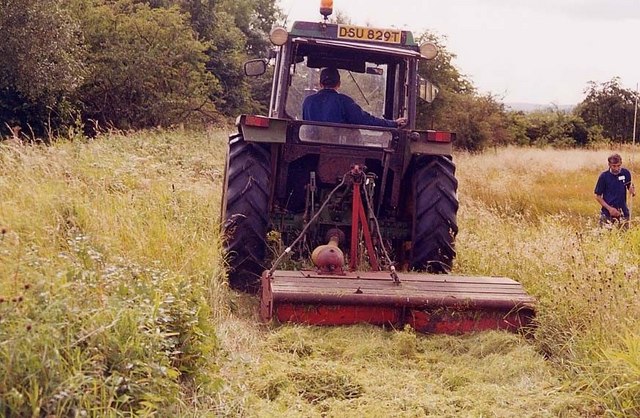
Remove the cuttings. This is the rule most people break. If you leave the hay on the ground it mulches, rots, and feeds the soil. A fertile soil grows grass. A grass-dominated sward closes the canopy at ground level and the wildflowers lose. The whole point of cutting and carting is to keep the field hungry.
Aftermath grazing. Sheep at roughly one ewe per hectare for six weeks in October and November. They nibble regrowth, open small bare patches with their feet, and press seed into the soil. Cattle work too at lower stocking. Horses graze selectively and trash the sward.
A meadow run on this cycle exports nutrients every year. The phosphorus index drifts down. Grass loses its edge. The flowers come back.
Yellow rattle: the parasite that does the heavy lifting
Yellow rattle (Rhinanthus minor) is an annual hemiparasite. Its roots tap into the roots of nearby grasses and pull water and sugars out of them. A good population suppresses grass growth by 40 to 60 percent and opens the sward for slower wildflowers.
It is the single most useful tool in meadow restoration. Cheaper than reseeding. Faster than waiting for fertility to drop.
Sow in autumn. The seed needs cold to germinate. Broadcast at one to two grams per square metre in September or October onto short, scarified turf. Graze or mow tight first so the seed reaches soil.
Year one is invisible. A few plants flower, set seed, die. Stocking goes from nothing to maybe twenty plants per square metre.
Year three is the turn. Grass thins visibly. Bare patches open. You broadcast green hay (see below) or a wildflower seed mix into the gaps and they actually take.
Year five is a meadow. Or the start of one.
Transitioning from a ryegrass ley
Most fields people want to restore are not blank slates. They are tired ryegrass pastures with high phosphorus, low diversity, and a thatch of dead grass at the base.
Plan for five to seven years.
Year one. Stop fertilising. Stop reseeding. Cut for hay in late July and take the bales off. Graze hard in autumn to scalp the sward.
Year two. Sow yellow rattle in September. Continue the hay cut and remove cuttings. Aftermath graze.
Year three. Start green hay strewing. Cut a donor meadow with known diversity at peak seed, the same day spread the fresh-cut material thinly across your field at one hectare donor to three hectares receptor. The seed shakes out as the hay dries on the ground.
Years four to seven. Repeat. Add plug plants of slower species: devil's bit scabious, betony, common knapweed, meadow vetchling. The species count climbs from five to twenty to thirty.
A field at index three phosphorus takes roughly seven years to drift down to index zero or one. There is no shortcut. Strip turfing works faster but costs more than most projects can absorb.
Timing matters more than people think
Cut too early and you kill the meadow you are trying to build.
Skylarks and meadow pipits nest in tall grass from April to July. A mower in June destroys every nest in its path. Wait until late July at the earliest, ideally the first week of August, and the chicks have fledged.
Waxcap fungi (Hygrocybe species) fruit in unimproved grassland from September to November. They need a short, ungrazed sward at fruiting and will not tolerate fertiliser or cultivation. End the autumn graze by mid-September on fields with waxcap potential.
Pollinators need flowers in succession. A meadow cut uniformly on one day loses its nectar supply overnight. Where the field is large enough, cut in strips, or rotate which sections cut first across years. Leave a tenth uncut as overwinter cover for invertebrates and small mammals.
This is a decade-scale practice. You will not see what you built for five years. The meadow you hand to whoever comes next is the real measure.
When it goes wrong
Grass keeps winning. Phosphorus is still too high or the cut is too late. Test the soil. Push the cut earlier in the window. Add more yellow rattle.
Thistles and docks take over. A sign of compaction, fertility, or both. Spot-pull or topping cut before they seed. Do not blanket-spray. A meadow that has been sprayed loses ten years of progress.
The sward goes mossy. Drainage is poor or the cut is too tight. Raise the blade height to 7 to 10 cm and skip the autumn graze for a year.
Nothing flowers in year three. You are leaving cuttings on the ground or fertility is still feeding the grass. Cart everything off. Every time.