The basic sequence
Leave bare ground in a temperate climate and it moves through a fairly predictable series of communities.
Bare ground → annual weeds → perennial herbs and grasses → scrub and shrubs → pioneer trees → longer-lived canopy trees.
Each stage is a seral stage, and the whole run is a sere. The endpoint traditionally gets called the climax community — in most of temperate Europe, some form of woodland.
Primary succession starts from genuinely bare substrate with no soil and no seed bank: lava, glacial moraine, bare rock, a new dune. It is slow, and the first colonisers are lichens, mosses, and nitrogen fixers. See lichens and mosses and coastal dunes.
Secondary succession starts from disturbed ground that retains soil and a seed bank — an abandoned field, a clearfelled wood, a burnt area. Far faster, because the hard part is already done.
Why the textbook version is wrong
The tidy deterministic sequence — every site marching through fixed stages to a single predictable climax — was Frederic Clements's model from the early twentieth century, and it has not survived contact with the evidence.
The problems:
Multiple possible endpoints. The same starting point can produce different stable communities depending on what arrived first, in what order, and under what conditions. This is path dependence, and it means succession is contingent rather than fixed.
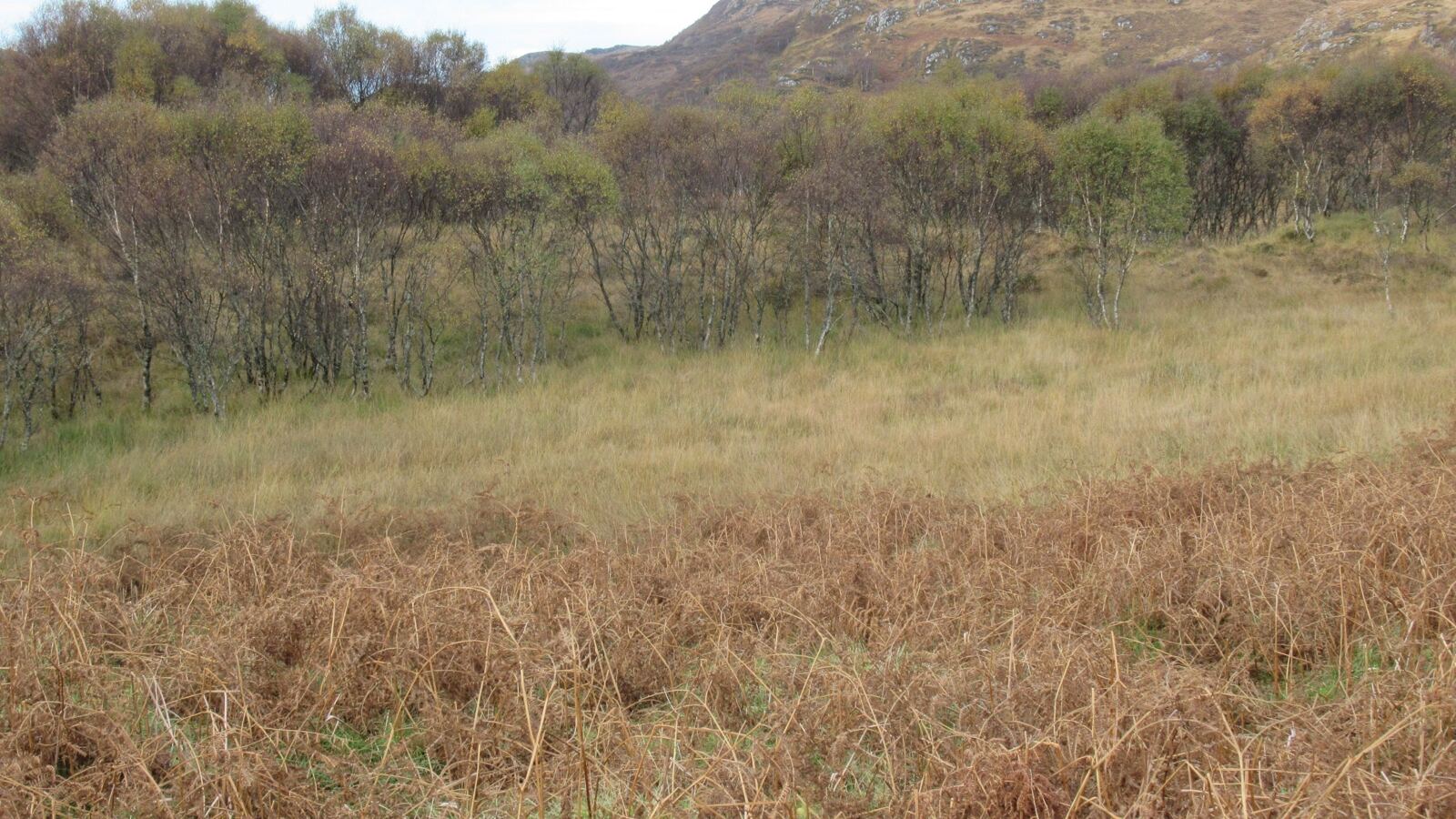
Arrested succession. Sites get stuck. Dense bracken, rank grass, a browsing regime, or a compacted pan can hold a site in one stage indefinitely. Left alone it does not proceed; it simply stays.
Disturbance is normal, not exceptional. Fire, flood, windthrow, grazing, and landslip are recurring features of most systems, not interruptions to them. Many communities exist because of regular disturbance and disappear without it — see the whole of fire management, grassland restoration, and coastal dunes.
Climate is moving. The endpoint a site is heading toward may not be the one it would have reached fifty years ago. See climate adaptation.
Novel ecosystems. Assemblages with no historical analogue — mixtures of native and introduced species on altered soils — are increasingly common and do not fit the model at all.
The useful residue is the direction and mechanism, not the schedule.
The mechanisms
Three processes drive the transitions, and they operate simultaneously.
Facilitation. Early species make conditions better for later ones. Pioneers stabilise soil, add organic matter, fix nitrogen, and provide shelter. This is the mechanism restoration exploits deliberately in nurse trees and pioneer species.
Tolerance. Later species establish under early ones because they can tolerate the conditions — chiefly shade — that pioneers cannot. Shade tolerance is the single most important trait determining who succeeds whom, which is why silver fir, beech, and holly sit late in the sequence and birch, larch, and tulip tree sit early.
Inhibition. Early species actively resist replacement — dense bracken, thick grass thatch, or allelopathic species holding a site against invaders. This is what produces arrested succession, and it is why some sites need intervention to move.
Reading a site
The practical skill: work out which stage a site is in and what is holding it there.
What is regenerating? Look for seedlings and saplings beneath the canopy or through the sward. Their absence is the most informative observation available, and it usually means browsing, shade, or no seed source. See pioneer identification.
What is the seed source? Succession cannot proceed to species that cannot arrive. An isolated field a kilometre from woodland will take a very long time to grow trees, regardless of conditions.
What is the disturbance regime? Grazing, mowing, burning, flooding. Removing it changes the trajectory as much as adding it.
What do the plants indicate? The species present report soil, moisture, fertility, and disturbance history. See indicator species and weed management.
What was here before? See historical ecology.
Working with it rather than against it
Most land management is a decision about where in the succession to hold a site, and at what cost.
Holding it early — a lawn, an arable field, a vegetable bed — takes continuous energy. Every weeding, mowing, and cultivation is work spent preventing succession. That is the framing in weed management: a weed is a plant doing succession where you did not ask for it.
Holding it mid-sequence — grassland, heath, coppice, wood pasture — needs regular disturbance, and these are frequently the most species-rich habitats precisely because they are held open. See meadow management and coppice rotation.
Letting it run costs nothing and gives you woodland eventually, which is the whole basis of assisted regeneration and rewilding edges.
Accelerating it is what restoration planting does — importing later-stage species so the site skips stages it would otherwise take decades to reach. See reforestation techniques and the Miyawaki method.
Farming the whole sequence at once is the syntropic insight: plant every stage simultaneously, harvest from each as it passes, and use pruning to drive the transitions. See syntropic agriculture and succession planting.
That last one is the most interesting reframing available. Conventional growing fights succession permanently; syntropic and food forest systems ride it.
The energy argument
The reason this matters practically.
An early-successional system is inherently high-maintenance, because it is being held against a strong tendency. A later-successional system is inherently low-maintenance, because it is where the land is going anyway.
That is most of the case for perennials first, food forest design, and permaculture design — not that perennial systems are morally superior, but that the maintenance burden of an annual system is a permanent tax paid to keep succession at bay.
The honest counterpoint is that annual crops produce staple calories that perennial systems mostly do not, so the tax buys something real. The design question is which parts of a holding are worth holding early and which are better let go forward.
See also
- Pioneer Species the species that go first
- Nurse Trees facilitation used deliberately
- Syntropic Agriculture farming the whole sequence at once
- Assisted Regeneration letting succession do the work
- Indicator Species reading which stage a site is in
- Weed Management succession arriving uninvited
- Hemlock
- Biodiversity
- Life-History Strategies
- Disturbance Ecology