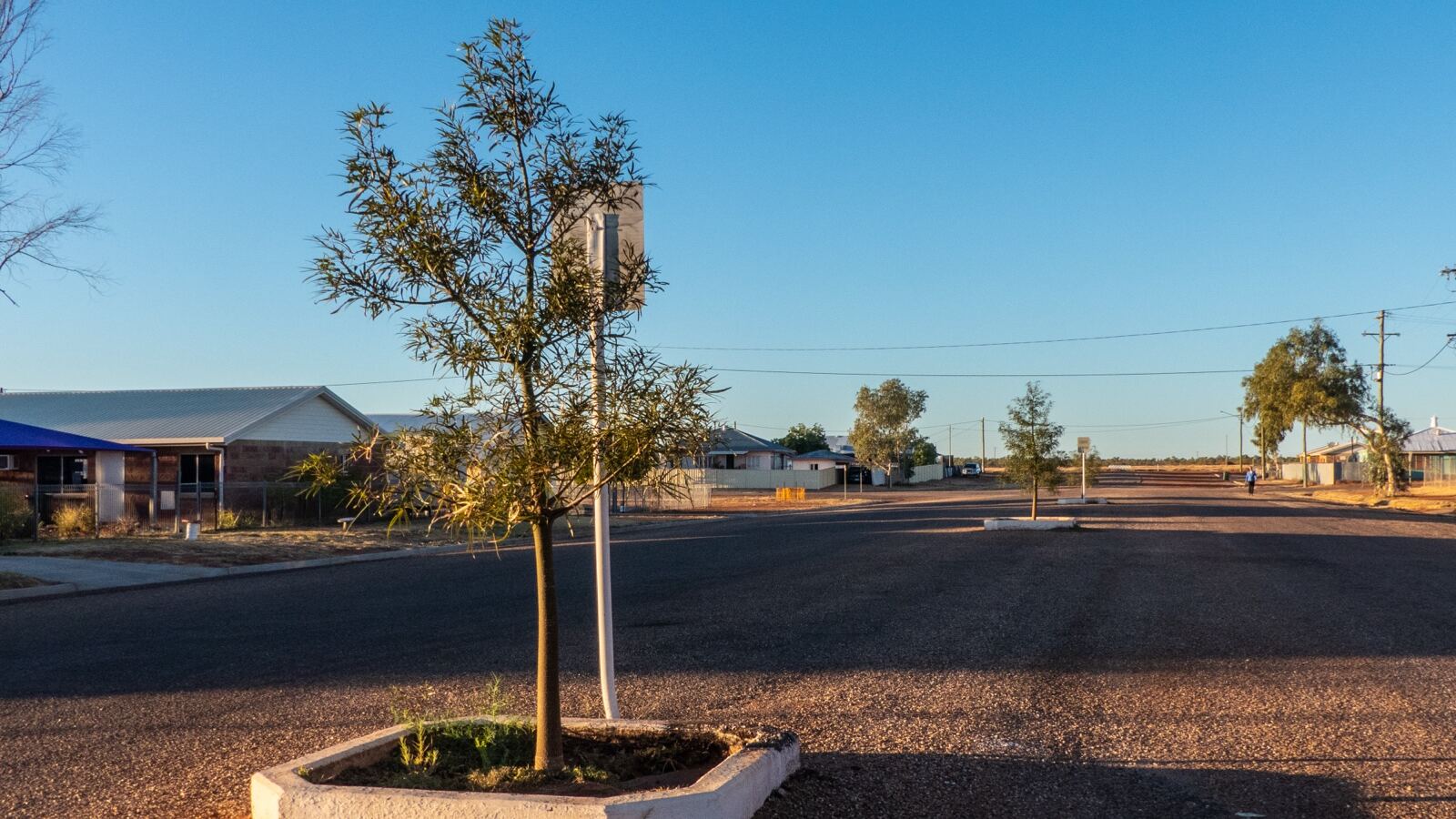
What they are
Brachychiton, the kurrajongs, bottle trees, and flame trees — a genus of Australian trees (with a few in New Guinea) in the mallow family, Malvaceae, the same family as the baobab, kapok, kola, and cacao.
They are among the most distinctive and useful trees of the Australian bush, and — like their baobab cousin — several of them are famous for one striking feature: a swollen, water- and food-storing trunk.
The bottle
The Queensland bottle tree (Brachychiton rupestris) takes the family's trunk-swelling to a dramatic extreme: its trunk balloons out into a huge, smooth, bottle- or gourd-shaped bulge, sometimes two or three metres thick, tapering above and below.
This bottle is a storage organ — the tree lays down water and starchy food reserves in the spongy, fibrous wood of the swollen trunk, a buffer against the long droughts of its dry inland home, exactly the strategy of the African baobab and the succulent quiver tree. In times of drought, settlers and Aboriginal people tapped bottle trees for the water and edible pith stored inside, and cut the foliage as emergency stock fodder — a living reservoir in a dry land. The bottle trees are also extraordinarily tough and long-lived, and mature specimens are so prized that they are sometimes dug up and transplanted whole, surviving the move because of the reserves in that trunk. See drought-tolerant species.
Food, fibre, and fodder
The kurrajongs were, and are, genuinely useful trees across their range.
Seeds. The boat-shaped, leathery seed pods are lined with clusters of yellow seeds that are edible and nutritious, roasted and eaten (and ground as a coffee substitute) by Aboriginal people and settlers — though the pods are also lined with fine irritant hairs that must be handled carefully.
Fibre. The inner bark is strong and fibrous, and was made into string, cordage, fishing nets, and bags — the name "kurrajong" itself comes from an Aboriginal word for the fibre and the tree, and the bark fibre was an important material across southeastern Australia.
Fodder. The foliage is valuable drought fodder for livestock, and kurrajongs were widely planted on farms and left in paddocks precisely so they could be cut to feed stock when the grass failed — an Australian silvopasture tradition. The trees also give dense shade and, being deep-rooted and drought-hardy, shelter and stabilise dry ground.
The flame trees
Some Brachychiton are grown purely for spectacle. The Illawarra flame tree (Brachychiton acerifolius) drops its leaves and then covers itself in a blaze of brilliant scarlet bell-flowers, one of the most vivid flowering trees of Australia — a native counterpart to the imported flame tree and jacaranda it is often planted among — and it, and various kurrajong hybrids, are popular ornamental and street trees for warm climates. The bell-shaped flowers of the whole genus are good for pollinators and nectar-feeding birds.
Growing them
Warm-temperate to subtropical, mostly frost-tender when young (hardening with age), and superbly drought-tolerant — kurrajongs and bottle trees want full sun and well-drained soil, tolerate poor, dry, rocky ground, and resent only waterlogging and hard frost, which makes them excellent tough trees for hot, dry climates and low-water landscaping.
They are slow-to-moderate growing, very long-lived, and deep-rooted, and the bottle trees in particular are almost indestructible once established. Grown from seed (handle the irritant pod hairs with care) and, for named flame-tree forms, by grafting. As drought-proof shade, fodder, ornament, and living water-store, they are among the most valuable trees for dry-country planting. See propagation and dryland restoration.
See also
- Baobab the African tree with the same water-storing trunk
- Quiver Tree another swollen-trunked drought survivor
- Kapok and Balsa more mallow-family trees
- Jacaranda and Flame Tree the imported flame trees the Illawarra joins
- Silvopasture kurrajong as drought fodder
- Drought-Tolerant Species trees for hot, dry country
- Silk-Floss Tree
- Tagasaste
- Ombú