What it is
The lilly-pillies are a group of Australian evergreen trees and shrubs of the myrtle family, Myrtaceae — chiefly species of Syzygium (and the related Acmena) — and they are among the most popular and widely-planted of all Australian native garden plants.
That family membership makes them close relatives of the rose apple and jambolan (also Syzygium), the clove, feijoa, guava, jaboticaba, and the great eucalyptus — the whole aromatic, berry-and-blossom myrtle clan. Lilly-pillies are dense, glossy-leaved, and generous both as ornamentals and as bush food.
The favourite hedge
The lilly-pillies' great popularity rests on their virtues as hedging and screening plants — they are, by a wide margin, among the most-planted native hedges in Australia, and increasingly in warm gardens worldwide.
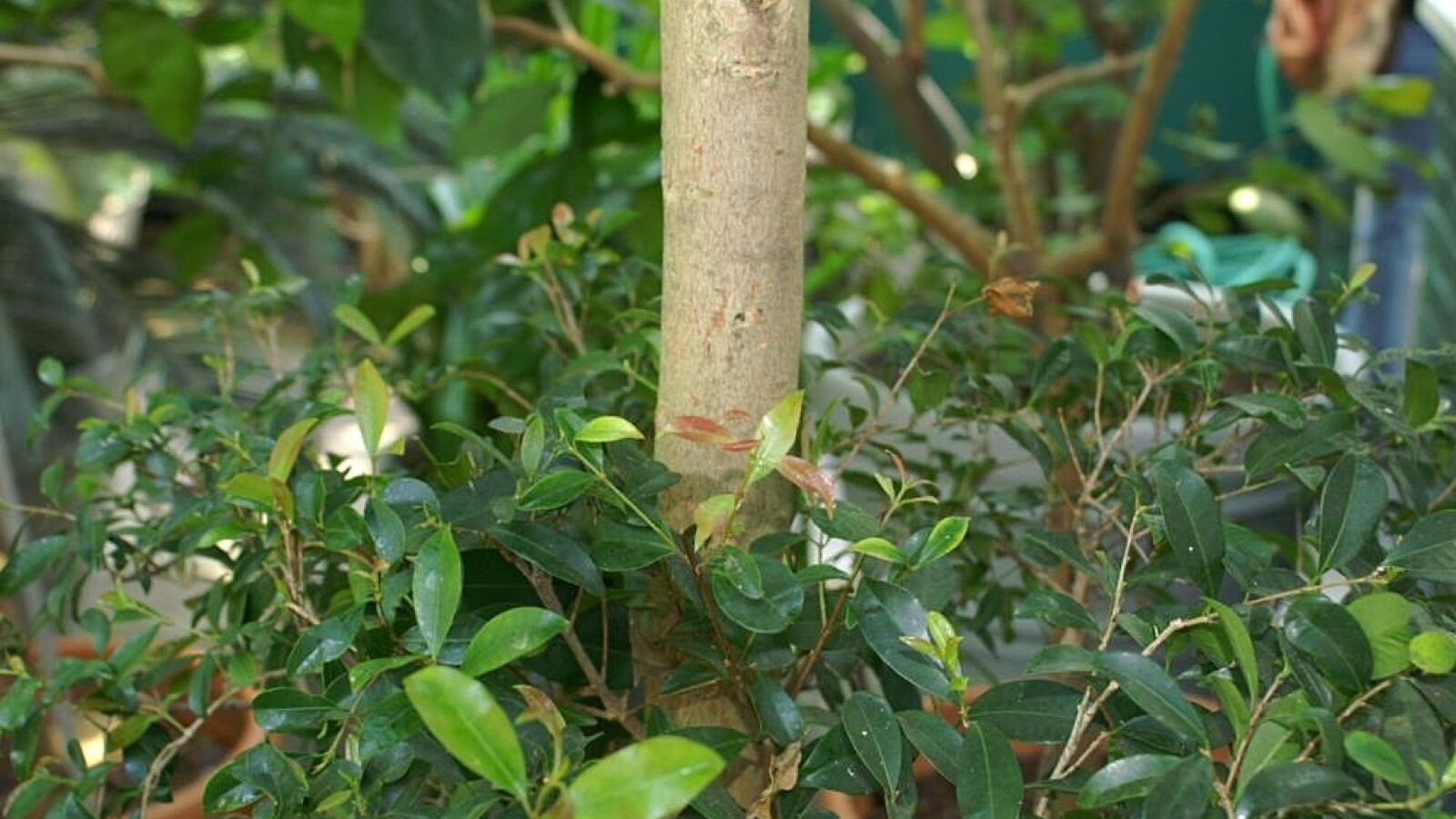
They are dense, evergreen, and glossy; they clip beautifully into hedges, screens, topiary, and formal shapes; they are fast and tough; and — a special bonus — their new growth flushes in vivid pink, red, orange, or bronze before turning glossy green, so a clipped lilly-pilly hedge is regularly lit up with colourful new shoots, giving the effect of a flowering hedge from its foliage alone. They also bear fluffy cream myrtle flowers (good for pollinators) followed by showy berries, so they offer flowers, colourful foliage, and fruit as well as a dense evergreen screen — which is why they are so beloved for hedges and gardens. Countless cultivars have been selected for hedge quality, foliage colour, compactness, and (importantly) resistance to the psyllid pimple-gall that disfigures some kinds. See urban forestry.
The berries
Most lilly-pillies bear edible berries — white, pink, red, or purple, crisp and juicy, with a tart, refreshing, apple-and-clove flavour — and several are genuine bush foods. The best-known is the riberry (Syzygium luehmannii), whose small red pear-shaped berries have a spicy, clove-and-cinnamon tang and are made into superb jams, sauces, and syrups and used in native-food cooking. The berries were eaten by Aboriginal peoples and are gathered and grown today for the bush-food market, as well as simply eaten off the hedge by generations of Australian children. So the same plant that makes the garden hedge also fills the jam pot. See food forest design and restoration economics.
One shadow hangs over the lilly-pillies and their whole family: myrtle rust, an introduced fungal disease that attacks the soft new growth of Myrtaceae and has become a serious threat to lilly-pillies and to Australian native myrtles generally — a reminder that even the toughest garden plants are vulnerable to imported disease.
Growing them
Subtropical to warm-temperate (and some hardy into cooler zones), the lilly-pillies are tough, adaptable evergreens wanting sun to part shade and moist, well-drained soil; most tolerate a range of soils, some drought once established, coastal conditions, and regular clipping, and they respond to pruning with fresh colourful growth — which is what makes them such good hedges. They dislike hard frost (in the tender kinds) and prolonged waterlogging.
They are grown from seed and, for named hedge and fruit cultivars, from cuttings, and they establish and grow fast. As dense, colourful, clip-happy, berry-bearing native evergreens, the lilly-pillies are the workhorse hedge-and-bush-food plants of the Australian garden, and a fine, useful, edible screen for any warm-climate food forest. See propagation.
See also
- Rose Apple and Jambolan their Syzygium fruit cousins
- Clove, Nutmeg, and Allspice, Guavas, Jaboticaba, and Eucalyptus the wider myrtle family
- Hedgerow Care and Urban Forestry the lilly-pilly as a hedge and screen
- Finger Lime, Quandong, Kakadu Plum, and Davidson Plum other Australian bush foods
- Tree Diseases the myrtle rust that threatens the family
- Food Forest Design an edible native hedge