What it is
Cola, chiefly Cola nitida and Cola acuminata, the kola nut — evergreen trees of the West African rainforest whose seeds are chewed as a stimulant and hold a central place in the culture, ritual, and economy of the region.
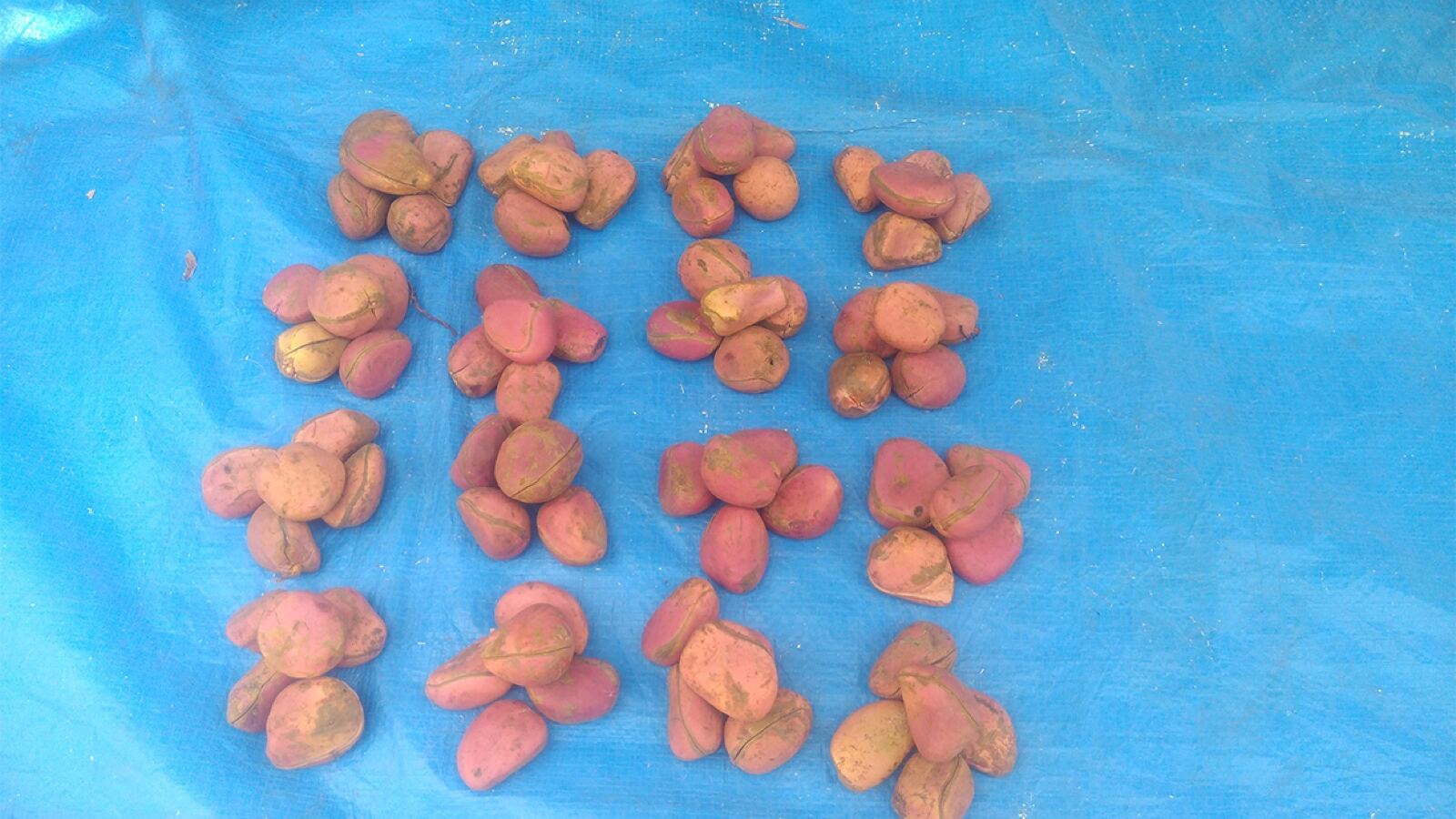
Kola belongs to the mallow family, Malvaceae, which makes it a close relative of cacao and the baobab and kapok — and, like cacao, it hides a stimulant in its seed. The "nut" is not a true nut but the seed from a large, knobbly pod, pink or white, about the size of a chestnut.
The kick
Kola nuts are bitter, and they are chewed for the lift they give: they are rich in caffeine (more than a coffee bean, weight for weight) along with theobromine — the same caffeine alkaloid that makes coffee, tea, and cacao stimulating. Chewing a piece of kola staves off fatigue, hunger, and thirst and sharpens alertness, which made it invaluable to labourers, travellers, and, historically, to those crossing the Sahara and enduring long work. A curious side effect is that the bitter nut makes water taste sweet afterwards.
Because it contains caffeine and is chewed as a mild stimulant, kola occupies, in much of West Africa, a social role somewhere between coffee and chewing tobacco — legal, everyday, mildly stimulating, and deeply habitual.
A culture of welcome
Kola is far more than a stimulant, though. Across West Africa — among the Igbo, Yoruba, Hausa, and many other peoples — the kola nut is a profound symbol of hospitality, respect, and community, woven into the most important moments of life.
To present and share kola is the essential gesture of welcome to a guest; "he who brings kola brings life," runs an Igbo saying. Kola nuts are broken and shared at weddings, naming ceremonies, funerals, the settling of disputes, and religious rites; they are offered to ancestors and deities; the way a kola nut splits (into how many segments) is read for meaning; and no significant gathering or negotiation proceeds without the ceremonial breaking of kola. This ceremonial and social weight makes the kola tree one of the most culturally important plants of West Africa, and kola nuts are traded in enormous quantities, an ancient and continuing commerce that long predates European contact and once ran across the whole Sahel.
The drink that took its name
Kola's most globally famous role is in the name of a drink. In the late nineteenth century, kola-nut extract — for its caffeine and flavour — was combined with coca-leaf extract and sugar to create the original Coca-Cola, and kola gave the whole class of "cola" soft drinks their name and, originally, part of their flavour and their caffeine.
Modern cola drinks mostly use synthetic caffeine and artificial flavourings rather than real kola extract, so the connection is now largely historical and nominal — but the word "cola," on billions of cans, is a direct memorial to a West African rainforest tree, in the same way "chicle," "cocoa," and "quinine" carry their trees' names into everyday life. See historical ecology.
Growing it
Tropical, frost-free, and lowland: kola wants the hot, humid, rainforest conditions of West Africa — high rainfall, warmth, shade when young, and deep, rich, well-drained soil — and it will not tolerate cold, drought, or waterlogging.
It is a medium to large evergreen tree, slow to come into bearing and long-lived, grown from seed and by grafting for superior fruiting types, and it is an important smallholder tree crop and a component of West African agroforestry and shade systems, often interplanted with cacao and food crops. Its flowers are pollinated by insects, and the pods are borne on the trunk and branches. See propagation and tropical fruit trees.
See also
- Cacao and Coffee the other stimulant tree crops, and cacao its family cousin
- Baobab a fellow African tree of the mallow family
- Kapok and Balsa more mallow-family trees
- Quinine Tree another tree behind a famous drink
- Historical Ecology the ancient kola trade of the Sahel
- Tropical Fruit Trees kola in the tropical tree-crop mix
- Yerba Maté
- Yaupon and Guayusa
- Betel Nut