What it is
Citrus australasica, the finger lime — a thorny understorey shrub or small tree of the subtropical rainforests of eastern Australia, and one of the world's most distinctive citrus fruits.
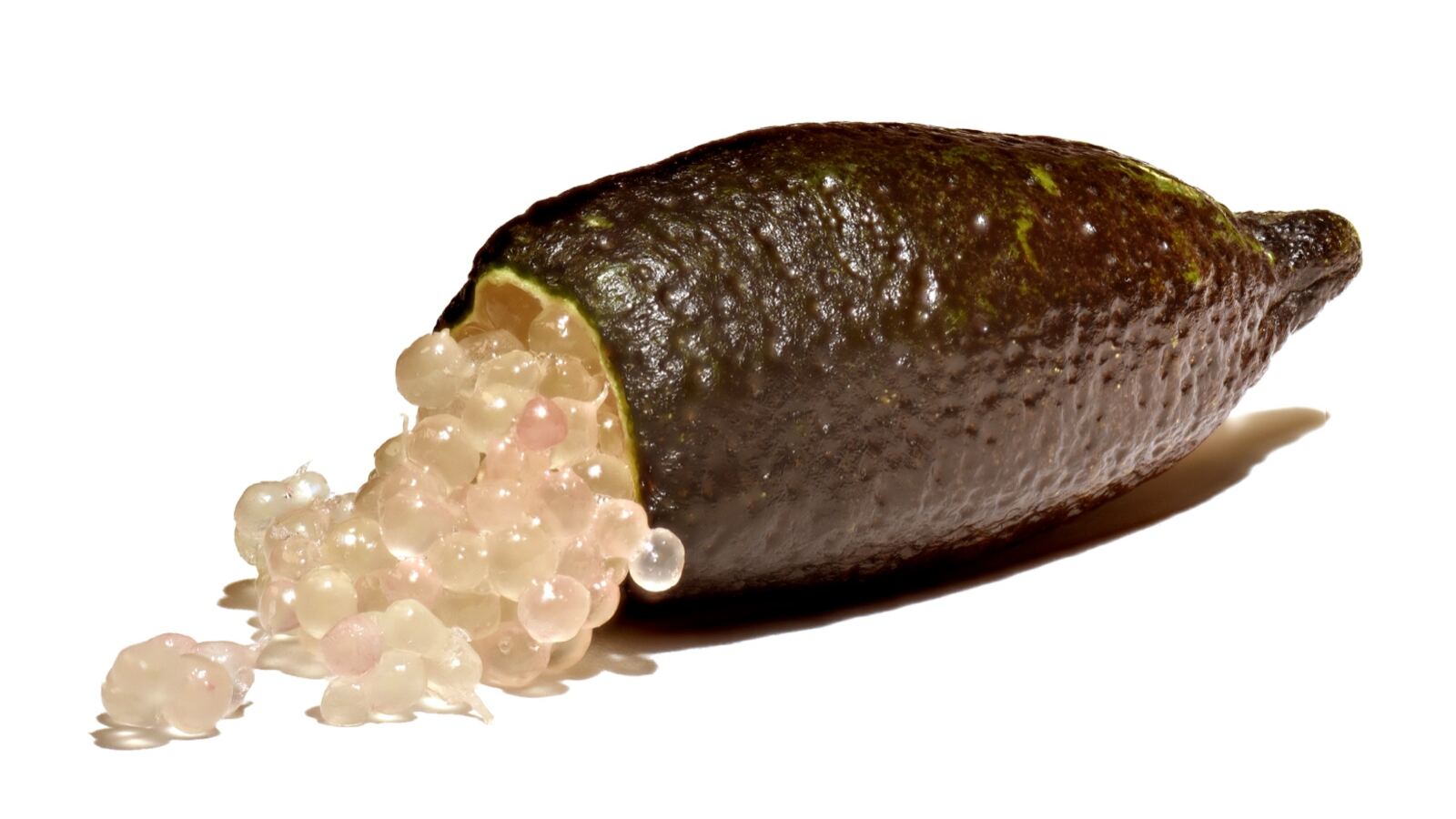
It is a genuine native Australian citrus — a relative of the familiar lemons and limes, and of the curry tree, bael, and Sichuan pepper in the wider citrus family, Rutaceae — but its fruit is like no other: slender, cylindrical, finger-shaped, a few centimetres long, and coming in a remarkable range of skin and pulp colours, from green and yellow to pink, red, purple, and near-black.
Citrus caviar
The finger lime's fame, and its gourmet value, come from what is inside. Cut or squeeze the fruit and out spill hundreds of tiny, firm, spherical juice-filled vesicles — little globes of tart citrus juice — that look exactly like beads of caviar, and that burst, one by one, with a tiny pop when you bite them, releasing a sharp, fresh, lime-like zing.
This "citrus caviar" — the popping pearls in shades of green, pink, and ruby — has made the finger lime a darling of chefs and fine-dining kitchens around the world, scattered over oysters, seafood, desserts, cocktails, and canapés for its burst of flavour and its jewel-like appearance. It has gone, in a couple of decades, from an obscure Aboriginal bush food to a high-value gourmet export crop, one of the great success stories of Australian native "bush tucker" reaching the world market, and it is now grown commercially in Australia and beyond. See restoration economics and food forest design.
Long before it was a restaurant garnish, the finger lime was gathered and eaten by the Aboriginal peoples of its rainforest range, and it remains a valued Indigenous food. Its rediscovery is also feeding back into citrus breeding, as its unusual genetics and its resistance to some citrus diseases interest growers of ordinary citrus.
Growing it
Subtropical to warm-temperate and marginally frost-hardy, the finger lime is a rainforest-understorey plant that wants warmth, reasonable moisture, and well-drained soil, and — being naturally an understorey shrub — it tolerates and even appreciates part shade, unlike most citrus, though it fruits best with good light; it dislikes hard frost, drought, and waterlogging. It is a thorny, dense, small shrub or tree, well suited to a pot, a hedge, or a garden corner.
It is grown from seed (variable) and, for named colour-and-flavour selections, by grafting onto citrus rootstock, as other citrus are, and it comes into bearing after a few years. Its small white citrus flowers feed bees. As a hardy, shade-tolerant, thorny little native citrus bearing jewel-like caviar fruit, the finger lime is one of the most exciting of bush foods and a rewarding, unusual addition to a warm-climate food forest or pot. See propagation and grafting.
See also
- Citrus the family the finger lime belongs to, as a native Australian member
- Curry Tree, Bael, and Sichuan Pepper other citrus-family trees
- Quandong, Kakadu Plum, and Davidson Plum other Australian bush foods
- Food Forest Design the finger lime as a shade-tolerant fruiting shrub
- Restoration Economics a bush food turned gourmet export
- Lilly-Pilly another Australian native fruit and hedge plant